
Festival Film Dokumenter 2023

Venues
Bioskop Sonobudoyo
Cemeti - Institute for Art and Society
Gedung Ex-Bioskop Permata
IFI Yogyakarta
Festival trailer
3–9 December 2023
Download catalogueAwards
- Best Student Documentary
- Best Short Documentary
- Best International Feature-length Documentary
- Best Indonesia Feature-length Documentary
Program
- International Feature-Length Competition
- Indonesia Feature-Length Competition
- Short Competition
- Student Competition
- Perspektif
- Retrospektif: Nishtha Jain
- Spektrum
- Utopia/Dystopia
- Lanskap 1
- Lanskap 2
- Lanskap 3
- Docs Docs: Short!
- DOC Interactive
- Monographs
Item 1
Jury

Mella Jaarsma
Mella Jaarsma
Mella Jaarsma has become known for her complex costume installations and her focus on forms of cultural and racial diversity embedded within clothing, the body, and food. She was born in the Netherlands in 1960 and studied visual art at Minerva Academy in Groningen (1978-1984), after which she left the Netherlands to study at the Art Institute of Jakarta (1984) and at the Indonesian Institute of the Arts in Yogyakarta (1985-1986). She has lived and worked in Indonesia ever since. In 1988, she co-founded Cemeti Art House (with Nindityo Adipurnomo), the first space for contemporary art in Indonesia, which to this day remains an important platform for young artists and art workers in the country and region.

Sunah Kim
Sunah Kim
Sunah Kim is a Korean-American filmmaker, currently working in South Korea. She started her film career as a narrative film producer in New York City. Since moving back to Korea in 2013, she has produced several highly acclaimed documentary features such as Singing with Angry Bird, The Birth of Resonance, Coming to You Minu, as well as an IDA-award winning Netflix Original DocuSeries My Love: Six Stories of True Love. In 2022 and 2023, she served as the Head of Industry at DMZ Docs. She also serves as a co-director of Korean Documentary Network (KDN).
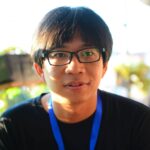
Wood Lin
Wood Lin
Wood Lin is a filmmaker, film critic, writer, and festival organizer specializing in documentaries. He has also been invited as the juror for many international film festivals. He has served as program director of the Taiwan International Documentary Festival (TIDF) since 2013 and has been the program advisor of the International Documentary Festival Amsterdam (IDFA) since 2020. He currently supervises the division of research and program at the Taiwan Film and Audiovisual Institute and is in charge of research, publication, film program, and TIDF.
International Feature-length Competition Program Note
The International Feature-Length Competition is a testament to the development and growth of documentaries from submissions across the world. This category presents documentaries that bring…
International Feature-length Competition Program Note
The International Feature-Length Competition is a testament to the development and growth of documentaries from submissions across the world. This category presents documentaries that bring novelty to the language of cinema by telling stories with depth and complexity. These films, to us, can serve to build a discourse in documentary film, placing a perspective that defends its own ideas. The films in this category are packaged with creative storytelling and approaches that not only convey issues, but also use documentary as a medium for social reflection and intervention.
This year’s films have moved on from the heady days of the global pandemic, when face masks, isolation, and social distancing were common themes that emerged in each work. This year’s entries are strong and diverse in terms of style, subject matter, and regional distribution. This category showcases documentaries that remind us of the diversity of humanity and the common struggle for a meaningful, safe, and peaceful life.
We have selected 12 films that capture the breadth of human experience from China to Mexico, Armenia to Myanmar.
General note on Competition
To continue taking part in documentary development and exploration in Indonesia–and the world–is Festival Film Dokumenter (FFD)’s main objective. FFD’s Competition Program is the main channel in assessing these dynamics. This year, more than 400 films were submitted. Through those numbers, topics about tradition are still on the pedestal. However, the way of perceiving and contextualization regarding the issues presented became a fairly fresh offer from several submitted films.
The presentation of perspectives and aesthetic overtures against conventional patrons became the lively scene of this year’s film submissions. These propositions lead us–at least–to take a look at the filmmakers’ heads and the way they see the world in continuous flux. From Latin America to Eastern Europe, they all share a common thread: human prowess in responding to nature and life.
Within 4 categories, this year’s 28 finalists not only present a diverse palette of storytelling and viewpoints, but also respond to the mundane everyday matters that revolve around them. The seemingly constant life becomes the birthplace of a documentary that is rather dynamic. A trip to the distant memory of history, a glimpse of the unknown future, as well as a celebration of day-to-day life become the supporting verbs of the documentaries in this program. All in all, the films in this program introduce us to fragments of life that, hopefully, can be our basis in celebrating what stays unchanged and what needs to be changed.
– Gerry Junus & Rugun Sirait
Program coordinator

Gerry Junus
Gerry Junus
Gerry Junus is a curator and film programmer who currently serves as Program Director of KDM CINEMA, an alternative cinema initiative in Yogyakarta, Indonesia. In addition, he is also the program coordinator for Festival Film Dokumenter while organizing screenings with Klub Sinema Sisifus Salatiga. Gerry also conducts research on film festival practices and Southeast Asian cinema.

Rugun Sirait
Rugun Sirait
Rugun Sirait is an Indonesian producer and researcher working across documentary, experimental cinema, and media anthropology. Her practice is shaped by long-term interests in digital cultures, collective memory, and the relationship between media, technology, and everyday life. She is currently pursuing a project-based doctoral degree in Amsterdam.
Film


- Best International Feature-length Documentary (2023)


Item 1
Jury

Eric Sasono
Eric Sasono
Eric Sasono is an Indonesian film researcher and critic who earned his Ph.D. in Film Studies from King’s College London and writes about documentary film culture in Indonesia. He is a co-founder of an online media outlet, Marginalia.id, which also organizes film screenings in the United Kingdom.

Gary Byung-seok Kam
Gary Byung-seok Kam
Gary is the first ever Korean documentary producer nominated for an Academy Award based in Seoul, Korea. He is committed to crafting compelling stories and supporting independent documentary makers. His films in release include Planet of Snail (2011, director Seung-jun YI), the first Asian documentary that won Best Feature-Length Documentary at the International Documentary Festival Amsterdam (IDFA), the OSCAR® nominated In The Absence (2018), Shadow Flowers (2019) and Crossing Beyond, the official Olympic film for the 2018 PyeongChang Winter Olympics. He has served as a mentor at the Docedge Kolkata, the DMZ International Documentary Festival, Docs by the Sea, MyDocs, EBS International Doc Fest and as a juror/selection committees at the Whickers Foundation, IDFA Forum and IDA. Gary is a member of the Academy of Motion Picture Arts and Science.

Laura Coppens
Laura Coppens
Laura Coppens is a filmmaker and visual anthropologist. She received her PhD through the University Research Priority Program Asia and Europe at the University of Zurich in 2014. Since then, she works at the University at Bern as a research assistant and teaches documentary filmmaking. Her PhD film project, Anak-Anak Srikandi, premiered at the Berlin International Film Festival and won several awards. As film curator, Laura served on several film festival juries including in the Berlinale Teddy Award. Her documentary feature, Taste of Hope, is Laura’s debut as sole director.
Indonesia Feature-length Competition Program Note
The four finalists in Indonesia Feature-Length Competition may serve as a window to peek into the scope of feature-length documentary production in the country. Although…
Indonesia Feature-length Competition Program Note
The four finalists in Indonesia Feature-Length Competition may serve as a window to peek into the scope of feature-length documentary production in the country. Although it is slowly increasing every year, the number is still comparatively small. The four films presented with equally important stories are able to show the depth and complex depiction of the featured narrative. Moreover, these films try to respond to issues with locally relevant contexts that can be contextualized in a broader sense. Over time, how can the quality of Indonesian feature-length documentaries compete with their quantity?
General note on Competition
To continue taking part in documentary development and exploration in Indonesia–and the world–is Festival Film Dokumenter (FFD)’s main objective. FFD’s Competition Program is the main channel in assessing these dynamics. This year, more than 400 films were submitted. Through those numbers, topics about tradition are still on the pedestal. However, the way of perceiving and contextualization regarding the issues presented became a fairly fresh offer from several submitted films.
The presentation of perspectives and aesthetic overtures against conventional patrons became the lively scene of this year’s film submissions. These propositions lead us–at least–to take a look at the filmmakers’ heads and the way they see the world in continuous flux. From Latin America to Eastern Europe, they all share a common thread: human prowess in responding to nature and life.
Within 4 categories, this year’s 28 finalists not only present a diverse palette of storytelling and viewpoints, but also respond to the mundane everyday matters that revolve around them. The seemingly constant life becomes the birthplace of a documentary that is rather dynamic. A trip to the distant memory of history, a glimpse of the unknown future, as well as a celebration of day-to-day life become the supporting verbs of the documentaries in this program. All in all, the films in this program introduce us to fragments of life that, hopefully, can be our basis in celebrating what stays unchanged and what needs to be changed.
– Gerry Junus & Rugun Sirait
Program coordinator
Gerry Junus
Gerry Junus
Gerry Junus is a curator and film programmer who currently serves as Program Director of KDM CINEMA, an alternative cinema initiative in Yogyakarta, Indonesia. In addition, he is also the program coordinator for Festival Film Dokumenter while organizing screenings with Klub Sinema Sisifus Salatiga. Gerry also conducts research on film festival practices and Southeast Asian cinema.
Rugun Sirait
Rugun Sirait
Rugun Sirait is an Indonesian producer and researcher working across documentary, experimental cinema, and media anthropology. Her practice is shaped by long-term interests in digital cultures, collective memory, and the relationship between media, technology, and everyday life. She is currently pursuing a project-based doctoral degree in Amsterdam.
Film


- Best Indonesia Feature-length Documentary (2023)

Item 1
Jury

Jason Iskandar
Jason Iskandar
Jason Iskandar, a Chinese-Indonesian director and founder of Studio Antelope in Jakarta, delves into his ethnic identity within Indonesia’s diverse sociocultural fabric. His short films, Seserahan and Langit Masih Gemuruh, have been showcased at major film festivals including Busan and Singapore. In 2021, his debut feature film co-producing with BASE Entertainment and Ivanhoe Pictures, Akhirat: A Love Story, ranked 15th in Indonesia’s top-grossing films that year. Jason is now working on First Breath After Coma backed by significant grants and selected for prominent film labs, including Southeast Asian Film Lab, Full Circle Lab, Produire au Sud, and Ties That Bind.

Natalie Khoo
Natalie Khoo
Natalie Khoo is a film programmer and outreach executive at the Asian Film Archive (AFA), where she curates films and organizes events on Asian cinema. She curated the programmes Y2K DreamZ–on Asian films at the turn of the new millennium, Orienting Paradise–which examines how Western filmmakers have projected their desires and anxieties onto Asia–and the commissioned essay project, Monographs 2023: sinking, shifting, stirring. Natalie is also a moving image artist and filmmaker whose work has screened and exhibited at Objectifs, Queer East Film Festival, and Kurzfilm Festival Hamburg among others. She was previously a film programmer at National Gallery Singapore.

Yuki Aditya
Yuki Aditya
Yuki Aditya graduated from University of Indonesia majoring in Fiscal Administration and once worked as a Tax Auditor at a Public Accountant in Jakarta. Since 2013, he is the Festival Director of ARKIPEL International Documentary and Experimental Film Festival. Yuki is acting as producer of films produced by Forum Lenteng, including Golden Memories: Petite Histoire of Indonesian Cinema (2018), Om Pius… This is My Home Come the Sleeping (2019), Dolo (2021). Along with I Gde Mika, he is the director of The Hypothesis of Wandering Images of Jakarta (2021) and The Myriad of Faces of Future Challengers (2022).
Short Competition Program Note
The growth of Indonesian short documentaries is not only marked by diverse topics, but also the exploration of out-of-the-box storytelling. Within a limited duration, filmmakers…
Short Competition Program Note
The growth of Indonesian short documentaries is not only marked by diverse topics, but also the exploration of out-of-the-box storytelling. Within a limited duration, filmmakers are challenged to convey their ideas efficiently. This year, the 7 films in the Short Competition program represent the dynamics of Indonesian short documentaries in the past year. From the quest of history, customary beliefs, trauma escapism, to the question of self-identity roll one by one in the films in this program. The presentation of these narratives is represented by ways of storytelling that do not merely follow the rules, but also dare to break the invisible boundaries of how short documentaries should be presented.
Selected finalists in Short Competition program are supposed to offer insights not only into how far–or how close–Indonesia documentary has come, but also to requisition what kind of development our documentary really needs.
General note on Competition
To continue taking part in documentary development and exploration in Indonesia–and the world–is Festival Film Dokumenter (FFD)’s main objective. FFD’s Competition Program is the main channel in assessing these dynamics. This year, more than 400 films were submitted. Through those numbers, topics about tradition are still on the pedestal. However, the way of perceiving and contextualization regarding the issues presented became a fairly fresh offer from several submitted films.
The presentation of perspectives and aesthetic overtures against conventional patrons became the lively scene of this year’s film submissions. These propositions lead us–at least–to take a look at the filmmakers’ heads and the way they see the world in continuous flux. From Latin America to Eastern Europe, they all share a common thread: human prowess in responding to nature and life.
Within 4 categories, this year’s 28 finalists not only present a diverse palette of storytelling and viewpoints, but also respond to the mundane everyday matters that revolve around them. The seemingly constant life becomes the birthplace of a documentary that is rather dynamic. A trip to the distant memory of history, a glimpse of the unknown future, as well as a celebration of day-to-day life become the supporting verbs of the documentaries in this program. All in all, the films in this program introduce us to fragments of life that, hopefully, can be our basis in celebrating what stays unchanged and what needs to be changed.
– Gerry Junus & Rugun Sirait
Program coordinator
Gerry Junus
Gerry Junus
Gerry Junus is a curator and film programmer who currently serves as Program Director of KDM CINEMA, an alternative cinema initiative in Yogyakarta, Indonesia. In addition, he is also the program coordinator for Festival Film Dokumenter while organizing screenings with Klub Sinema Sisifus Salatiga. Gerry also conducts research on film festival practices and Southeast Asian cinema.
Rugun Sirait
Rugun Sirait
Rugun Sirait is an Indonesian producer and researcher working across documentary, experimental cinema, and media anthropology. Her practice is shaped by long-term interests in digital cultures, collective memory, and the relationship between media, technology, and everyday life. She is currently pursuing a project-based doctoral degree in Amsterdam.


Item 1
Jury
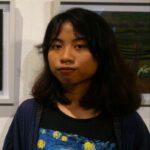
Dini Adanurani
Dini Adanurani
Dini Adanurani (born 1998), studied Philosophy at Universitas Indonesia. She is a writer and researcher focusing on art and film. She is a member of the selection committee of ARKIPEL – Jakarta International Documentary and Experimental Film Festival. During her university days, she was the Festival Director for UI Film Festival 2019. With two other writers, Dini is building a visual culture criticism platform, Aspek Rasio.
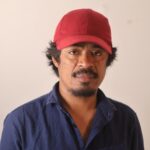
Manuel Alberto Maia
Manuel Alberto Maia
Manuel Alberto Maia (Abe) started his passion in film by founding Komunitas Film Kupang in 2012. In 2013, he joined a documentary film workshop for beginners in the Kickstart! In-Docs program. His short documentaries include Kaos Kupang (2012) and Kabar dari Medan (2014). Nokas (2016), his first feature-length documentary, was nominated for Best Feature-Length Documentary in Festival Film Indonesia 2016 and screened at various national and international film festivals including SGIFF, YIDFF, FFD, and Freedom Film Festival. Abe also directed short fiction Siko (2018) which competed for Best Short Film at Festival Film Indonesia, and Uma De Raffa (2022) which was screened at JAFF.

Wahyu Utami
Wahyu Utami
Wahyu Utami is a filmmaker and lecturer based in Yogyakarta, Indonesia. She holds a Master of Arts degree from ISI Yogyakarta. Her work focuses on social, cultural, educational, and disability inclusion issues, primarily through documentary filmmaking. Her films have been screened and awarded at various film festivals.
Student Competition Program Note
The Student Competition is an appreciation platform for students in Indonesia who are engaged in documentaries. In this category, instead of looking at the presentations…
Student Competition Program Note
The Student Competition is an appreciation platform for students in Indonesia who are engaged in documentaries. In this category, instead of looking at the presentations of various forms, the honesty of perspective in seeing the surroundings becomes an important proposition.
The five finalists in this category present a similar main idea, but they all bring a completely different approach and way of speaking. The innocence of seeing and issue can in fact be read as a critical and constructive perspective on the media that–of course–is the patron of students. Amidst the like-never-seen-before-progression of technology, student filmmakers are more interested in presenting things related to tradition. This year’s Student Competition Program invites us to further understand the perspectives that can enrich the way we read things.
General note on Competition
To continue taking part in documentary development and exploration in Indonesia–and the world–is Festival Film Dokumenter (FFD)’s main objective. FFD’s Competition Program is the main channel in assessing these dynamics. This year, more than 400 films were submitted. Through those numbers, topics about tradition are still on the pedestal. However, the way of perceiving and contextualization regarding the issues presented became a fairly fresh offer from several submitted films.
The presentation of perspectives and aesthetic overtures against conventional patrons became the lively scene of this year’s film submissions. These propositions lead us–at least–to take a look at the filmmakers’ heads and the way they see the world in continuous flux. From Latin America to Eastern Europe, they all share a common thread: human prowess in responding to nature and life.
Within 4 categories, this year’s 28 finalists not only present a diverse palette of storytelling and viewpoints, but also respond to the mundane everyday matters that revolve around them. The seemingly constant life becomes the birthplace of a documentary that is rather dynamic. A trip to the distant memory of history, a glimpse of the unknown future, as well as a celebration of day-to-day life become the supporting verbs of the documentaries in this program. All in all, the films in this program introduce us to fragments of life that, hopefully, can be our basis in celebrating what stays unchanged and what needs to be changed.
– Gerry Junus & Rugun Sirait
Program coordinator
Gerry Junus
Gerry Junus
Gerry Junus is a curator and film programmer who currently serves as Program Director of KDM CINEMA, an alternative cinema initiative in Yogyakarta, Indonesia. In addition, he is also the program coordinator for Festival Film Dokumenter while organizing screenings with Klub Sinema Sisifus Salatiga. Gerry also conducts research on film festival practices and Southeast Asian cinema.
Rugun Sirait
Rugun Sirait
Rugun Sirait is an Indonesian producer and researcher working across documentary, experimental cinema, and media anthropology. Her practice is shaped by long-term interests in digital cultures, collective memory, and the relationship between media, technology, and everyday life. She is currently pursuing a project-based doctoral degree in Amsterdam.
Film
- Best Student Documentary (2023)


Item 1
Program Note
Anthropocene
Supposing that the religious leader in the short story Borges (1940) detests mirror (as well as fornication) because it multiplies the number of humans, what would they…
Anthropocene
Supposing that the religious leader in the short story Borges (1940) detests mirror (as well as fornication) because it multiplies the number of humans, what would they say about film and camera? Through recording, film multiplies humans and immortalizes them. Through duplication and distribution, it even increases its number. From early on in its creation, the film camera has followed in the footsteps of humans to “increase in number; fill the earth and subdue it”, with its impacts on the geological age now widely called Anthropocene.
Whether under the pretext of scientific, aesthetic, journalistic, or industrial exploration, the Anthropocene broadened with camera movement extensions that record and document remote corners of the world. Ziegler-Fiala expedition in 1902 brought cameras through their journey to the North Pole, becoming the first National Geographic Society documentary and every recording is undoubtedly an invite for the next. So, over a hundred years later, in a place far from the Arctic, Ko Phi Phi Leh, an island where Maya Bay Beach becomes the shooting location for The Beach (2000), must be closed due to over-tourism—the multiplication of humans triggered by cameras and films—that leads to nature destruction. In an era when the word ‘Instagrammable’ has not only entered the Cambridge Dictionary lemma but is also understood by people who do not even speak English fluently, every beautiful, amateurish footage from any phone camera is a chance for a new destruction of the earth.
However, it is also important to state here that not everyone agrees that the current massive destruction of nature is triggered by the majority of humans (anthro). In a recent discussion that I moderated, activist and physicist Vandana Shiva expressed her disagreement with the term anthropocene and argued that ‘capitalocene’ is a more accurate term to refer to the condition caused by greedy industrial capitalism merchants, who only consisted of a handful of humanity, not the majority.
Likewise, perhaps not all would agree that camera and film are an integral part of the destruction and expansion brought by the Anthropocene. Could films—especially documentaries—also contain redemptive power in its destructive effects? As a believer in the power of films, there is no other option for me than to believe in it. Through the films in this programme, hopefully, we can open our eyes and awareness to the Anthropocene on many aspects and impacts, also taking action.
Feeling the Apocalypse (Chen Sing Yap, 2022) animation captures the psyche of many people at this time, especially the youth, who perhaps have not been talked about much and too often disregarded as something ‘made-up’: stress and anxiety about the future does not come from the economy and employment uncertainty but the environment uncertainty as a result of the Anthropocene era. The anxiety of world destruction and the self-position (humans) in it made them feel powerless and useless.
Filled with deep conversation, frequently philosophic, between a hunter, a veterinarian, and a nurse in the middle of an operation session for a wild deer in a protected forest area. The discourse in the film L’Ombra di Rasputin (Pietro Francesco Pingitore, 2023) disrupts our perception of the meaning of wild nature. Is what we call natural truly not artificial? If so, where should we draw the line? Students of political ecology will remember Paul Robbins’s statement, “[T]he environments around us, including and especially those composed of non-humans, are clearly produced. Forests are produced as much as factories…” (Political Ecology: A Critical Introduction, 2012). Humans remain as the central actors that cannot be separated from their natural surroundings, and the Anthropocene confirms that even the so-called wildest nature, either directly or indirectly, contains traces of human civilisation.
RITUAL, Part IV: The Blends (Robby Ocktavian, 2022) captures the intersected discourse of Samarinda and Mahakam River from various stakeholders, though, in the end, those views must submit to the main interests of state-bureaucracy/capitalism-industry that expand the city into the backwoods and leaving it chaotic. A relevant film to critically see the mega-project that is being rushed through in a region not too far from Samarinda.
We could see the crushing impact of state-bureaucracy/capitalism-industry interests and other tragic consequences in Yarokamena (Andrés Jurado, 2022), a rambling speech of the Uitato indigenous community elders about the resistance to the colonialism-capitalism rubber plantation in Casa Arana, Colombia. A bloody clash of the Anthropocene project in the middle of ruins of modern houses and abandoned dish antennas: between the idea of human as the master of nature who wants to exploit all of its resources with the belief of human as a small part of nature living in harmony with its rhythm.
The Secret Garden (Nours Ouayda, 2023) is an imaginative exploration of the human’s position in the Anthropocene: they are central as the bearer of the first-person narrative but also turn out to be powerless (invisible) when their surrounding world feels like it’s bearing down on them. Constructed from hundreds of common vegetation photos around us, this film invites us to see the close as distant, as well as the often ignored, as something fantastic worthy of further attention and admiration. When nature seeks to reclaim its dominance over the city through a spread of new species, what could be done by humans?
— Ronny Agustinus
Programmer
Programmer

Ronny Agustinus
Ronny Agustinus
Ronny Agustinus was one of the founders of ruangrupa. In 2004 he founded Marjin Kiri publisher that he still manages until now. He is the vice-coordinator of the English network in the International Alliance of Independent Publishers and also a member of International Union of Left Publishers. He translates and writes a lot about Latin American fiction. He was curator for Latin American session for ARKIPEL Jakarta International Documentary & Experimental Film Festival 2014-2016, jury for ARKIPEL 2014-2015, jury for long documentary category in Festival Film Dokumenter 2015 and 2017 (Yogyakarta), and also jury for Psychology Film Festival 2016 (Surabaya). His book is Macondo, Para Raksasa, dan Lain-Lain Hal: Seputar Sastra Amerika Latin (2021).


Item 1
Program Note
The Cinema of Nishtha Jain
Nishtha Jain is blunt, outspoken, and–perhaps most importantly for a filmmaker–a helluva tenacious artist. Celebrating the works of this award-winning filmmaker and Academy of Motion…
The Cinema of Nishtha Jain
Nishtha Jain is blunt, outspoken, and–perhaps most importantly for a filmmaker–a helluva tenacious artist. Celebrating the works of this award-winning filmmaker and Academy of Motion Pictures and Sciences member promises to be an engagement with twenty-first-century cinema at its finest. We welcome you to this limited but compelling retrospective where we will experience three remarkable documentaries including Gulabi Gang (2012), The Golden Thread (2022), City of Photos (2004); and a short fiction Proof (2019); each a testament to Nishtha Jain’s impressive oeuvre that has interrogated societal struggle in its diverse forms for two decades.
Jain takes us into worlds perhaps unfamiliar to many, and yet made accessible. Gulabi Gang (2012) immerses us in the fearless struggle of women in the heartland of India, as they unite under a banner to fight against injustice and gender-based violence. Jain’s keen observation and empathy allow us to witness the extraordinary courage of these women as they heroically confront societal challenges head-on, but not without strife, doubt and introspection.
The Golden Thread (2022) transports us into the heart of the lives of those affected by the twilight of the once roaring jute industry in Bengal, delicately unraveling the tapestry of their interconnected lives in a moving portrayal of an environment in its last echoes of a long-gone colonial juggernaut.
Jain’s prescient, pre-social media exploration of a small photography studios in India invites us to contemplate the stories behind these images. It helps us understand the ever-increasing power of images to amplify our vanities and hankering for connecting with the lives of others, near and far. Through City of Photos (2004), Jain navigates a world where photographs become windows into the lives of strangers.
Proof (2019), a black and white gem makes us, the viewers, uncomfortable witnesses of decisions made in a hospital ward on the night of a violent tragedy in 1984; the night that forever left a stain on the secular aspirations of the Indian Republic, decades after Independence from British rule.
These films are a reminder that in every frame and every story, there is a world waiting to be explored, understood, and appreciated. Join us at Festival Film Dokumenter for a curated selection of Nishtha Jain’s works for the first time in Indonesia, and be touched by the indomitable spirit of the human experience, as captured and re-told by a dedicated, first-rate storyteller.
– Sandeep Ray
Programmer
Programmer

Sandeep Ray
Sandeep Ray
Sandeep Ray is a writer, filmmaker, and historian. His films have screened at several festivals including in Busan (BIFF), Taiwan (TIDF), Sydney, Paris (Jean Rouch), Tehran (IIFF), Copenhagen (DOX), and have curated at the Flaherty Seminar, the Films Division of India, and the Whitney and Getty Museums. He is the head of the School of Humanities at the University of Nottingham in Malaysia.


Item 1
Program Note
Cinema as Teleportation
Teleport is a tool used by Arad, while Maya with a headband-like device on its head is able to communicate telepathically with animals and other…
Cinema as Teleportation
Teleport is a tool used by Arad, while Maya with a headband-like device on its head is able to communicate telepathically with animals and other living beings. The genius biologist duo are comic book characters from the planet Mytica. Mytica’s technology is also far more advanced than Earth’s, so when using teleports, they can travel faster than light, while also being able to move matter on a local scale through the Blipper ‘teleportation staff’ controlled by a super smart and wise computer.
When we enter the theater and are willing to give up our bodies and all our senses to absorb and be absorbed (reciprocally), we are then immersed in a cinematic experience. Departing from this, the films in this program provide interesting suggestions that will take us to images of time and images of space. In addition to dealing with the present, it also takes us to the civilization of the past (deep ancient), the colonial period, world wars, and even the end of time.
Similar to the films in the previous year’s edition of the Spektrum program, this year’s selection of films, apart from being undisciplined, has the same tendency of treating the films as teleportations. The selected films use a variety approaches, through the use of archives and footage (Terra Incognita and An Asian Ghost Story), using animation (Wa’anak Witu Watu and Feeling the Apocalypse), exploring memories (I WAS THERE), conveying personal experiences or narratives (All my Scars Vanish in the Wind), or those cultivated in the production or post-production stages such as Yang Kelak Akan Retak which takes the audience to various locations of the Van Mook Line or the border between the Netherlands and Indonesia in East Java after the Renville agreement or Behind the Sun which takes us into space and to reflective questions in film production.
Filmmakers explore all these aspects at the editing table and in the production process in order to present and offer a different experience, including the experience of being someone else. The film Loneliness brings us that impression. By these filmmakers, the images of time and space are stretched and compressed, as well as the perception of reality and imagination.
The 10 films offer an experience of the past that has implications for the problems of our lives today and in the future, but also speculates to present or bring the audience to different experiences in celebrating documentaries.
– Wimo Ambala Bayang
Programmer
Programmer

Wimo Ambala Bayang
Wimo Ambala Bayang
Wimo Ambala Bayang is an artist and co-founder of Ruang MES 56, based in Yogyakarta, Indonesia. Working across photography, film, video, objects, and painting, he explores how images shape our understanding of memory and reality.


Item 1
Program Note
Utopia/Dystopia
The imagination of a harmonious life brings various hopes for a better world. Reality does not always favorable to the imagination. Irony and the utopian…
Utopia/Dystopia
The imagination of a harmonious life brings various hopes for a better world. Reality does not always favorable to the imagination. Irony and the utopian reality of various events from various parts of the world bring us to certain limits of awareness and sanity to see more deepest that various cultural contexts. This year, this program appears with a selection of films that bring dynamics and long-lasting impacts to each element, individual, and their social order.
In a world driven by competition and capital, there is a fascinating story of a workers’ cooperative factory on Taste of Hope (Laura Coppens, 2019), there’s a dynamic journey to real utopia. Representations that combined reality and visual trace were being one of the central elements of new media in the observational documentary. A sensorial journey about practice and tourism global impact through Onlookers (Kimi Takesue, 2023) teases out complex and paradoxical questions of cross-cultural travel. An interesting analogy and the storyline from a mechanic in a village outside Beirut, who receives many visitors were need to repair their cars, and realized that was not only their cars, but has to fix the owner as well, Thiiird (Karim Kaseem, 2023) bring the audience distanced from the “hustle and bustle” politic of Lebanese through village outside Beirut.
Turning to the barren landscape of south-eastern Morocco, supported combination of two basic concepts of sound design were shaping our auditory journey, follows a nomad and scientist seek the meteorite fragments on Fragment of Heaven (Adnane Baraka, 2022), that bring us traces of existential questions to longs for a better life through powerful image that worked on like cinematic sleeping pill. Continuing on an essay film exploring how colonial logic has influenced sense of self and others in a footage collage that intersecting sci-fiction on the Odyssey (Sabine Groenewegen, 2018), questions the extent to which these frames of perception have been decolonized today. And the journey intensifies with each new wave on the sea surface, with the constant movement, in A Wander into the Ocean (Toma Zidić, 2022) which reflects our conflicted relationship with the environment in the present moment. Eventually, how we construct the real journey is reflecting on how we all live as observers on a traversing journey that moves at geological speed.
– Alia Damaihati
Programmer
Programmer

Alia Damaihati
Alia Damaihati
For two decades, Alia Damaihati has been involved in developing various programs for Forum Film Dokumenter. Her work focuses on managing film programs and exhibitions, and her experience has led her to participate in various forums, festivals, and documentary networks in Indonesia and internationally. Alia plays a key role in program development and in mapping documentary trends, which serve as the foundation for the organization’s various initiatives. She currently serves as Program Director of Festival Film Dokumenter.


Item 1
Program Note
Ordinary/Extraordinary
The fundamental narration of documentaries often comes from the simplest mundane narratives. Yet, when we try to step afar to take a closer look, those…
Ordinary/Extraordinary
The fundamental narration of documentaries often comes from the simplest mundane narratives. Yet, when we try to step afar to take a closer look, those mundane things start to give us a glimpse of personal and social struggles. The films in this program explore the intertwining of the small and big narratives pertaining the humans’ positions in society and their relation with the environment they live in. Moreover, the choice of medium and approach of the film also takes a vital aspect of how it is presented, strengthening their narration through what we can see.
The Unseen Words (Wahyu Utami, 2017), captures the daily lives of visually impaired people who are members of a performance group. Using observational approach, the film follows the subjects’ movements patiently without laying judgment. The anxiety of competing for a job as a masseuse, the joy of singing together, and the struggle to find support for performances. The footage reveals and unravels the complexities inherent in everyday life. If… (Diva Suki Larasati, 2019) is a short animation that uses simple visual language to depict the flashback of a child who lost his father-a human rights activist who was murdered. Animation becomes a medium to envision the father-daughter relationship and its estrangement.
Diaspora (Ivonne Kani, 2015) is a diary compiling the experiences of the filmmaker and her family as Chinese. The film intimately traces the family’s journey and genealogy across generations and countries, sparking conversations about identity struggles, especially among the younger generation of Chinese in Indonesia. Presented using observational approach, The Crowded Bridge (David Darmadi, 2016) composes an audiovisual portrait of a small bridge crowded with people’s activities. Using the bridge as a focal point, the film observes the shapes and rhythms of daily activities that, consciously or not, are shaped by an urban setting.
The last film, Children of Rapa’i Plok (Nursalliya Ansari B, 2017), adopts expository approach in narrating the endeavor of a group of children to keep playing traditional music in their village. The use of expository in this film is unique because it is able to get close to the subject, showing the social dynamics and friendship between them. The intertwining of the big narrative represented by traditional music and the small narrative represented by friendship is nicely crafted.
The five films in this program represent the effort to look closer towards such mundane things and its relation with big perspective while also present it with the form and approach to communicate.
— Valencia Winata
Programmer
Programmer
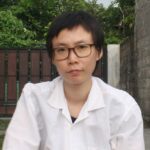
Valencia Winata
Valencia Winata
Valencia Winata is a film researcher who has made several short videos. Since 2024, she has been part of the selection committee for ARKIPEL – Jakarta International Documentary and Experimental Film Festival. She was also part of the database team at Forum Film Dokumenter, Yogyakarta, that manages Indonesia’s documentary film collection. She is currently continuing her education in Cultural Studies at Universitas Sanata Dharma. Her research focuses on film history, aesthetics, and culture.


Item 1
Program Note
Grotesque Cinema
Since its birth, cinema has been an otherworldly presence. An audience's surprise at the documentation of a train passing by on the screen during Lumiere's…
Grotesque Cinema
Since its birth, cinema has been an otherworldly presence. An audience’s surprise at the documentation of a train passing by on the screen during Lumiere’s first film screening had already taken place earlier when the magic lantern played ghostly figures. This phenomenon shows how cinema is actually close to “otherworldly” things outside the daily lives of its audience.
Documentary itself, in its own development, has also begun to access things beyond the realm of everyday life, such as dreams, trauma, mysticism, and so on. In this context, of course, the approach of documentarians also has an impact on visual approaches that may be different from other practices. This also includes the notion of contemporary cinema, which tries to revisit the practices of the B cinema approach as a method. That means, the hierarchical structure in the modern tradition is no longer valid today. Seeing the range of issues taken up in contemporary cinema is also a matter of experience in the deepest niches of the personal, non-human, and the world of the grotesque.
The mundane becomes a sort of approach because it contains personal diversity. As in The Book of Life and Three Stories about Women and the Unseen in the Midst of the Pandemic (2023), a sort of women’s stories that reopen the tension between the past and the present, loss and so on, as daily stories that are traced personally. Meanwhile, Garden Amidst the Flame (2023) is a reflection in looking at the archaic knowledge of the people in Minahasa, who form their own world that erases the hierarchy between humans and non-humans, which creates its own cinema language because of the loss of realist and non-realist distinctions. The experience of grotesque cinema is also a complex one, no longer an independent visual matter, but in Di Balik Rupa (2023), it also tries to trace the past and its representation through what goes on behind the scenes, especially how history is a fiction that contains various artistic works in shaping its horror.
Have a great time watching Grotesque Cinema!
–Akbar Yumni
Programmer
Programmer
Akbar Yumni
Akbar Yumni
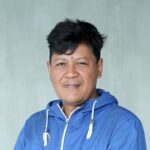
Akbar Yumni attended Sekolah Tinggi Filsafat Driyarkara (Driyarkara College of Philosophy) in Jakarta. He was the curator of ARKIPEL – Jakarta International Documentary and Experimental Film Festival (2013–2018) and is active as a researcher and performance artist. Some of his performances are based on Indonesian film archives that were lost during the authoritarian regime, including Menonton “Turang” (1957), Menonton “Daerah Hilang” (1956), and Menonton “Sedap Malam” (1951). Currently, Akbar is a member of the theater committee of Dewan Kesenian Jakarta (Jakarta Arts Council) for 2023–2026.


Item 1
Program Note
Milisifilem
This is about Minke, a Javanese minor nobleman who lived during the Dutch East Indies colonialism. He is a reflection of Raden Mas Tirto Adhi…
Milisifilem
This is about Minke, a Javanese minor nobleman who lived during the Dutch East Indies colonialism. He is a reflection of Raden Mas Tirto Adhi Soerjo, a movement figure during the Dutch East Indies colonial period who founded the Sarekat Prijaji organization. He was also a pioneer of Indonesian journalism, publishing the first Malay-language newspaper, Medan Prijaji. The chronicle of Minke’s journey of thought and struggle is described in the historical romance Buru Quartet. These four books are literary works written by Pramoedya Ananta Toer during his political incarceration on Buru Island. A masterpiece that describes the details of colonialism in the form of thoughts and encounters of people.
The three films in this program are part of the Minke Project, a project to read the Buru Quartet and use it as inspiration to produce films. The three works are: Sparrow in the Storm (Van Luber Parensen, 2023), Sugar Map (Ali Satri Effendi, 2023), dan I Watch You Watch Them (Helmi Yusron, 2023) are the three films produced in the final period of study of the 6th batch of MILISIFILEM class (Edelweiss batch).
MILISIFILEM is a platform established by Forum Lenteng in September 2017 that specifically explores visual production practices, both technically and in contexts related to current socio-cultural issues. Regularly, MILISIFILEM organizes training on visual fundamentals in an interdisciplinary manner, using a participatory and collaborative approach. Participants explore the possibilities of visual experimentation and build collective discipline in producing visual works. MILISIFILEM specifically engages participants to explore art and cultural activism in order to face the challenges of changing times.
– Otty Widasari
Programmer
Programmer

Otty Widasari
Otty Widasari
Otty Widasari (Balikpapan, 1973) is an artist, filmmaker and one of the founders of Forum Lenteng, a collective in Jakarta focusing on art, media, and sociocultural studies. Her artistic practice is nourished by her engagement with media activism, journalistic experiences dealing with social and historical actualities, and a lifelong study and fascination of film. She is the chief editor of Akumassa, a collaborative platform with local collectives/communities in Indonesia for conducting workshops and producing a variety of forms of communication media. She is also the Head of Selector for ARKIPEL – Jakarta International Documentary and Experimental Film Festival.


Item 1
Program Note
Rhythm & Reality
Earth's cycles, it can be argued, gives meaning to human existence with each unique rhythmic expression and being communicated with living on another part of…
Rhythm & Reality
Earth’s cycles, it can be argued, gives meaning to human existence with each unique rhythmic expression and being communicated with living on another part of the earth. A culture’s rhythm is its continuing and evolving narration, linking events, time, people and generation to underlying themes, archetypes, structure, values, expectations and recurring motifs. It pivots around complex and interrelated rhythms and reality about occupation, origin, colonial extractivism and a simple reminiscence. This program offers a journey across time and geographic distance to open conversation and interaction over various complexities of rhythm and other realities.
In the middle of a shipwrecks, an exploration through a ghostly reality of the past in Abyssal (Alejandro Alonso Estrella, 2021) brings us into the wonder of wishes and dreams. Conversations and activities within a narrow physical and mental spaces lead us to believe that we are the wandering wounded souls. Echoing them, An Ode to a Time I Loved Bread (Neema Ngelime, 2021) and Shanghai Quarantopia (Clarissa Zhang, 2023) peek into the past that might spark hope for a new rhythm of heartbreaking reality.
Yarokamena (Andrés Jurado, 2022) carries us through time, tracing the dark realities recorded by world history from a space that created a spiral of betrayal and death. The colonial ghost that has been haunting since two decades ago is repeatedly reborn through the destructive forces preserved in the oral memory of the survivors of exploitation and extractivism in Casa Arana, Colombia. Recognizing itself through the landscapes, traditions, rituals and people depicted in six chapters, The Maestrat on Film (Fermín Sales, 2022) shows the duality of region and ethnography as a point of departure that can reach the point of experimental cinema.
Featuring a hypnotizing journey to and through death, an elderly man who has worked for 14 years in the university hospital morgue is inseparably connected to the corpses he works on. Playing with the daily cycle of life and death, Laboratory No. 2 (Edris Abdi, Awara Omer Saeed; 2021) signals to us that eternal life is in the possession of those who dares.
Now that we are in the emerging state of awareness that we are standing in the middle of a rhythmic motion, at least, we could try to reproduce the faith in life.
– Alia Damaihati
Programmer
Programmer
Alia Damaihati
Alia Damaihati
For two decades, Alia Damaihati has been involved in developing various programs for Forum Film Dokumenter. Her work focuses on managing film programs and exhibitions, and her experience has led her to participate in various forums, festivals, and documentary networks in Indonesia and internationally. Alia plays a key role in program development and in mapping documentary trends, which serve as the foundation for the organization’s various initiatives. She currently serves as Program Director of Festival Film Dokumenter.


Item 1
Film
Item 1
Program Note
sinking, shifting, stirring
Monographs is a series of video and text essays on Asian cinema commissioned by the Asian Film Archive (AFA). Conceived during the outbreak of COVID-19…
sinking, shifting, stirring
Monographs is a series of video and text essays on Asian cinema commissioned by the Asian Film Archive (AFA). Conceived during the outbreak of COVID-19 when physical screenings were disrupted, Monographs offers a critical platform for writers and thinkers to discourse upon the moving image beyond the walls of the cinema. The second edition of Monographs consists of 13 commissioned works–7 video essays and 6 written essays–produced in consultation with filmmaker/editor Daniel Hui and researcher/curator Matthew Barrington.
Responding to changing geological and sociopolitical landscapes, Monographs 2023: sinking, shifting, stirring interrogates how the environment, climate, and human and nonhuman relationships might be reimagined. Evoking cycles of geological transformation, the anthology explores how cinematic representations of the environment move through cycles of dissolution, transformation, and rebirth.
From meditations on a glacial Himalayan town to speculative eco-fictions, the essays uncover how a wide stratum of interpersonal, historical and cultural meanings are grafted onto the multitudinous landscapes of Asia. Through the filmic medium including but not limited to contemporary vlogs, video art, travelogs, silent cinema, and state sponsored productions, Monographs 2023 explores the tensions between form and formlessness, sound and silence; as landscapes are continually sinking, shifting, stirring.
Read the Monographs 2023 essays here.
— Natalie Khoo
Programmer
Programmer
Natalie Khoo
Natalie Khoo
Natalie Khoo is a film programmer and outreach executive at the Asian Film Archive (AFA), where she curates films and organizes events on Asian cinema. She curated the programmes Y2K DreamZ–on Asian films at the turn of the new millennium, Orienting Paradise–which examines how Western filmmakers have projected their desires and anxieties onto Asia–and the commissioned essay project, Monographs 2023: sinking, shifting, stirring. Natalie is also a moving image artist and filmmaker whose work has screened and exhibited at Objectifs, Queer East Film Festival, and Kurzfilm Festival Hamburg among others. She was previously a film programmer at National Gallery Singapore.


Festival Info
Statistics
- 0Film submission
- 0Film screened
- 0Audiences
- 0Volunteer
- 0Partners