Festival Film Dokumenter 2025

Venues
Cemeti - Institute for Art and Society
Kedai Kebun Forum
Langgeng Art Foundation
Pascasarjana ISI Yogyakarta
Festival trailer
21—28 November 2025
This year, Festival Film Dokumenter presents 90 works from 45 countries across 8 programs. Festival Film Dokumenter 2025 is open and free for anyone, only in Langgeng Art Foundation, Pascasarjana ISI Yogyakarta, Kedai Kebun Forum, and Cemeti – Institute for Art and Society.
Awards
- Best Indonesia Feature-length Documentary
- Best International Feature-length Documentary
- Jury Special Mention
- Jury Special Mention
- Best Short Documentary
Program
- International Feature-Length Competition
- Indonesia Feature-Length Competition
- Short Competition
- Student Competition
- Perspektif
- Spektrum
- Utopia/Dystopia
- Lanskap 1
- Lanskap 2
- Lanskap 3
- Lanskap 4
- Docs Docs: Short! 1
- Docs Docs: Short! 2
- Docs Docs: Short! 3
- Special Presentation
- Le Mois du Film Documentaire
- DOC Talk
- DOC Chat
- Exhibition
Item 1
Jury

Farah Wardani
Farah Wardani
Farah Wardani is an independent art curator, consultant, and producer of cultural programs that has been active since 2002. Farah is a board member of the Indonesian Visual Art Archive Foundation. Among her current engagements, she is currently serving as Expert Committee of SAKA Museum, Bali, member of Acquisition Committee of National Gallery Singapore (2024–2027), curator of Ellipse Art Projects +E Program for Biennale de Lyon (2024–2026), Program Chair of Museum Forward by EUNIC Indonesia (2024–2025), and lead curator of ARTJOG (2026–2028).

Krishna Sen
Krishna Sen
Krishna Sen FAHA is an Australian professor and internationally recognized scholar in contemporary Indonesian and media studies. Her first book was a comprehensive account of Indonesian film history. She is Chair of the Perth Centre of PEN International, Emerita at the University of Western Australia, and a member of the Murdoch University Senate. Indian by birth and Australian by circumstance, she has dedicated much of her academic career to researching and writing about the connections between media and politics in Indonesia. Her long-standing interest in media censorship, developed through her work on Indonesia under Soeharto, now informs her role with PEN International, particularly in supporting imprisoned writers worldwide.
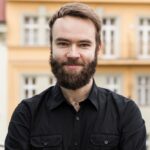
Ondřej Kamenický
Ondřej Kamenický
Ondřej Kamenický is the director of One World International Human Rights Film Festival. The festival is held in Prague and 56 other cities and towns in the Czech Republic, showcases documentaries and fiction films on human rights, social, political, environmental, and media issues. It includes Q&As, panel debates, virtual reality events, social impact projects, screenings for schools, and East Doc Platform for film industry. One World distributes films, assists to new festivals, and organizes several festival echoes around the world.
Notes on Competition Program
Each film in the selection for FFD 2025 Competition program is recognized not only for its technical or aesthetic achievements, rather for its ability to…
Notes on Competition Program
Each film in the selection for FFD 2025 Competition program is recognized not only for its technical or aesthetic achievements, rather for its ability to ignite questions. These films give birth to knots in a larger conversation about the direction contemporary documentaries are moving in. What new forms are being tested at the intersection of the personal and the political? What ethical urgencies are the filmmakers trying to renegotiate when dealing with their protagonists?
Coming from different corners of cities and regions we may never have heard of before, this year’s Competition documentaries loudly express the spectrum of urgencies that the world is facing. In daring fashion, they challenge conventions and redefine the very meaning of documentary. In this regard, the FFD 2025 Competition strives to surpass its function as a ring to be a participatory listening booth.
From the diverse entries, this year’s selection process sifted through works with the most relevant, urgent, and diverse ideas. We aim to present a range of documentaries rich in method, texture, and perspective, reflecting the diversity of cinematic practices in today’s documentary ecosystem. From the observational to the poetic, from research-based to personal intimacy, the works in this program offer a starting point for unraveling the knots in conversations that will hopefully never end.
–Gerry Junus
Programmer
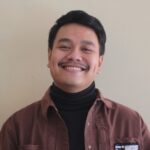
Gerry Junus
Gerry Junus
Gerry Junus is a curator and film programmer who currently serves as Program Director of KDM CINEMA, an alternative cinema initiative in Yogyakarta, Indonesia. In addition, he is also the program coordinator for Festival Film Dokumenter while organizing screenings with Klub Sinema Sisifus Salatiga. Gerry also conducts research on film festival practices and Southeast Asian cinema.
Film

- Best International Feature-length Documentary (2025)


Item 1
Jury
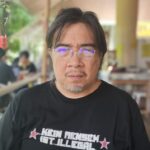
Dave Lumenta
Dave Lumenta
Dave Lumenta (1971) is an anthropologist at Universitas Indonesia. His main academic interest covers transnational mobility, borderland ethnography as well as Art practices. His other activities are focused on music and film music scoring with two Citra Award nominations for Seperti Dendam Rindu Harus Dibayar Tuntas (Edwin, 2022) and one for Kabut Berduri (Edwin, 2024). Two short documentaries were made from his research Borderless Borneo (2003, with Rhino Ariefiansyah) and Performing Out of Limbo (2018 with Rhino Ariefiansyah & Betharia Nurhadist).

Nia Dinata
Nia Dinata
Nia Dinata, born in Jakarta in 1970, studied Film in the U.S. before joining Indonesia’s post-1998 reform filmmakers. Her debut film, The Courtesan (2001) and the follow-up The Gathering (2003), tackled bold social themes. Love for Share (2006) confirmed her as a leading woman director, earning honors at Tribeca and Hawaii. A 2008 Eisenhower Fellow and 2009 Young Global Leader, she continues to inspire through the Kalyana Shira Foundation’s Project Change! workshops empowering new filmmakers.

Taichi Ishikawa
Taichi Ishikawa
Born in Tokyo, Taichi Ishikawa has primarily made independent fiction films since his student days and screened his work at numerous film festivals. His 2025 short film, The Shore of Empathy, screened internationally, including at the Raindance Film Festival in London. He has worked for YIDFF since 2019. TALK ROLL WHEEL is his first feature-length documentary.
Notes on Competition Program
Each film in the selection for FFD 2025 Competition program is recognized not only for its technical or aesthetic achievements, rather for its ability to…
Notes on Competition Program
Each film in the selection for FFD 2025 Competition program is recognized not only for its technical or aesthetic achievements, rather for its ability to ignite questions. These films give birth to knots in a larger conversation about the direction contemporary documentaries are moving in. What new forms are being tested at the intersection of the personal and the political? What ethical urgencies are the filmmakers trying to renegotiate when dealing with their protagonists?
Coming from different corners of cities and regions we may never have heard of before, this year’s Competition documentaries loudly express the spectrum of urgencies that the world is facing. In daring fashion, they challenge conventions and redefine the very meaning of documentary. In this regard, the FFD 2025 Competition strives to surpass its function as a ring to be a participatory listening booth.
From the diverse entries, this year’s selection process sifted through works with the most relevant, urgent, and diverse ideas. We aim to present a range of documentaries rich in method, texture, and perspective, reflecting the diversity of cinematic practices in today’s documentary ecosystem. From the observational to the poetic, from research-based to personal intimacy, the works in this program offer a starting point for unraveling the knots in conversations that will hopefully never end.
–Gerry Junus
Programmer
Gerry Junus
Gerry Junus
Gerry Junus is a curator and film programmer who currently serves as Program Director of KDM CINEMA, an alternative cinema initiative in Yogyakarta, Indonesia. In addition, he is also the program coordinator for Festival Film Dokumenter while organizing screenings with Klub Sinema Sisifus Salatiga. Gerry also conducts research on film festival practices and Southeast Asian cinema.
Film
- Best Indonesia Feature-length Documentary (2025)


Item 1
Jury

Jinna Lee
Jinna Lee
Jinna Lee is a programmer at Ulsan Ulju Mountain Film Festival (UMFF) since 2018. She finished the film studies PhD Course at Hanyang University. Before joining UMFF, since 2005 she has worked at several film festivals in Korea and served on several film festivals’ jury work. Moreover, she programmed several international-related programs.
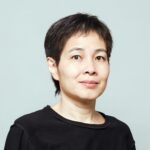
Tan Pin Pin
Tan Pin Pin
Tan Pin Pin is a Singapore artist and filmmaker for whom art-making is a means to understand herself and the place and time from where she has come. She is known for groundbreaking films about Singapore including Singapore GaGa (2005), Invisible City (2007), IN TIME TO COME (2017) and To Singapore, with Love (2013). She has had retrospectives at Montreal International Documentary Festival (RIDM), Dok Leipzig, and at the Flaherty Seminar.
Thomas Barker
Thomas Barker
Thomas Barker is an Honorary Associate Professor at the Australian National University. Previously, he was Head of School at the University of Nottingham Malaysia, and a visiting scholar at UCLA, National Chengchi University, National University of Singapore, and the National Library of Australia. He has served on the juries for the International Documentary Association and Freedom Film Festival Malaysia, and written for the Far East Film Festival. He has written extensively about the screen industries of Indonesia and Southeast Asia.
Notes on Competition Program
Each film in the selection for FFD 2025 Competition program is recognized not only for its technical or aesthetic achievements, rather for its ability to…
Notes on Competition Program
Each film in the selection for FFD 2025 Competition program is recognized not only for its technical or aesthetic achievements, rather for its ability to ignite questions. These films give birth to knots in a larger conversation about the direction contemporary documentaries are moving in. What new forms are being tested at the intersection of the personal and the political? What ethical urgencies are the filmmakers trying to renegotiate when dealing with their protagonists?
Coming from different corners of cities and regions we may never have heard of before, this year’s Competition documentaries loudly express the spectrum of urgencies that the world is facing. In daring fashion, they challenge conventions and redefine the very meaning of documentary. In this regard, the FFD 2025 Competition strives to surpass its function as a ring to be a participatory listening booth.
From the diverse entries, this year’s selection process sifted through works with the most relevant, urgent, and diverse ideas. We aim to present a range of documentaries rich in method, texture, and perspective, reflecting the diversity of cinematic practices in today’s documentary ecosystem. From the observational to the poetic, from research-based to personal intimacy, the works in this program offer a starting point for unraveling the knots in conversations that will hopefully never end.
–Gerry Junus
Programmer
Gerry Junus
Gerry Junus
Gerry Junus is a curator and film programmer who currently serves as Program Director of KDM CINEMA, an alternative cinema initiative in Yogyakarta, Indonesia. In addition, he is also the program coordinator for Festival Film Dokumenter while organizing screenings with Klub Sinema Sisifus Salatiga. Gerry also conducts research on film festival practices and Southeast Asian cinema.
Film


- Jury Special Mention (2025)
- Best Short Documentary (2025)


Item 1
Jury

Anna Har
Anna Har
Anna Har is deeply passionate about creating communities, connections, and a more just and equal world through films. She’s a festival organiser, a documentary producer, and a human rights advocate.
Risa Permanadeli
Risa Permanadeli
Risa Permanadeli is the Director of Center for Social Representations Studies and a graduate from École des Hautes Études en Sciences Sociales, Paris, France. She focuses her research activities to study the local social phenomenon such as power, women, urban movements, oral traditions, and ghost stories for identifying the socio-genetics of these phenomena in the non-modern/non-western society. Currently, she is a member of both Reseaux Mondial Serge Moscovici, France, and the international task force for Indigenous Psychology.
Taufiqurrahman Kifu
Taufiqurrahman Kifu
Taufiqurrahman Kifu is an interdisciplinary artist who has also curated several art exhibitions. Currently, he serves as a selector and curator at ARKIPEL – Jakarta International Documentary and Experimental Film Festival, and the Artistic Director for Festival Film Tengah in Palu. His film, A Tale of the Crocodile’s Twin (2022), received a Jury’s Special Mention at the Kurzfilmtage Oberhausen in 2023. The film has also been screened at various other international festivals and presented at several academic forums and cinema conferences.
Notes on Competition Program
Each film in the selection for FFD 2025 Competition program is recognized not only for its technical or aesthetic achievements, rather for its ability to…
Notes on Competition Program
Each film in the selection for FFD 2025 Competition program is recognized not only for its technical or aesthetic achievements, rather for its ability to ignite questions. These films give birth to knots in a larger conversation about the direction contemporary documentaries are moving in. What new forms are being tested at the intersection of the personal and the political? What ethical urgencies are the filmmakers trying to renegotiate when dealing with their protagonists?
Coming from different corners of cities and regions we may never have heard of before, this year’s Competition documentaries loudly express the spectrum of urgencies that the world is facing. In daring fashion, they challenge conventions and redefine the very meaning of documentary. In this regard, the FFD 2025 Competition strives to surpass its function as a ring to be a participatory listening booth.
From the diverse entries, this year’s selection process sifted through works with the most relevant, urgent, and diverse ideas. We aim to present a range of documentaries rich in method, texture, and perspective, reflecting the diversity of cinematic practices in today’s documentary ecosystem. From the observational to the poetic, from research-based to personal intimacy, the works in this program offer a starting point for unraveling the knots in conversations that will hopefully never end.
–Gerry Junus
Programmer
Gerry Junus
Gerry Junus
Gerry Junus is a curator and film programmer who currently serves as Program Director of KDM CINEMA, an alternative cinema initiative in Yogyakarta, Indonesia. In addition, he is also the program coordinator for Festival Film Dokumenter while organizing screenings with Klub Sinema Sisifus Salatiga. Gerry also conducts research on film festival practices and Southeast Asian cinema.
Film

- Jury Special Mention (2025)

Item 1
Program Note
Post-cinema
When cinema is no longer the dominant medium but rather a part of a more complex and digitally connected landscape, it gradually shapes our everyday…
Post-cinema
When cinema is no longer the dominant medium but rather a part of a more complex and digitally connected landscape, it gradually shapes our everyday experiences and common sense. The emergence of various digital media has transformed how films or videos are produced and consumed, creating new aesthetic experiences, and ushering us into an era where technology and culture together generate a new “structure of feeling,” as Steven Shaviro describes in his notion of post-cinema. The rise of artificial intelligence (AI) marks a period that invites prolonged meditation on the moving image itself.
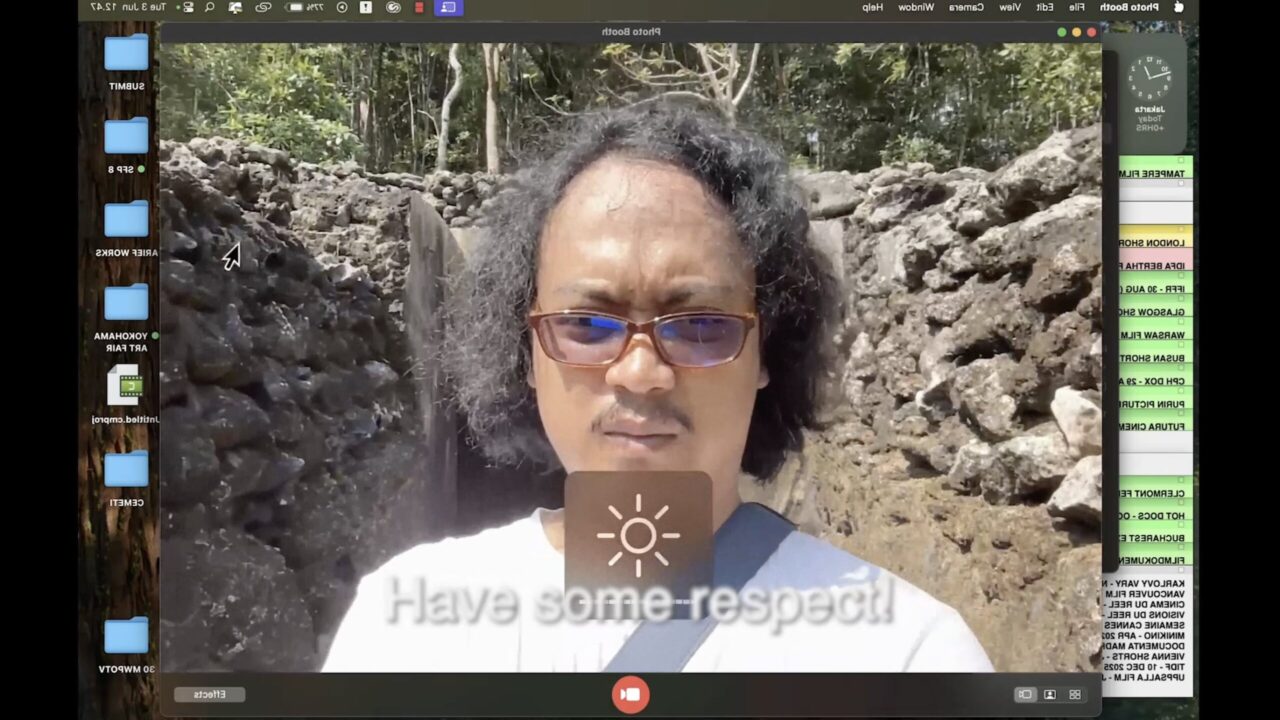
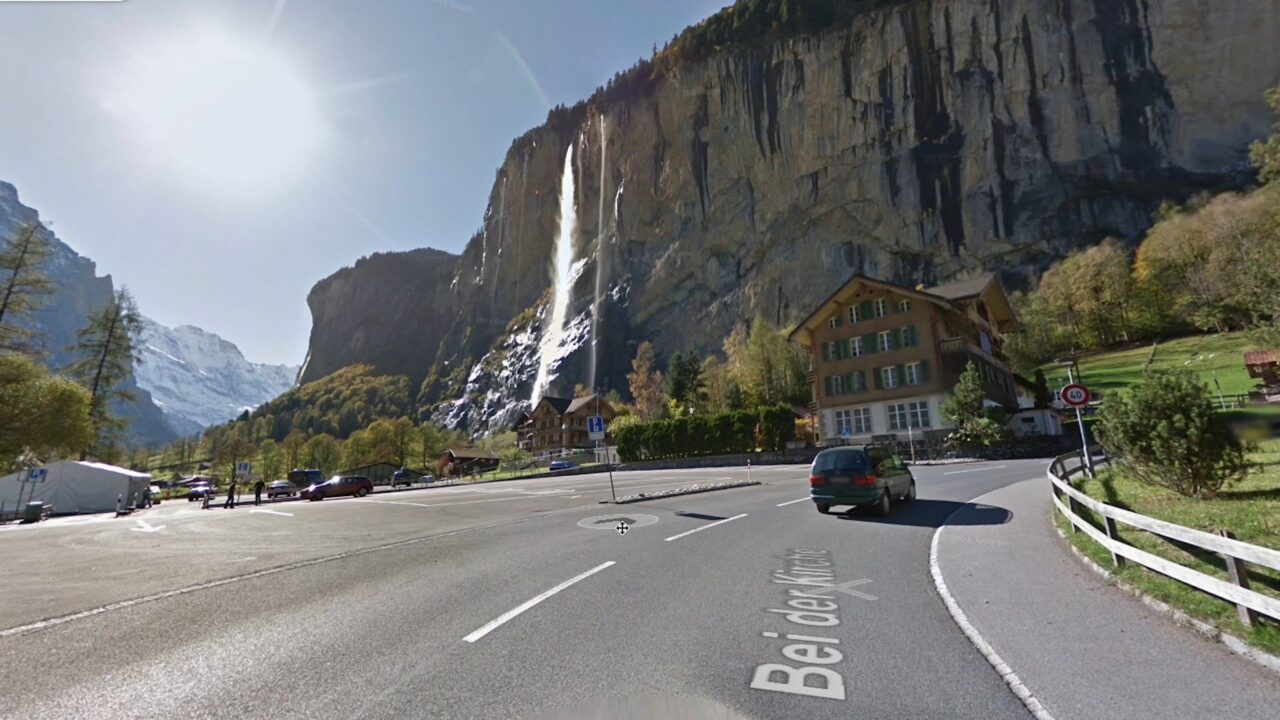
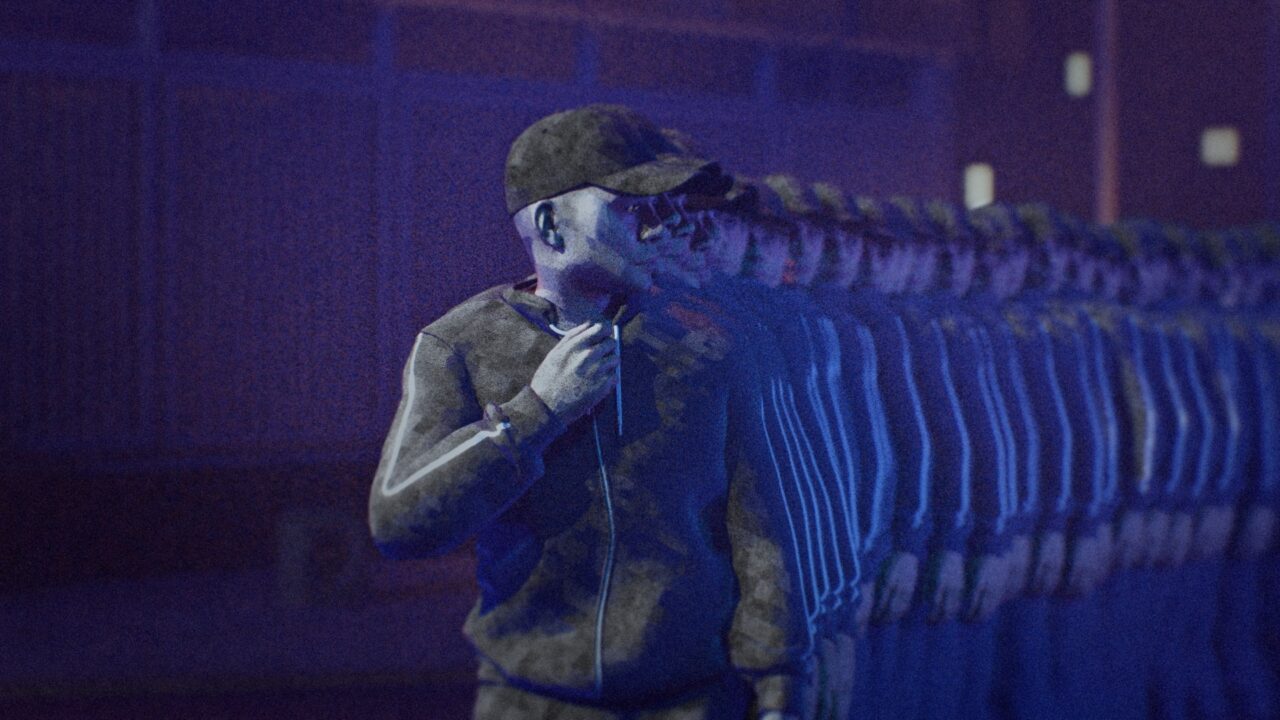
This year’s Perspektif program seeks to open discussions and examine various contemporary media practices as captured by filmmakers. Their Eyes (Nicolas Gourault, 2025) depicts how workers in the Global South train AI technologies by annotating objects in photos or videos. They are the invisible workers behind the technologies that allow self-driving cars to navigate in the Global North. The encounters and journeys within the network, through a satirical montage of images from Google Street View in Machine Vacations (Hadafi Raihan Karim, 2025), shift the behavior of internet users from conventional search engines to certain algorithms that are not easily separated. Closed-circuit television (CCTV), a continuously evolving security feature, captures 15 frames per second, while a bullet fired by the police is recorded for only 67 milliseconds. The CCTV footage in Sixty-seven Milliseconds (Fleuryfontaine, 2025) adds a precise sense of realism without diminishing the film’s investigative elements, blending early cinema techniques of chrono photography with CGI. These three films surpass the conventional concept of production using film cameras, as if inviting us to redefine the documentary form in the post-cinema era.
Four artists explore the use of various kinds of “cameras” in the narrative reconstruction Ep.10 Reality Sandwich: Jogja Chronicles (Ho Bin Kim, 2025), which questions our understanding while examining the very shifts expressed in its story. Elsewhere in the world, The Orchards (Antoine Chapon, 2025) takes us to the memory of a district in Damascus, Syria that is razed to the ground as punishment as their citizens rebel against the ruling regime. In this film, former residents are confronted with a computer displaying a new 3D model of their district, filled with political graffiti as an act of remembering their crusade.
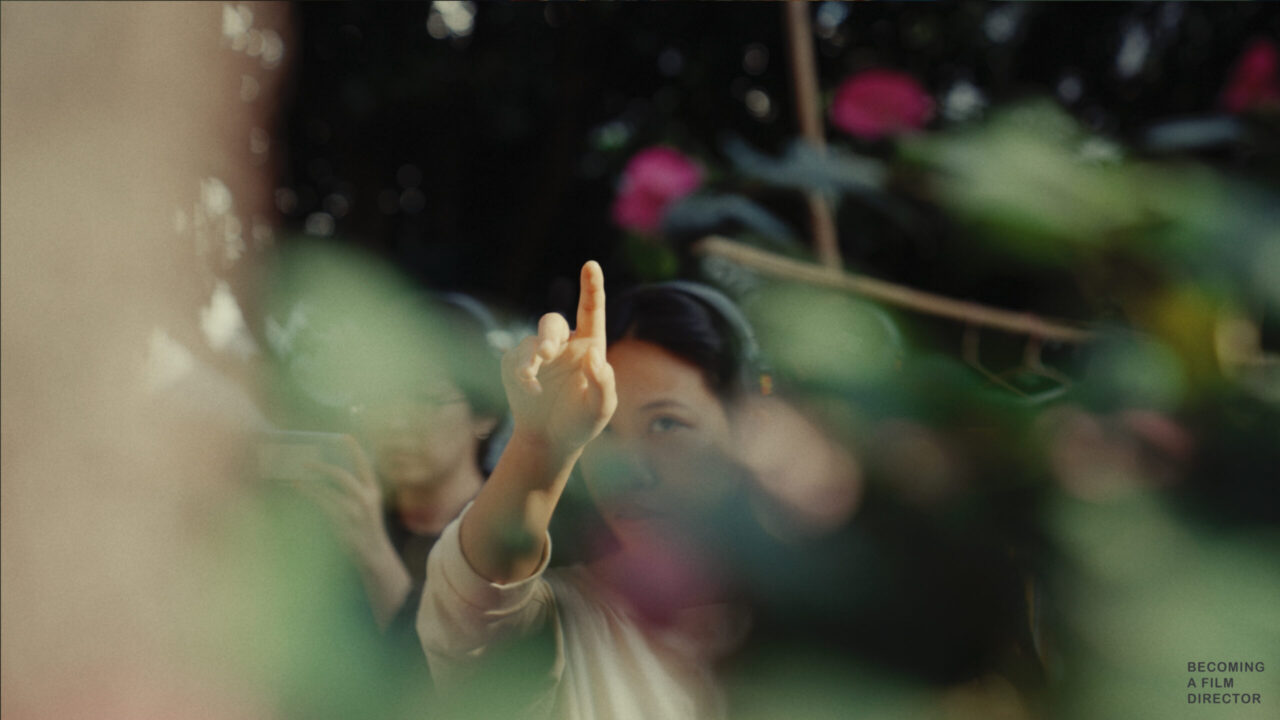
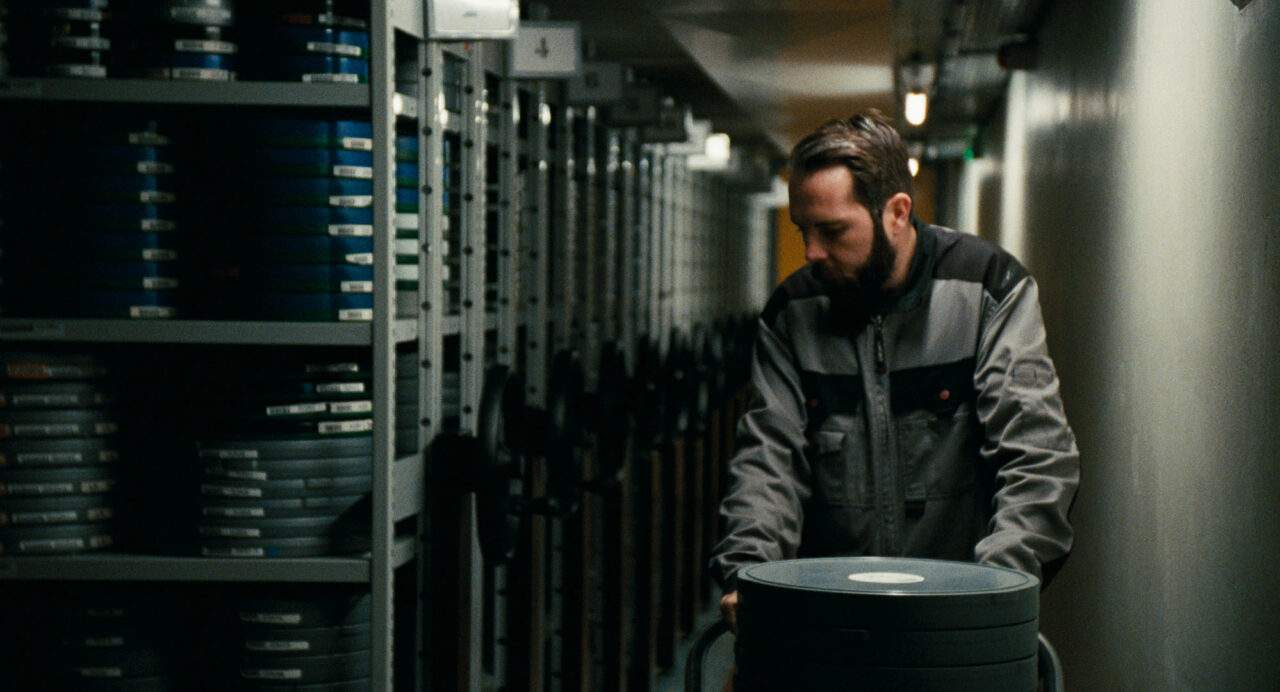
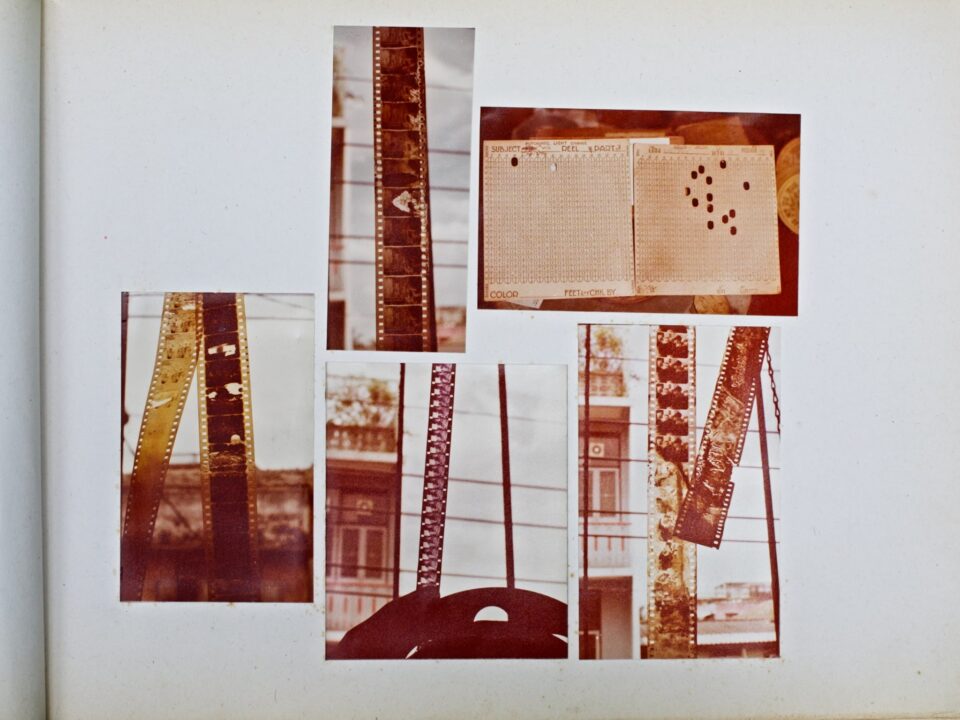
This era of post-cinema does not simply abandon the products and practices of conventional cinema that have persisted for more than a century. This program also aims to offer a compilation of stories that preserve cinema’s continuing breath through conventional trajectories. In recent years, feminism has gained significant attention in China, coinciding with rising awareness among women and their struggles, as portrayed in Becoming a Film Director (Rongfei Guo, 2025), which offers a new perspective and invites reflection on a journey fraught with challenges. Another struggle is presented in Series of Actions (Chanasorn Chaikitiporn, 2024), which traces the origins of film archiving in Thailand, intricately linked to its sociopolitical networks. Through its exploration of Dome Sukvong, the founder of the Thai Film Archive, this film reminds us of the vital role that film archiving and activation play in a nation’s civilization. As if the symphonies of a city in the 1920s, Few More Centuries (Raphaël Martin-Dumazer, 2025) portrays the restoration process of a 35mm film, documenting cinema’s iconic locations across France. This short film reveals clever processes, integrating the technical, whilst also questioning the future of film preservation.
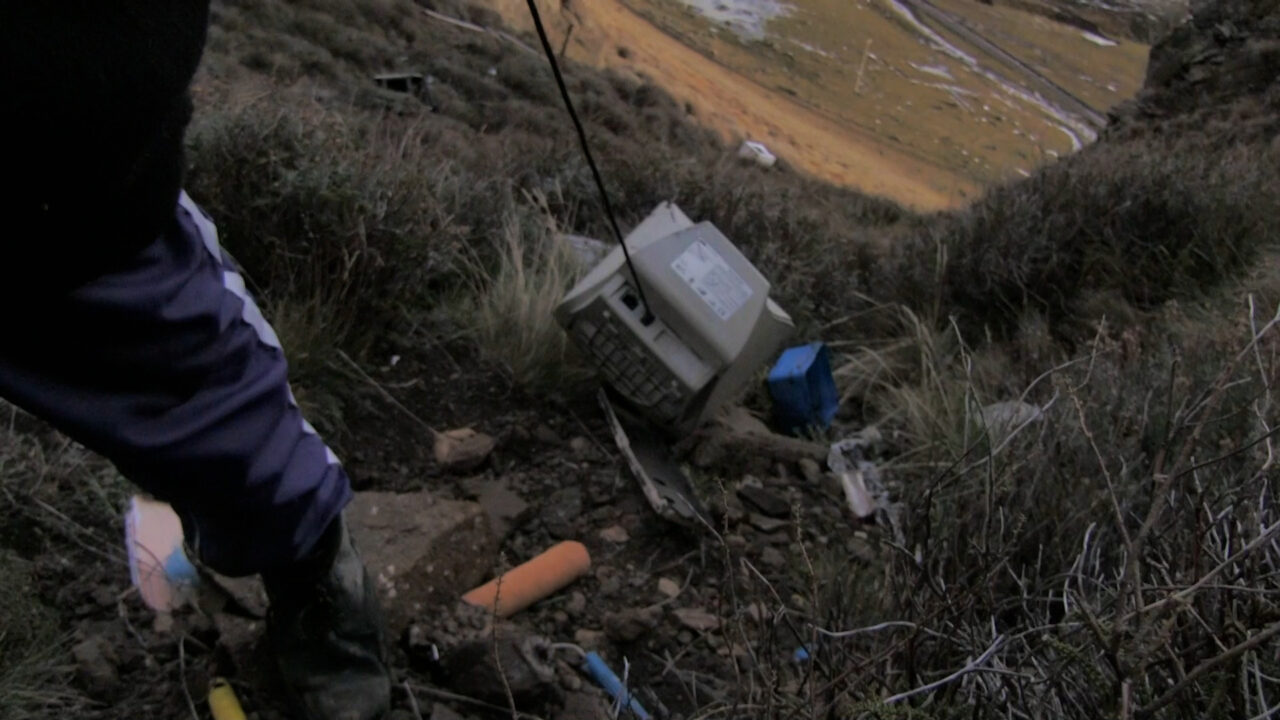
The New Ruins (Manuel Embalse, 2024) takes us on a long reflection on what and how post-cinema manifests not only on the screen, but beyond it; by portraying obsessions which explore the connections between electronic wastes that records image, technology, and memory. Technological advancements inescapably affect the quickening pace of our lives, and this film transforms into a cheerful, musical personal diary that traverses its own boundaries and archival praxis itself. This reading does not aim to overstep our definition of post-cinema as practiced today, nor to abandon conventional cinema, but rather to refer to new modes of production, exhibition, as far as shaping new aesthetic experiences.
–Irham Nur Anshari
Programmer
Programmer
Irham Nur Anshari
Irham Nur Anshari
Irham Nur Anshari is a lecturer in Communication Studies Department, Universitas Gadjah Mada, Indonesia. He is currently a PhD candidate in Film Studies at King’s College London, United Kingdom. His research explores the intersection between cinema and contemporary art.
Item 1
Program Note
O Ghosts of the World, Arise!
In a climate where the ruling regime aims to rewrite history to fit its narrative, I would like to preface this program with a few…
O Ghosts of the World, Arise!
In a climate where the ruling regime aims to rewrite history to fit its narrative, I would like to preface this program with a few questions.
What if we were to start by returning to the essence of storytelling?
What if we were to see that every story is worth telling?
What if we were to write the truth rather than record it
Then, what if we free ourselves to tell stories more imaginatively about anything and using various forms or approaches to storytelling?
In other words, what if we see subjectivity as a method, and of course without compromising respect for the truth?
Reading You (Angeline Teh, 2023), L’Mina (Randa Maroufi, 2025), Lion’s wrinkle and Crow’s feet (Juliette Léonard, 2024), The Flow of Resilience (Pranami Koch, 2024), My Grandmother is a Skydiver (Polina Piddubna, 2025), Apoleon (Amir Youssef, 2024), Last May in Theaters (Arief Budiman, 2025), and Sharp Objects (Taufiqurrahman Kifu, Hattie Wade; 2025) have answered and transcended those questions. Their makers believe that the past is never truly disappear. It is always there, just buried somewhere, like ghosts waiting to be rediscovered.
These ghosts of the past can be both present and absent. They take the form of fragments in various shapes and sizes: videos or film footage, objects, sounds, faded photographs, written archives, or incomplete and blurred pieces of memory, like ghosts that creep into narratives that are not always chronological and/or presented as facts.
The ghosts of the past are presented to us as an attempt to evoke an affectual experience. They are presented not to show what happened in the past as a completely factual truth, but as a way of remembering or feeling the past as truth. Can it then fill the gaps or cracks in the spectrum of the greater narrative and become a counter-perspective to the narrative constructed by those in power? I think this will be inevitable if we manage to arouse the ghosts of the past.
–Wimo A. Bayang
Programmer
Programmer
Wimo Ambala Bayang
Wimo Ambala Bayang
Wimo Ambala Bayang is an artist and co-founder of Ruang MES 56, based in Yogyakarta, Indonesia. Working across photography, film, video, objects, and painting, he explores how images shape our understanding of memory and reality.


Item 1
Program Note
Jalan Raya Pos and Memoranda to Death
As the film unfolds, Pramoedya Ananta Toer recounts the history of Jalan Raya Pos, along with stories of his experiences in prison and his books,…
Jalan Raya Pos and Memoranda to Death
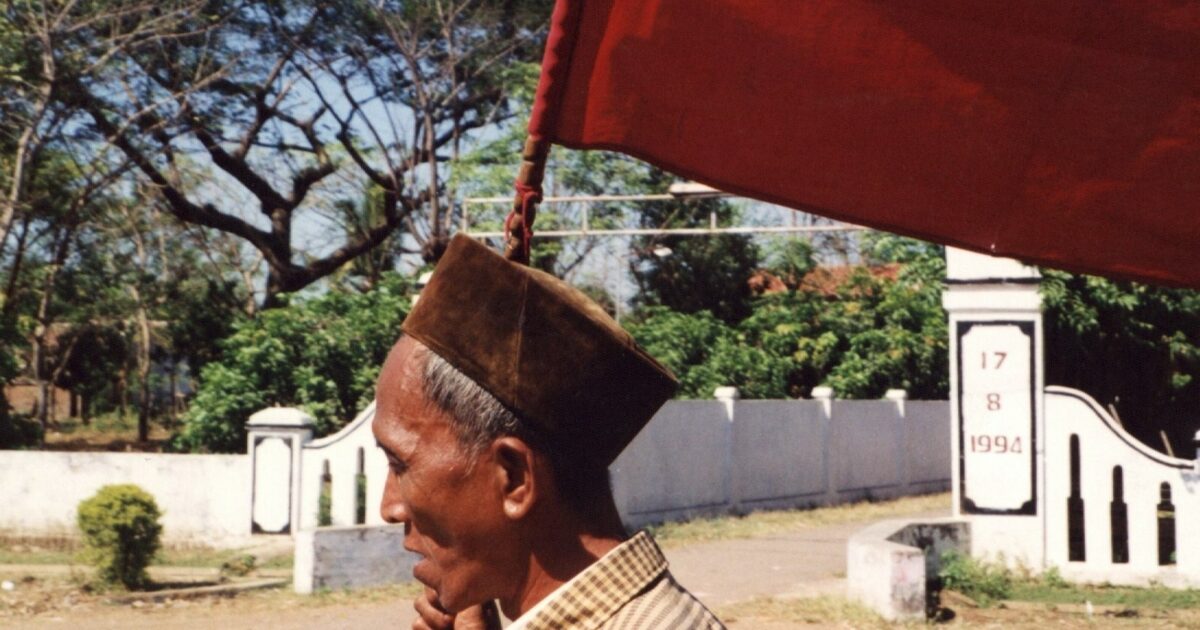
As the film unfolds, Pramoedya Ananta Toer recounts the history of Jalan Raya Pos, along with stories of his experiences in prison and his books, which were frequently banned from being read. Jalan Raya Pos (Bernie IJdis, 1996) depicts Indonesia at the tail end of the New Order. His optimism is no longer roaring. Skepticism and critical attitudes emerge in the various responses of the sources, who either flatter the New Order or oppose it. The images are almost like those in the news, cold and expressionless. People speak to the camera with white people shoved in front of them. In those days, it took guts to even answer a foreigner’s questions. Even though it looks “overly conventional documentary”, it still manages to expose the arrogance of New Order developmentalism by comparing it to the Daendels post road project; nothing more and nothing less than a repetitive colonialism.
Pramoedya himself is portrayed as a puppet master, providing depth by adding details along with context. Jalan Raya Pos was made in 1996, on the eve of the economic crisis that would bring down the New Order regime, which at the beginning of its establishment was envisioned as a beacon of hope. It was the antithesis of the previous order, which was considered chaotic and turbulent. A utopia that in this film is turned on its head into a dystopia, at least according to the voices of some of the people who were recorded in it.
Dystopia and utopia are often perceived as binary opposites. However, the films in this program have proven otherwise. There is no dystopia without utopia. The two coexist, superimposed upon each other. They are constructs created in an effort to see what is novel and advanced, replacing the old. It is a perspective that seems to view eras or periods as negating one another.
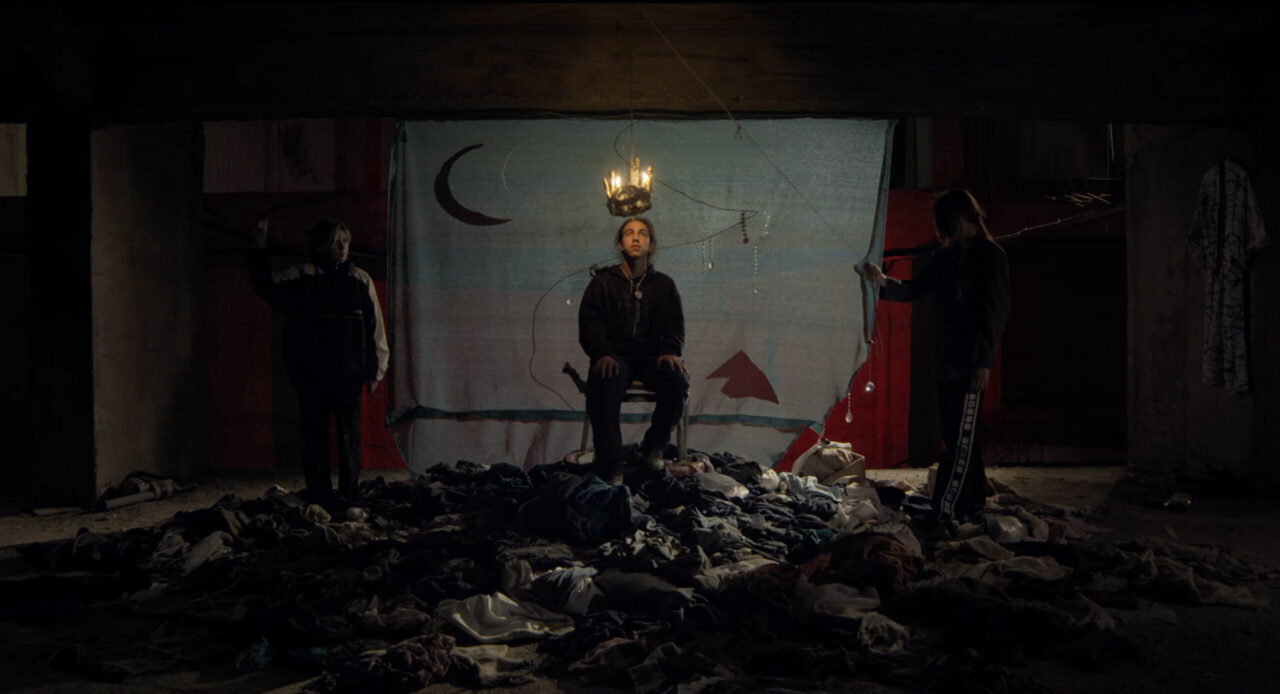
The city of Tbilisi is dark and gloomy. Ruins of buildings, street lights, and dimly lit alleys fill the entire film. The protagonist is neither male nor female, just living life in the midst of COVID. The pandemic has killed the city. Activity has come to a standstill. Marginalized transgender groups have even less space to gather. Defeated, they are not considered important enough for a city in a coma. Gamodi (Felix Kalmenson, 2023) is a journey that forces us to see the nocturnal life of the transgender community through its two protagonists. Slow, somewhat tedious, yet compelling in its details—graffiti, broken streetlights, and half-finished buildings. Darkness consumes the film, revealing the era’s context without needing much to say.
Setting cleanliness on the map by equating the originally noble natives with monkeys, i.e., beings without any cleanliness norms. Filthy. Unworthy of enjoying the utopia of the garden master. Cast out into the gutter. Cleaning & Cleansing (Thomas Fürhapter, 2024) is a testament to how cleanliness and the act of cleaning are sacred work. Its meticulousness is interpreted as a sign of the cross or stigmata, sacred and must not be tarnished. “This is a suitable job for someone who has killed someone,” a cleaner in the film mutters, cursing at the stain on the floor that won’t go away.
Any stains are unfit to exist in today’s world. Thus, civilization spends billions of dollars to wash its hands, not only from any stains, but also from the unspoken guilt of civilization. The act of cleaning and cleansing in this film actually reveals the face of civilization, showing that washing hands is not as noble as it seems. This trivial act actually has a dark history. Washing hands is not just about cleanliness; it also involves history and the reversal of such history.
Che is dead in Bolivia, shot by American-trained special forces. The war against communism is being waged across the globe. Latin America is one of its centers, and Che Guevara is a stain that must be cleaned and sterilized, not with soap, but with 5.56 mm bullets. As the bullets tore through his stomach, he may have briefly recalled the letters he had written to his friends. Death seized his memories faster than any reply could arrive, but this film immortalizes his final journey to death. Beautiful scenery, shuffling city streets and beaches, interspersed with security camera footage, illustrate Commander Che’s soliloquy. This documentary tends to express the unspoken through a series of collages. While the images and the text could stand alone, they have a peculiar connection. The images lull us to sleep, while the narrative repeatedly wakes us up.
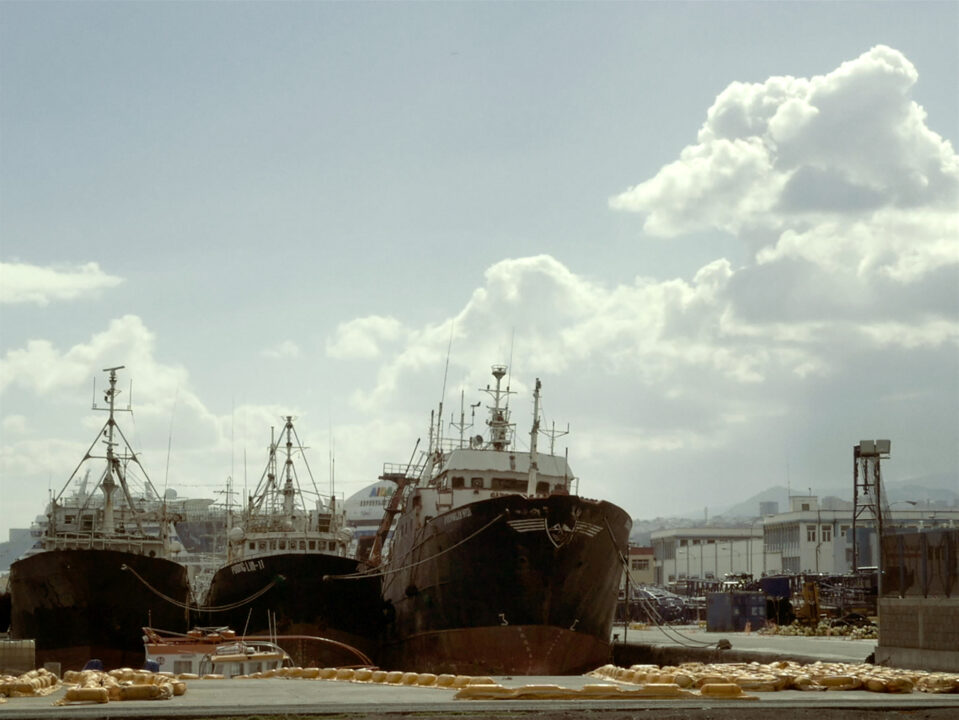
It ends with an exuberant music. A long text follows, yet the entire film is a narrative about the final journey of a group of leftist fighters towards death. Whether swept away by floodwaters or being shot. Their interactions, despair, and relationships with soldiers and farmers are valuable documentative notes worth hearing, with or without images in Glass Bottom Ferry. On Border and Submerged Utopias (Chus Domínguez, 2025).
The connection between images and narration in some of these films has its own dramatic situation. Are the images and narration connected, or do they stand alone? Some films are loud with very little narration, while others are full of images with strong narration battling each other.
Watching a documentary film is like listening to thousands of complaints. Our job as viewers is to listen carefully. Even so, with or without images that are well connected, they still appear as reasoning filled with clear political attitudes. It is at this point that documentaries become valuable accounts. Leaving fiction films far behind, crumpled in a trash can filled with gimmicky ghosts and market domestication. Documentaries speak—or more accurately, whimper–just like Commander Che when the army captured him: weary and wistful yet still respectful of the world that antagonized him.
–Agung Kurniawan
Programmer
Programmer
Agung Kurniawan
Agung Kurniawan
Agung Kurniawan (or commonly known as Agung Leak) was born on March 14, 1968 in Jember, East Java. Since the 90s, he has been active in the art scene. As an artist, Agung uses many media in making his art. He makes drawings, comics, installations, and puppets. Agung has an interest with diverse themes from taboo or sensitive issues, such as genocide, politics, women, and transgender.


Item 1
Program Note
Turang, People, and Decolonial Cinema
Turang (1957), a film by Bachtiar Siagian (1923–2002), was rediscovered around 2023. Following extensive searches and even reenactments inviting audiences to imagine the lost film…
Turang, People, and Decolonial Cinema
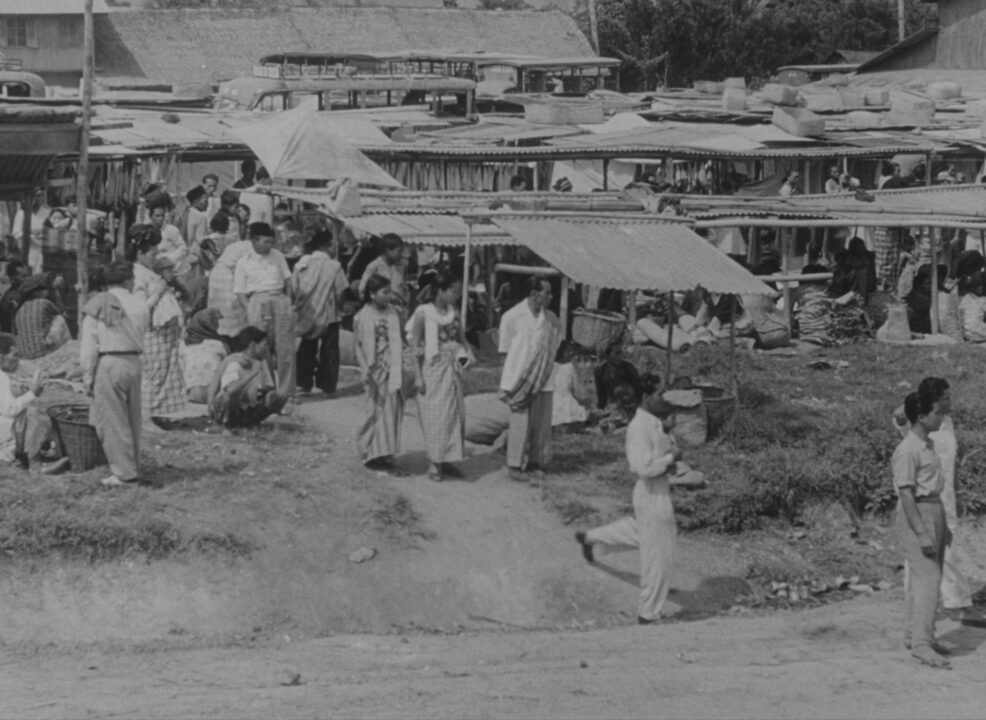
Turang (1957), a film by Bachtiar Siagian (1923–2002), was rediscovered around 2023. Following extensive searches and even reenactments inviting audiences to imagine the lost film archives of Indonesian filmmakers, the rediscovery of Turang (1957) is not only a revelation but also an encounter, particularly with director Bachtiar Siagian, as a part of Indonesian cinema’s historical heritage and diversity.
In the past, Bachtiar Siagian experienced discrimination and became a political prisoner, which resulted in many of the works of this left-wing director being lost and immediately erased from the history of Indonesian cinema. However, at the time, Turang held an important place in the history of Indonesian cinema. Its premiere was even held at Istana Negara (lit. State Palace) in Jakarta. The film also won an award at Pekan Apresiasi Film Nasional (lit. National Film Appreciation Week), which would later become the Festival Film Indonesia (FFI) in 1960.
Turang was found in the Taschen film archive in Uzbekistan when it was screened at the first Afro-Asian Film Festival (AAFF) held in the former Soviet Union in 1958 as a cultural agenda continuing the fervor of decolonization at the Asian-African Conference in Bandung, Indonesia, in 1955. When it was screened in Taschen, Turang became a popular film. “The audience at the Iskra Theater, which was packed to the brim, stared at the screen with bated breath,” said poet and translator Mikhail Kurgantsev, “…where a ray of sunlight slowly crossed the motionless faces of Rusli and Tipi. The sun rose over the blood-soaked land of Indonesia. A haunting and heart-wrenching song began, then faded into the distance,” (Elena Razlogova, 2021:117).
Turang’s discovery is not a repatriation of historical objects, but a kind of “homecoming” and reunion. The spirit of Turang, which embodies civic spirit, both as a player and as a character, is also Turang’s “homecoming” initiated by Indonesian cinema enthusiasts.
The film’s location, shot in Seberaya and Kabanjahe, Karo, North Sumatra, is a “real” backdrop depicting the struggle for independence that took place across Indonesia. The role of the villagers, both as actors and narrators, illustrates that it was not only the military but also people from all corners of the archipelago who fought for Indonesia’s independence.
The landscape markers in Turang, which takes place in the villages of Tanah Karo, show the diversity of local landscapes in Indonesian cinema at that time. This diversity is important considering that at that time, Java was still the central focus of Indonesian cinema, as seen in the film Anak Perawan di Sarang Penyamun (Usmar Ismail, 1962), which depicts a story set in the forests between Lahat and Pasemah, Palembang, but was actually filmed in forests in Java. The landscape in Turang is certainly not just a space, but also how it is brought to life by the actors, who are also the locals. Several long takes in Turang seem to celebrate Indonesianness, which is also consistent in other scenes, such as the scene where Rusli is shot, filled with traditional rituals from Tana Karo as part of how the landscape in cinema is brought to life by the residents who play in it.
“Pil Kina Bandung,” is how Bachtiar Siagian responds to the discourse on political ideologies and global cinema that is unique to Indonesia. Pil Kina is a metaphor for bitter medicine, while Bandung is a beautiful landscape and romantic narrative, representing Bachtiar Siagian’s decolonial practice in cinema. Turang is about the struggle of the Karo people to defend Indonesia’s independence, which was full of pain and sorrow, but it is packaged in beautiful natural landscapes and romanticism.
In its production context, Turang cannot be separated from the dominance of Hollywood melodramas at the time and the spirit of socialism against colonial domination. The discovery of Turang seems to uphold the right to life, especially the right to film archives, as part of Indonesian identity itself. In Walter Benjamin’s dialectical image, it does not mean that the past illuminates the present, or that the present illuminates the past; rather, the image is a place where what has happened meets the present in an instant to form a constellation. Through the image, the relationship between the two is a temporal one. Turang’s homecoming is not archaic, but forms a fresh constellation of how the role of “people” in its spatiality decolonizes the history of cinema and temporal Indonesianness.
–Akbar Yumni
Programmer
Programmer
Akbar Yumni
Akbar Yumni
Akbar Yumni attended Sekolah Tinggi Filsafat Driyarkara (Driyarkara College of Philosophy) in Jakarta. He was the curator of ARKIPEL – Jakarta International Documentary and Experimental Film Festival (2013–2018) and is active as a researcher and performance artist. Some of his performances are based on Indonesian film archives that were lost during the authoritarian regime, including Menonton “Turang” (1957), Menonton “Daerah Hilang” (1956), and Menonton “Sedap Malam” (1951). Currently, Akbar is a member of the theater committee of Dewan Kesenian Jakarta (Jakarta Arts Council) for 2023–2026.
Film
Item 1
Program Note
The Disruption of the Personal
Unlike “conventional” cinema, which utilizes reality as a representation to support its narrative, in documentary cinema, the utilization and presence of reality is open to…
The Disruption of the Personal
Unlike “conventional” cinema, which utilizes reality as a representation to support its narrative, in documentary cinema, the utilization and presence of reality is open to discussion and can be rearranged, processed, manipulated, and so on, while seeking opportunities for the filmmaker’s personal presence to view reality in a fresher light. This personal element becomes a strong marker, as we often emphasize in cinema. However, perhaps most importantly, the repetition of the term “personal” in this cinematic work is a political interruption, which, in Jacques Ranciere’s framework of thinking, is to change or at least disrupt the order of “the sensible,” “the unseen,” “the unheard,” and so on, to make the invisible and inaudible part of the order so that they become visible and audible.
Within this framework, documentary cinema becomes political as it does not only lead to a specific cinematic approach, but the notion of documentary is often referred to as capturing space in an undivided state when it is filled with bodies and objects whose identities have not been placed within a predetermined order. Hence, it is a kind of raw reality that still has its own autonomy, unlike fictional cinema, where the meaning of space and its bodily inhabitants has been divided and distributed into a certain order of meaning and connected to a specific social setting. Unlike fictional cinema, which tends to be pedagogical, documentary cinema seems to imply a certain equivalence since the possibilities of presenting space and bodies in a particular configuration are widely open.
The potential for equivalency in documentary cinema is indirectly influenced by the development of increasingly personalized technology and media. As documentary cinema tends to be personal and intimate, its unpredictability and diversity increasingly reach the complexity and expansion of the reality surrounding humans. The development of digital media technology has indeed celebrated personality. However, the next question, when the “ unseen” and “ unheard” take part in the existing order, forming a new order, is how documentary cinema can continue to provide expansion, unpredictability, complexity, to be continuously defended in a festival, just as equality, according to Ranciere himself, is a situation that is continuously presupposed, and not a purpose.
–Akbar Yumni
Programmer
Akbar Yumni
Akbar Yumni
Akbar Yumni attended Sekolah Tinggi Filsafat Driyarkara (Driyarkara College of Philosophy) in Jakarta. He was the curator of ARKIPEL – Jakarta International Documentary and Experimental Film Festival (2013–2018) and is active as a researcher and performance artist. Some of his performances are based on Indonesian film archives that were lost during the authoritarian regime, including Menonton “Turang” (1957), Menonton “Daerah Hilang” (1956), and Menonton “Sedap Malam” (1951). Currently, Akbar is a member of the theater committee of Dewan Kesenian Jakarta (Jakarta Arts Council) for 2023–2026.


Item 1
Program Note
Finding Macondo in Semi-Fictional Films
The reiteration of literature into film is a monumental task. These two media offer many similarities as well as striking contrasts. Literary reality processes visual…
Finding Macondo in Semi-Fictional Films
The reiteration of literature into film is a monumental task. These two media offer many similarities as well as striking contrasts. Literary reality processes visual narratives absorbed by the author into a series of precise textual descriptions, from which corresponding images are expected to emerge. Conversely, in film, visualization through a series of images, editing, framing, and photographic angles is designed to achieve consistency or “controlled inconsistency” of the textual narrative being reiterated.
The matter becomes even more complicated when it comes to today’s film media. The director’s reluctance to comply with the adapted literary text becomes a way to assess whether a film is successful or not. It is a kind of tug-of-war strategy that requires considerable skill and craftsmanship in order to not fall into mediocrity.
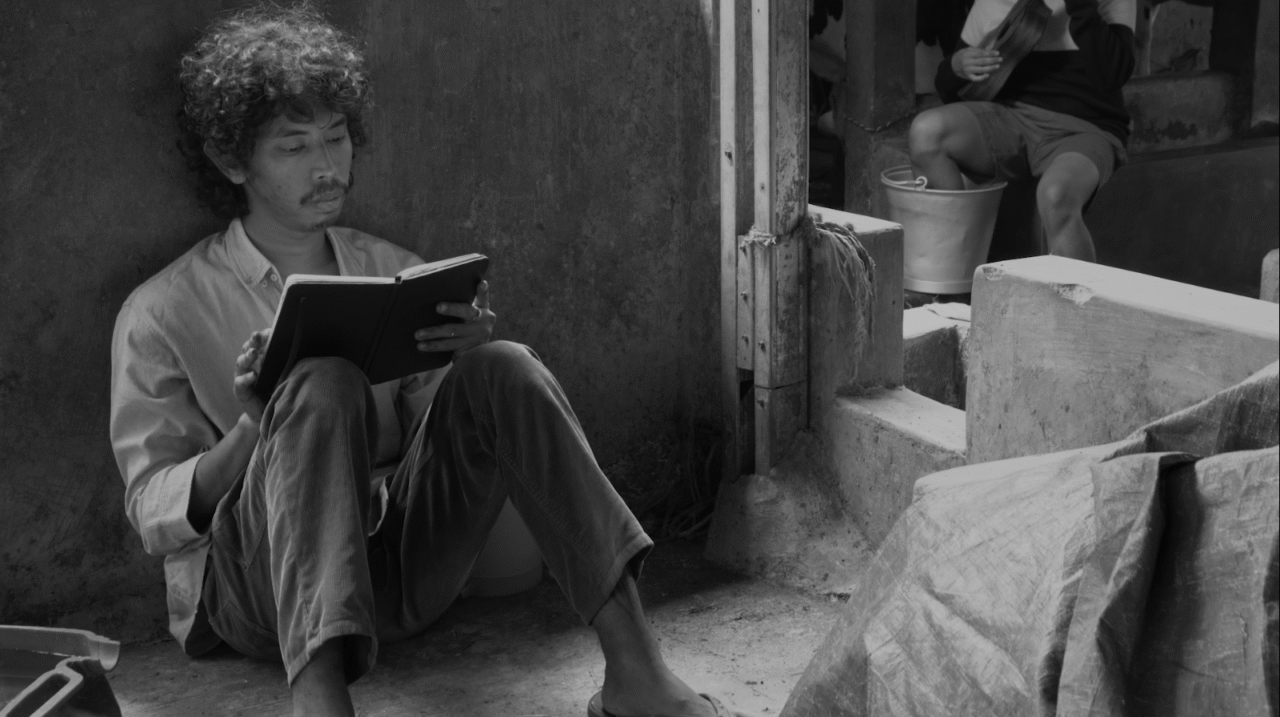
All that tension—if we can call it that—is evident in Nobody Ever Dies Here (Fachri Ghazali, 2025), Pen Sword (Zahra Zulya, 2025), House (Kayla Miska, 2025), In Melquiades Room: Causa-Prima (Rafael Marius, 2025), Inline Align (Shelvira Alyya, 2025), and The Cow (Misbahul Khoir, 2025), which were crafted for them to reiterate, and thus produce a new compound that may merely leave traces of its textual literary narrative. As charcoal drawings on Padalarang paper, the images and depictions are created in dense contrast so that the texture and its lightness and darkness are very pronounced. The images, which are occasionally blurry, resemble the dussel technique in drawing, giving them volume and depth.
In In Melquiades Room: Causa-Prima, the character who rises from the dead is seen through the trinkets in their “house”. Things are collected and perhaps given names, simply to stave off the epidemic of dementia that will plague the city. However, this “picture film” allows us to enjoy it without having to read the thick book. They have written their own book. It doesn’t have to be, and perhaps shouldn’t be, linked to Gabriel García Márquez. In this film, Gabo is merely words and names without a past or context.
The pleasure in watching these films is to witness a rebirth. Melquíades (indeed) died in Singapore, but he rises again in these films to become something.
Something else.
–Agung Kurniawan
Programmer
Agung Kurniawan
Agung Kurniawan
Agung Kurniawan (or commonly known as Agung Leak) was born on March 14, 1968 in Jember, East Java. Since the 90s, he has been active in the art scene. As an artist, Agung uses many media in making his art. He makes drawings, comics, installations, and puppets. Agung has an interest with diverse themes from taboo or sensitive issues, such as genocide, politics, women, and transgender.


Item 1
Program Note
Mo(nu)ment
The camera that lacks respect for human beings distorts the truth. If these principles are respected, there is no objection to the meticulous reconstitution or…
Mo(nu)ment
The camera that lacks respect for human beings distorts the truth. If these principles are respected, there is no objection to the meticulous reconstitution or staging of scenes. –– Henry Storck
A camera’s ubiquity is always intertwined with power, ideas, and choices about what lies before it. Through their agency, filmmakers frame, edit, and interpret what is captured and ultimately inscribed. What we see on screen is not a plain mirror of reality but a reflection shaped by the filmmaker’s hand. Yet the camera can also trap us into stopping at who is portrayed, instead of asking what is truly at stake.
Globally, documentary funding and festivals tend to favor narratives anchored in figures. Prominence is often seen as the quickest way to draw attention, especially when a film seeks to address larger issues. A strong figure is too easily assumed to equal a strong story. This tendency has also become a fixture of documentary production in Indonesia today. As a result, many films walk a fine line between becoming profiles that celebrate individual achievements and narratives that carve space to interrogate the circumstances around them. The who often overshadows the what. Audience may leave the cinema in awe, but not always with an understanding of the conditions, structures, or systems that shaped the character. In this situation, perhaps we need to question our position as filmmakers and audience: what is lost when the spotlight stops at the figure?
The filmmaker’s agency in positioning the camera plays a decisive role in shaping a narrative’s direction. Every frame and cut is not merely a technical choice, but a decision that asserts a perspective. Through these choices, the filmmaker opens a space of interpretation for the audience. Rather than stopping at the who, a film can invite us to read, to experience, and even to question the narrative it presents. Are we simply watching a group of women weaving in See a Mother, a Wife, and a Weaver (Suharditia Trisna Anugerah, 2025)? Or can we encounter NH Dini beyond the adoring gaze of those who loved her in NH Dini (Ardian Parasto, 2024)? Perhaps we are also being asked to dive deeper into what emerges in The Silenced Soil (Dara Asia, 2025) or The Last Accord: War, Apocalypse, and Peace (Arfan Sabran, 2025).
Figure-centric documentaries are not destined for glorification alone. On the contrary, they can challenge us to look past the surface, to engage with what lies beyond the figure on screen. If a camera that respects its subjects can render reality, then perhaps our responsibility as audience is to question the moment it turns them into a monument.
–Vanis
Programmer
Programmer

Vanis
Vanis
Vanis is active in Yogyakarta’s film scene through various functions in public relations, communications, film programming, and festival management. She oversees the organization’s communications strategy while promoting Forum Film Dokumenter’s programs, as well as its engagement with the public, communities, and broader networks. Her experience in communications and exhibition work shapes her approach to stimulating public discourse on documentaries and related issues.

Item 1
Program Note
Site-making
Site remains an essential–if not enduring–aspect of cinema. Site shapes cinema’s form, and cinema redefines our perception of site. Here, site does not appear as…
Site-making
Site remains an essential–if not enduring–aspect of cinema. Site shapes cinema’s form, and cinema redefines our perception of site. Here, site does not appear as a representation–as something shown as it is–but instead undergoes a process of making and performing through filmic practices. This programme, which consists of five films, asks the audience to problematise the meaning of site by looking at how site is made.
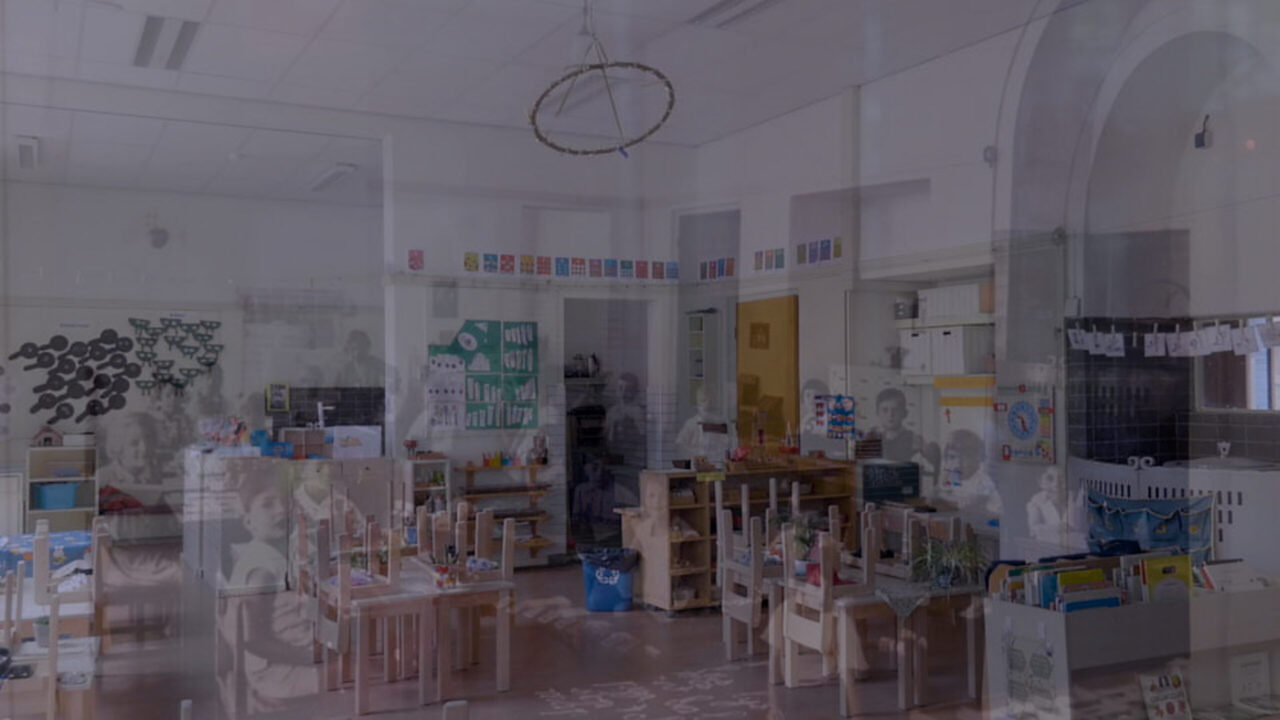
The first film, Images of Tunisia (Younès Ben Slimane, 2025), remaps the site of Tozeur, Tunisia, previously occupied by France. The film takes French colonial archives that record the site then abruptly juxtaposes them with present-day handheld recordings of walking around the site. By sensing the site through bodily movements such as pacing and turning, the film creates a new sketch that counters the colonial gaze. The colonial gaze extracts what it sees, whereas the film takes that extract and melts it, returning the site to the realm of lived experience mediated by both human and camera. Meanwhile, a site with a story of the past is a site grounded in familiarity and unfamiliarity. In Statues Rule the Waves (Noah Berhitu, 2024), a Dutch-Moluccan filmmaker visits her ancestors’ land in Ambon, Indonesia. The film treats its filmmaking process as a journey of processing the site. For the filmmaker, to process a site is to translate it, consequently facing the risk of experiencing losses in translation. It is an honest process that does not attempt to cover up the barriers and cracks that arise from the history of colonialisation.
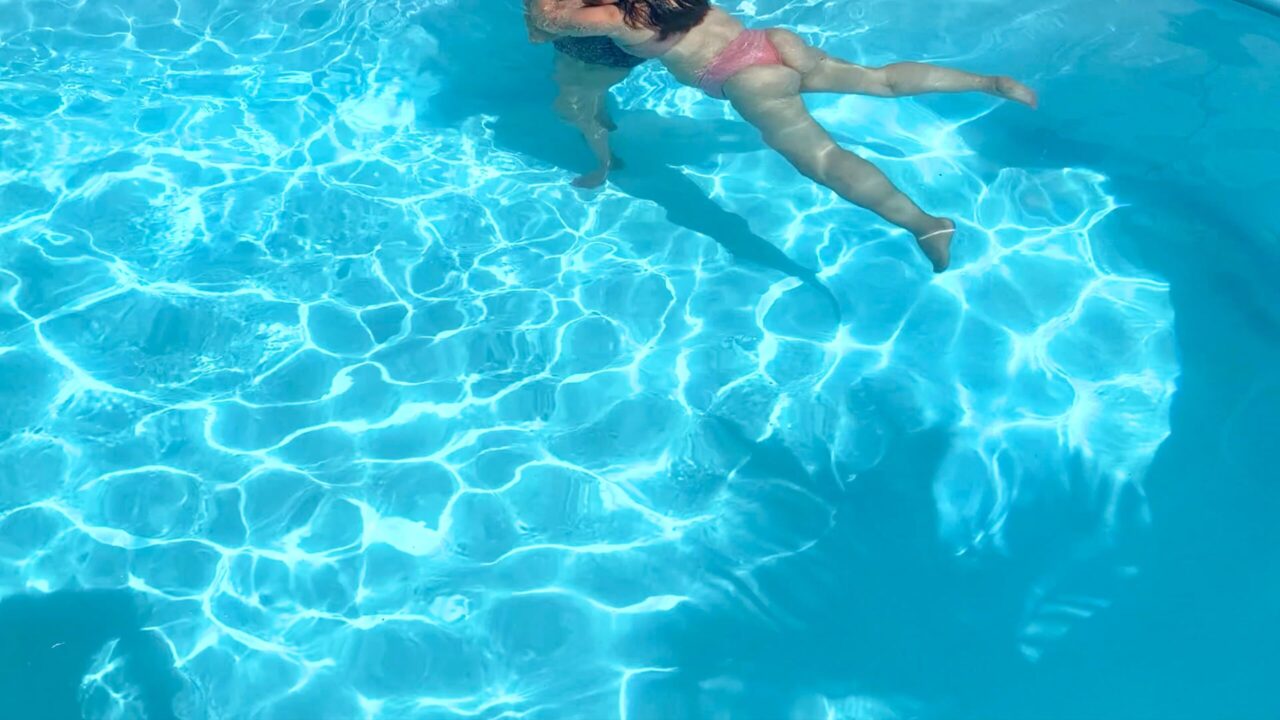
In Dissipate (Victor Laet, 2024), site begins to shift in meaning. The camera looks at a swimming pool; people swim in and out of the frame, talking and humming idly. Through the long take, site is no longer just a place but a situation that is framed. The swimming pool is a site in material sense, and framing turns that material site into one that now exists specifically in the filmic sense, with temporal and spatial dimensions. The swimming pool in the film is a swimming pool that is made, and given a life, precisely because of the practice of framing.
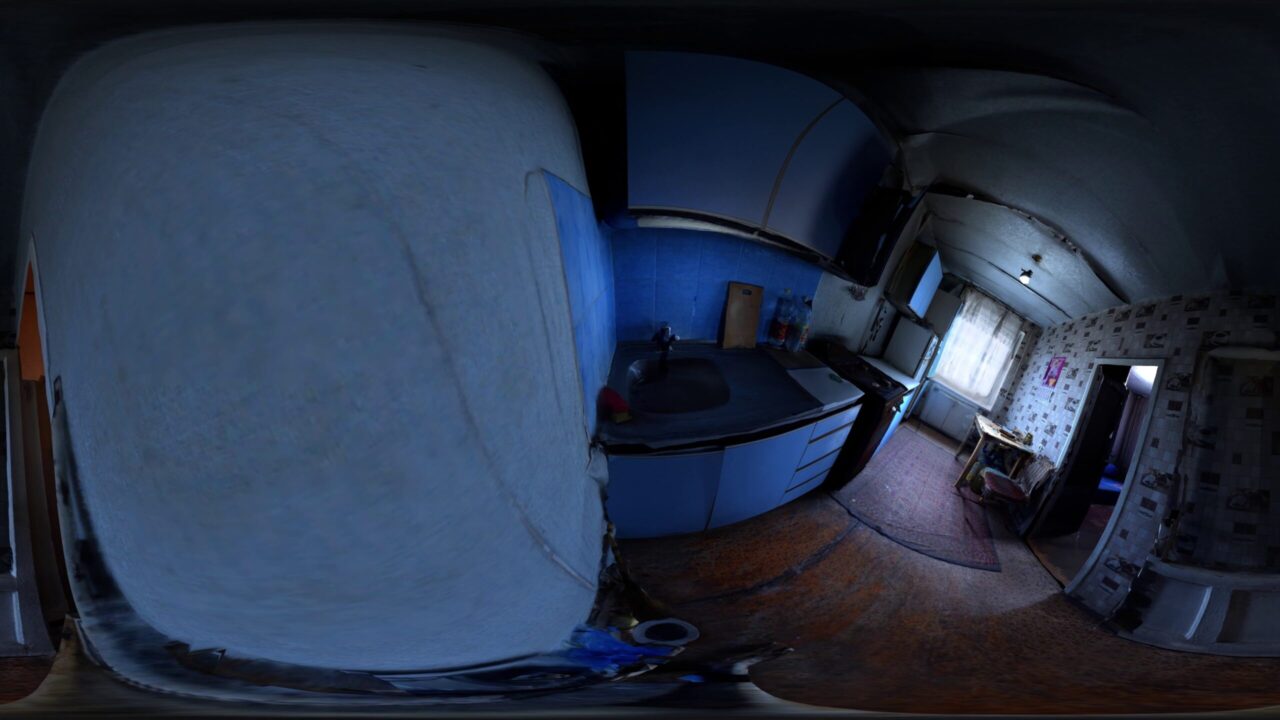
In site-making, the sense of site itself can be unstable. Rapture I – Visit (Alisa Berger, 2025) demonstrates this tension when a man, standing in a dark room, is asked to wear a virtual reality headset and revisits his apartment, which is not physically accessible due to Russia’s invasion. Meanwhile, the camera observes the man moving around the dark room with the headset on, recounting the memory of the place as he experiences the virtual world. The apartment, made virtual and non-virtual, then resides in the cognitive realm, where it is defined and redefined–constantly in a state of tension because of its fluidity.
Lastly, there is also a site that cannot be articulated, as it does not exist as a material and/or conceptual site. Mountain Roars (Pobwarat Maprasob, Chonchanok Thanatteepwong; 2024) pieces together a story about a cave with a principle that the universe and its agents are bound by mystical relations. Unlike its predecessors, this film’s artistic tactic is not rooted in language and logic, but rather in a hybrid of magic and science. The site appears as something that cannot be and refuses to be represented, and through the film, the site becomes translucent. Transmitted, diffused, not exactly what it seems, yet it is what it is.
Site is not fixed and always in the making–made, remade, unmade. Cinema empties and refills it, playing its role in shaping spatial practice and imagination.
–Valencia Winata
Programmer
Programmer
Valencia Winata
Valencia Winata
Valencia Winata is a film researcher who has made several short videos. Since 2024, she has been part of the selection committee for ARKIPEL – Jakarta International Documentary and Experimental Film Festival. She was also part of the database team at Forum Film Dokumenter, Yogyakarta, that manages Indonesia’s documentary film collection. She is currently continuing her education in Cultural Studies at Universitas Sanata Dharma. Her research focuses on film history, aesthetics, and culture.
Item 1
Program Note
How to Say Something Without Speaking
In Southeast Asia, to speak directly and criticise the authorities is to be subject to severe prosecution. To mitigate this, we have learned to speak…
How to Say Something Without Speaking
In Southeast Asia, to speak directly and criticise the authorities is to be subject to severe prosecution. To mitigate this, we have learned to speak around a subject, refer to it and shape it, without having to address it directly. Our programme, How to Say Something Without Speaking, brings together films from across the region that examine and propose a variety of methods on how to speak up for yourself and your rights without compromising on your safety.
Developed as part of the Teka-teki Sinema film programming workshop hosted by FFD earlier this year, we are further addressing the position of the witnesses of history. In an age of live-streamed genocide, war, and mindless doom-scrolling, is it still enough to bear witness? In this context, we are particularly drawn to the haptic effects of sound, which demands of the viewer to engage beyond vision and engage films physiologically. By centering haptic sound, we propose a means of engaging with films beyond vision and into a totality of sensorial experience towards re-engagement with our world.
–Sasha Han, Shelma Feraniza, Yosua Imantaka
Programmer
Programmer

Sasha Han
Sasha Han
Sasha Han is a film writer and programmer interested in the circulation of images in Southeast Asia and its potential for resistance. She has been part of critics labs in Locarno Film Festival, Far East Film Festival and the Singapore International Film Festival. Her writing has been published by the Asian Film Archive, Documentary Magazine, Film Comment, Literary Hub, MARG1N Magazine and Mekong Review. She has presented film programmes at Queer East Film Festival, London, and Festival Film Dokumenter, Indonesia. In 2025, she co-founded CORRESPONDENCE, a film publication based in Singapore.

Shelma Feraniza
Shelma Feraniza
As a film enthusiast who enjoys exploring art, culture, and creativity, Shelma Feraniza spends her time participating in film-related projects and events. She aims to deepen her understanding of cinema and share film appreciation with a wider audience.
Yosua Imantaka
Yosua Imantaka
Yosua Imantaka is a Program Officer at In-docs, an organization dedicated to supporting Asian documentary film ecosystem. He has been part of Docs by the Sea, a documentary film lab and forum based in Indonesia, while also involved in film festivals and community screenings programming.

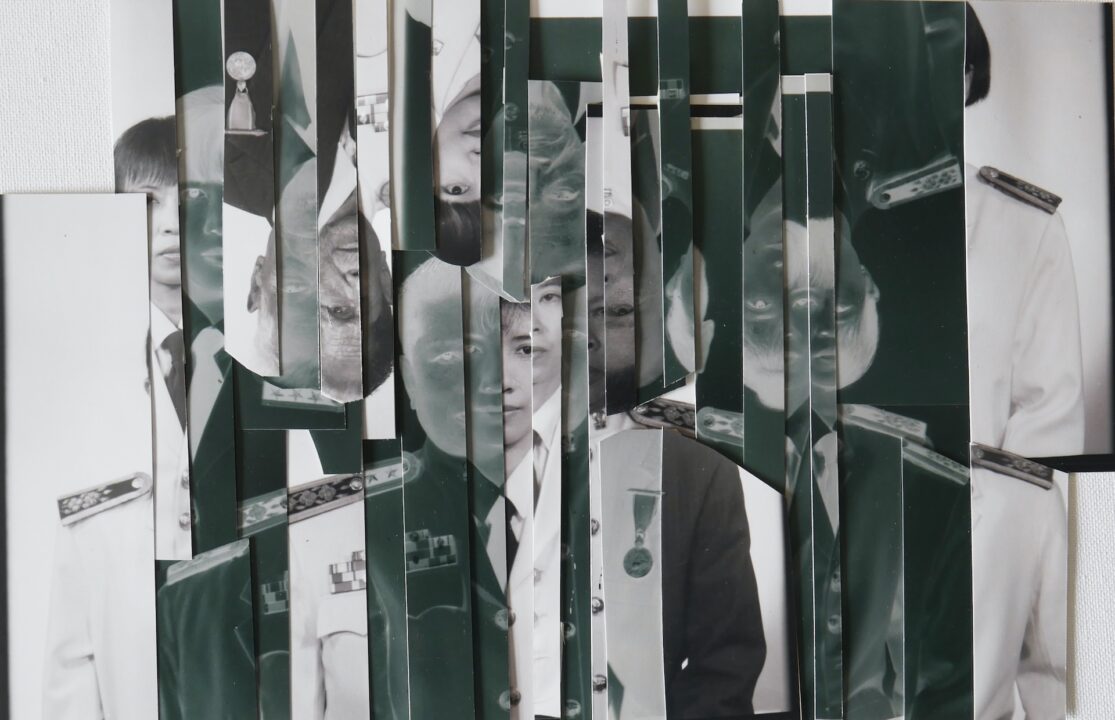
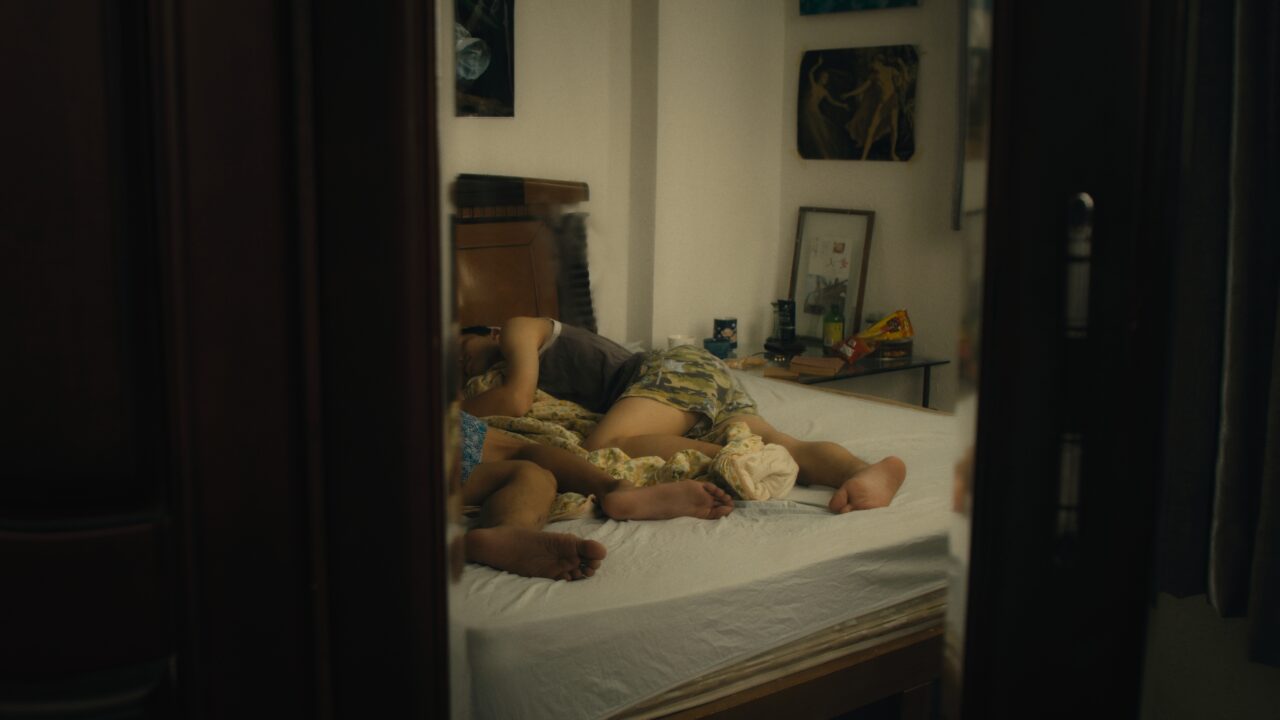

Item 1
Program Note
Fresh Voices, Bold Visions
The Ulsan Ulju Mountain Film Festival (UMFF) has been commissioning four short documentaries annually since 2018 under the banner UMFFmentary. Each year, the UMFF selects…
Fresh Voices, Bold Visions
The Ulsan Ulju Mountain Film Festival (UMFF) has been commissioning four short documentaries annually since 2018 under the banner UMFFmentary. Each year, the UMFF selects production proposals from filmmakers who, under the guidance of veteran documentary directors, create short documentaries capturing diverse stories from Ulsan City. These films premiere at the festival before traveling to other film festivals.
As a festival deeply connected to its region, UMFF is dedicated to community engagement and to introducing mountain cinema and cultural diversity to local audiences. This year at FFD, four UMFFmentary shorts present fresh perspectives on life in Ulsan from emerging filmmakers.
Director Yu So-young’s Water Celery exemplifies the observational documentary form, following Lee Jung-ae, who has devoted her life to cultivating water dropwort and vending it from a street stall. Another work, The Time of Yeast, centers on “nuruk” (a fermentation starter essential to makgeolli production), which demands time-intensive cultivation of nuruk mold. This documentary seamlessly weaves together the lives of local artisans who craft it with the director’s own creative journey.
The subsequent film, Welcome to New World, traces the start and current trajectories of cultural producers working in Ulsan. Functioning simultaneously as both an autobiographical meditation on life as a screening programmer and a self-affirming work, this documentary could resonate particularly with cultural organizers beyond Yogyakarta throughout Indonesia’s diverse regions.
Finally, Ulsan Vulture, this year’s production by a husband-and-wife directorial team, is a short documentary featuring young steppe vultures from Mongolia that migrate to Ulsan annually. The film is structured around the various individuals who safeguard, observe, and advocate for these majestic creatures.
Though all debut works, FFD presents these films with conviction for their technical accomplishment, craftsmanship, and the authentic documentary ethos they embody.
–Jinna Lee
Programmer
Jinna Lee
Jinna Lee
Jinna Lee is a programmer at Ulsan Ulju Mountain Film Festival (UMFF) since 2018. She finished the film studies PhD Course at Hanyang University. Before joining UMFF, since 2005 she has worked at several film festivals in Korea and served on several film festivals’ jury work. Moreover, she programmed several international-related programs.


Item 1
Program Note
A Chronicle
Behind the camera that allows events to unfold naturally, a warm portrait, touching, full of patience and respect about relationships as a sine qua non…
A Chronicle
Behind the camera that allows events to unfold naturally, a warm portrait, touching, full of patience and respect about relationships as a sine qua non process; between a domestic issue, a broken appliance, and psychiatric conditions in their homes. Fixing objects is used as a metaphor for repairing people’s lives and helping them find meaning. The Typewriter and Other Headaches (Nicolas Philibert, 2024) offers time and space for meandering conversations, internal monologues, complex relationships, unexpected things, and long silences.
This film is presented in Le Mois du film Documentaire program, an annual event in France and around the world, initiated by Image en Bibliothèque. Throughout the month of November, various film screenings are held at cultural, educational, and social institutions to promote creative documentary film.
–Margaux Nemmouchi, Alia Damaihati
Programmer
Programmer
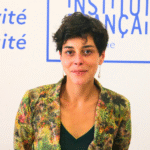
Margaux Nemmouchi
Margaux Nemmouchi
Margaux Nemmouchi is the director of the French Institute in Yogyakarta. For more than 10 years, she has been working in the cultural sector in France as Cultural Director of Labo des Histoires, Delegate of the Marcel Bleustein Blanchet Foundation, in Ivory Coast as the Project Manager for the Abidjan Art Festival and Madagascar as a Director of the French Alliance in Ambositra.

Alia Damaihati
Alia Damaihati
For two decades, Alia Damaihati has been involved in developing various programs for Forum Film Dokumenter. Her work focuses on managing film programs and exhibitions, and her experience has led her to participate in various forums, festivals, and documentary networks in Indonesia and internationally. Alia plays a key role in program development and in mapping documentary trends, which serve as the foundation for the organization’s various initiatives. She currently serves as Program Director of Festival Film Dokumenter.

Item 1
Event
- Detail
- Idak-Idak-Idak
- Sharp Objects
- The Stone That Remembers
Thursday, 27 Nov 25, 13:00 WIB(2h 30min)Kedai Kebun Forum - DetailSunday, 23 Nov 25, 15:00 WIB(2h)Langgeng Art Foundation
- DetailThursday, 27 Nov 25, 15:00 WIB(2h)Langgeng Art Foundation
- DetailMonday, 24 Nov 25, 15:00 WIB(2h)Langgeng Art Foundation
- DetailSaturday, 22 Nov 25, 13:00 WIB(2h 30min)Kedai Kebun Forum
- DetailSaturday, 22 Nov 25, 15:00 WIB(2h)Langgeng Art Foundation
- DetailTuesday, 25 Nov 25, 15:00 WIB(2h)Langgeng Art Foundation
- DetailSunday, 23 Nov 25, 13:00 WIB(2h 30min)Kedai Kebun Forum
Item 1
Item 1
Event
- Detail21 Nov - 27 Dec 25, 13:00 - 17:00 WIB(1bulan 6hari)Cemeti - Institute for Art and Society
Festival Info
Collaborating Artist
Tehato
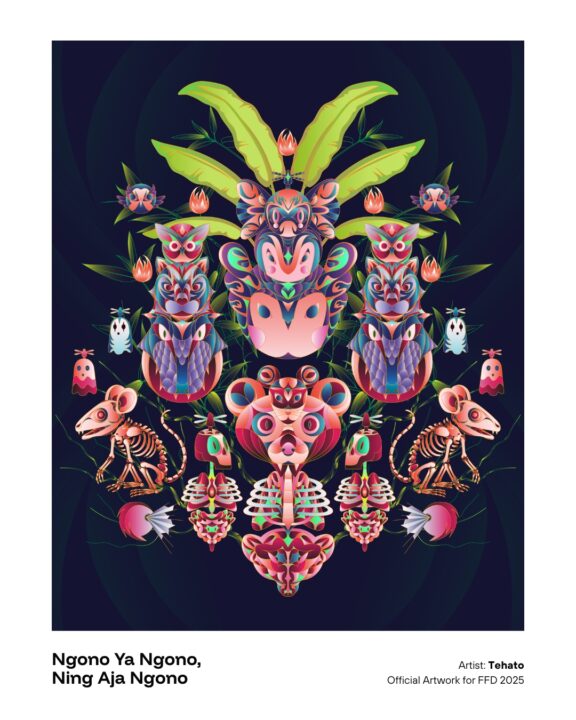
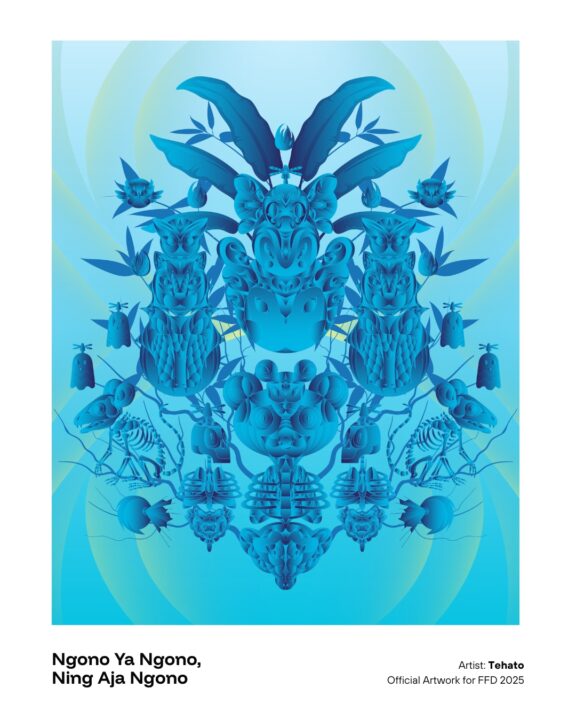
Ngono Ya Ngono, Ning Aja Ngono
This artwork aims to depict utopian and dystopian landscapes in response to the relationship between humans and nature, as well as the overlapping role of myths and modern perspectives. The characters in this work are not merely meant to entertain, but serve as a medium to deliver the inherited ideas and values. They represent the relationship between humankind and its natural surroundings, as well as the virtues and vices inherent in human nature, such as valor, strength, wisdom, deceit, and greed.
Ngono Ya Ngono, Ning Aja Ngono (lit. it is so, but don’t be so) invites us to look back to the land, remembering that behind every pledge of growth, there are always traces of progress left behind. It reflects on how humans build, destroy, and perhaps one day, return to what was once considered merely a backdrop: the earth itself.

Tehato
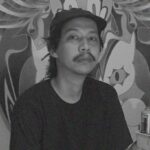
Tehato is an artist and graphic designer based in Yogyakarta, Indonesia. His work transforms folk tales, history, myths, and social issues into decorative visual figures. He participated in Seniman Pasca Terampil residency (2020) at Padepokan Seni Bagong Kussudiardja (PSBK). Tehato has been actively involved in various exhibitions, including Ancient Indonesian Military Conquest at Erasmus Huis Jakarta (2019), Excursion at the National Gallery (2019), Melipat Senjang at PSBK (2020), and Timelapse at Museum Benteng Vredeburg (2023).

Arif Furqan
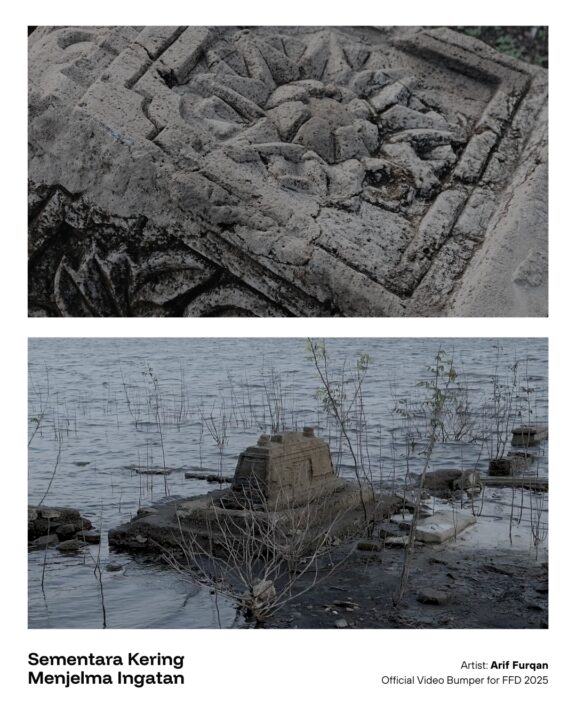
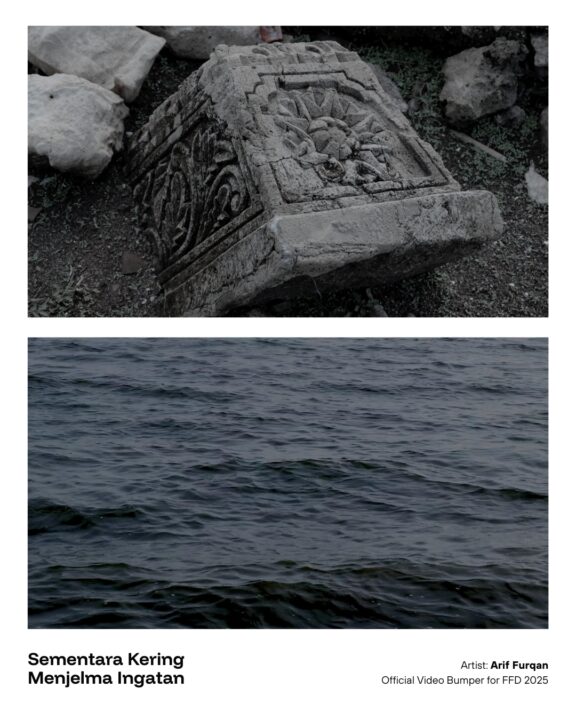
Sementara Kering Menjelma Ingatan
One of my most vivid childhood memories is a 1990s calendar featuring images of green hills and a dam in Wonogiri. Behind this beautiful image lies the story of dozens of submerged villages and the displacement of thousands of people for the sake of development. Today, at the bottom of the dam, graves and remnants of civilization emerge when the water recedes—becoming temporary monuments that will eventually sink back into the water along with the memories and stories associated with them.
This work is adapted from the audiovisual installation Yang Timbul dan Tenggelam serta Ingatan yang Terukir pada Air (2025), inspired by the phenomena and stories surrounding Waduk Gajah Mungkur (Gajah Mungkur Reservoir). This short video raises the issue of the mechanism of memory, which often relies on distance, form, and materiality—on the remains, objects, and traces that are visible on the surface.
The rites of ebb and flow reveal the remains of a civilization hidden at the bottom of the dam, but also erode and submerge it. Memories are trapped in transience: waiting to disappear in the stagnant water, or vanishing along with the fragile materials that uphold them.

Arif Furqan
Visual artist based in Yogyakarta, Indonesia. Arif Furqan’s practice examines the complex intersections of memory, history, and identity. Through various mediums; photography, archiving practice and research, and installation, his work centers on intimate domestic narratives and the fragile mechanisms through which memory is preserved and transmitted. In 2021, he was awarded the Prince Claus Seed Award for Unhistoried, an artistic and research project exploring Indonesian family archives from the New Order regime.
Statistics
- 0Film submission
- 0Film screened
- 0Audiences
- 0Volunteer
- 0Partners