

Festival Film Dokumenter 2021
Awards
- Best Short Documentary
- Best International Feature-length Documentary
- Jury Special Mention
- Best Student Documentary
- Jury Special Mention
- Best Indonesia Feature-length Documentary
Program
- International Feature-Length Competition
- Indonesia Feature-Length Competition
- Short Competition
- Student Competition
- Perspektif
- Retrospektif: Chris Marker
- Spektrum
- Lanskap
- Le Mois du Film Documentaire
Item 1
Jury
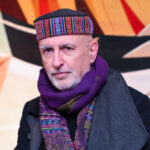
Gabriel Soucheyre
Gabriel Soucheyre
Gabriel Soucheyre is the director of VIDEOFORMES, International Digital Arts Festival in Clermont-Ferrand since 1986, and the VIDEOFORMES Digital Archive. Editor of Turbulences Video (video art and Digital Culture quarterly magazine). Curator for VIDEOFORMES Galerie. Participates in many national and international events as curator or jury member. Former teacher at Université Clermont Auvergne, Clermont-Ferrand. Video and digital art producer, vlogger and videomaker.
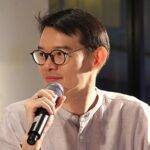
Sanchai Chotirosseranee
Sanchai Chotirosseranee
Sanchai Chotirosseranee is the deputy director of the Thai Film Archive (Public Organization). He holds a Bachelor’s degree from the Faculty of Journalism and Mass Communication, Thammasat University, Thailand, and a Master of Arts in Film Studies from the University of East Anglia in the United Kingdom.

Varadila Nurdin
Varadila Nurdin
Varadila Nurdin is a curator, film programmer, and specialist in documentary project development. She is an ex-program director for Docs by the Sea, worked with In-Docs, Jakarta International Film Festival, Minikino, and Erasmus Huis. She has served as a member of the selection committee, panel speaker, moderator, pitch trainer, and juror for international and regional film festivals including Sheffield DocFest, Open City Documentary Festival, Nordisk Panorama Forum, Festival Film Dokumenter, and Luang Prabang Film Festival.
Competition Program Note
For 20 years straight, FFD’s Competition program has been the main course that is held consistently. This year is the third year for the competition…
Competition Program Note
For 20 years straight, FFD’s Competition program has been the main course that is held consistently. This year is the third year for the competition program to present four categories: International Feature-length Documentary, Indonesian Feature-length Documentary, Short Documentary, and Student Documentary. Through the Competition program, we keep trying to organize a place for documentary films from around the world as a reflective medium for responding to issues around us critically and delivered in a creative documentary film.
This year, over 150 films were submitted to our Competition program, from June to August. This number actually is lower than the numbers in the last two years of the festival. But, the quality of this year’s films is incredibly impressive. We have chosen 11 films for the category International Feature-length Documentary, 4 films for the category Indonesian Feature-length Documentary, 6 films for the category Short Documentary, and 3 films for the category Student Documentary. The 24 films will be presented to be the main focus for the FFD audience online or offline.
We have more interest in films with colorful perspectives, narration, or approaches. This year’s juries-who come from different backgrounds-will choose one film from each category to be awarded on the Awarding Night and Closing Ceremony of Festival Film Dokumenter 2021.
— Rugun Sirait
Program Coordinator
Program Coordinator

Rugun Sirait
Rugun Sirait
Rugun Sirait is an Indonesian producer and researcher working across documentary, experimental cinema, and media anthropology. Her practice is shaped by long-term interests in digital cultures, collective memory, and the relationship between media, technology, and everyday life. She is currently pursuing a project-based doctoral degree in Amsterdam.
Film
- Best International Feature-length Documentary (2021)

- Jury Special Mention (2021)


Item 1
Jury

Leni Velasco
Leni Velasco
Leni Velasco is the co-founder and Secretary General of DAKILA, an artist-activist collective in the Philippines, and the Executive Director of its Active Vista Center. She was the Festival Director of the Active Vista International Human Rights Film Festival for 13 years. Leni has been a fellow of the Equitas Human Rights Training Program in Montreal, the Summer School of Cinema Human Rights Advocacy in Venice, the RELEASE Southeast Asia Fellowship on Drug Reform Policy in London, and the Friedrich Naumann Foundation International Academy for Leadership in Germany. She sits at the Governance Circle of the Innovation for Change – East Asia Hub. In 2018, she was nominated for the Most Distinguished Human Rights Defender at the Ignite Awards of Amnesty International.

Yosep Anggi Noen
Yosep Anggi Noen
Yosep Anggi Noen is a director who makes documentary films, fiction, and also explores other audiovisual mediums. His latest feature film, The Science of Fictions, premiered in the main competition session of the Locarno Film Festival 2019 and was awarded the Special Mention Award. The film has traveled to 20 film festivals around the world, including Rotterdam, Busan, AFI Fest Los Angeles, Tokyo, Singapore, and has won a directing award at the Porto Postdoc Film and Media Festival, Portugal.

Yow Chong Lee
Yow Chong Lee
Yow Chong Lee is a film lecturer at Universiti Malaysia Sarawak. Apart from teaching, researching, and making films, he curates for the longest running short film festival in Malaysia, Mini Film Festival. He wishes to contribute in building a vibrant and healthy film ecosystem in Malaysia Borneo by gelling all concerted efforts that bring audiences and filmmakers together through film festivals and film appreciation.
Competition Program Note
For 20 years straight, FFD’s Competition program has been the main course that is held consistently. This year is the third year for the competition…
Competition Program Note
For 20 years straight, FFD’s Competition program has been the main course that is held consistently. This year is the third year for the competition program to present four categories: International Feature-length Documentary, Indonesian Feature-length Documentary, Short Documentary, and Student Documentary. Through the Competition program, we keep trying to organize a place for documentary films from around the world as a reflective medium for responding to issues around us critically and delivered in a creative documentary film.
This year, over 150 films were submitted to our Competition program, from June to August. This number actually is lower than the numbers in the last two years of the festival. But, the quality of this year’s films is incredibly impressive. We have chosen 11 films for the category International Feature-length Documentary, 4 films for the category Indonesian Feature-length Documentary, 6 films for the category Short Documentary, and 3 films for the category Student Documentary. The 24 films will be presented to be the main focus for the FFD audience online or offline.
We have more interest in films with colorful perspectives, narration, or approaches. This year’s juries-who come from different backgrounds-will choose one film from each category to be awarded on the Awarding Night and Closing Ceremony of Festival Film Dokumenter 2021.
— Rugun Sirait
Program Coordinator
Program Coordinator
Rugun Sirait
Rugun Sirait
Rugun Sirait is an Indonesian producer and researcher working across documentary, experimental cinema, and media anthropology. Her practice is shaped by long-term interests in digital cultures, collective memory, and the relationship between media, technology, and everyday life. She is currently pursuing a project-based doctoral degree in Amsterdam.
Film


- Best Indonesia Feature-length Documentary (2021)

Item 1
Jury
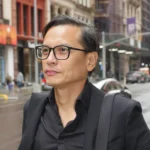
Aryo Danusiri
Aryo Danusiri
Aryo Danusiri is an anthropologist and documentary filmmaker whose work explores the intersection of anthropology, critical media, and visual practice. He earned his doctorate in Social Anthropology and Critical Media Practice from Harvard University and is affiliated with the Harvard Sensory Ethnography Lab.

Jewel Maranan
Jewel Maranan
Jewel Maranan is a documentary director, producer, and cinematographer whose creative documentaries explore how history inches through ordinary life. Her directing and producing works, crafted in this pursuit, have been screened and awarded internationally. Aside from her filmmaking, she organized pioneering cinema initiatives in the Philippines, such as the Nation in Visions Film Festival, Alternative Cinema Initiatives Conference and Daang Dokyu. She is the founder and manager of Cinema Is Incomplete, an alternative film production and distribution center with projects in the Philippines and the Asian region, and a co-founder of the Filipino Documentary Society.

Rain Cuaca
Rain Cuaca
Rain Cuaca is the president of 100% Manusia Film Festival, a film festival concerning human rights and humanity since 2017. His passion in cinema, diversity, and mental health led him to initiate the festival with his friends. Aside from that, he is also involved in research programs and psychology services in Jakarta.
Competition Program Note
For 20 years straight, FFD’s Competition program has been the main course that is held consistently. This year is the third year for the competition…
Competition Program Note
For 20 years straight, FFD’s Competition program has been the main course that is held consistently. This year is the third year for the competition program to present four categories: International Feature-length Documentary, Indonesian Feature-length Documentary, Short Documentary, and Student Documentary. Through the Competition program, we keep trying to organize a place for documentary films from around the world as a reflective medium for responding to issues around us critically and delivered in a creative documentary film.
This year, over 150 films were submitted to our Competition program, from June to August. This number actually is lower than the numbers in the last two years of the festival. But, the quality of this year’s films is incredibly impressive. We have chosen 11 films for the category International Feature-length Documentary, 4 films for the category Indonesian Feature-length Documentary, 6 films for the category Short Documentary, and 3 films for the category Student Documentary. The 24 films will be presented to be the main focus for the FFD audience online or offline.
We have more interest in films with colorful perspectives, narration, or approaches. This year’s juries-who come from different backgrounds-will choose one film from each category to be awarded on the Awarding Night and Closing Ceremony of Festival Film Dokumenter 2021.
— Rugun Sirait
Program Coordinator
Program Coordinator
Rugun Sirait
Rugun Sirait
Rugun Sirait is an Indonesian producer and researcher working across documentary, experimental cinema, and media anthropology. Her practice is shaped by long-term interests in digital cultures, collective memory, and the relationship between media, technology, and everyday life. She is currently pursuing a project-based doctoral degree in Amsterdam.
Film
- Best Short Documentary (2021)


- Jury Special Mention (2021)


Item 1
Jury

Asrida Elisabeth
Asrida Elisabeth
Asrida Elisabeth works as a journalist and documentary filmmaker. She is now studying about environmental issues, cultural communities, and women. She is also active in a documentary film community namely Papuan Voices. She is living in Jayapura.
Bani Nasution
Bani Nasution
Bani Nasution was born in Surakarta, Central Java. During his studies at the Indonesian Institute of the Arts (ISI) Surakarta, he created fiction films that were screened at various film festivals in Indonesia. After graduating, his short documentary, ‘Sepanjang Jalan Satu Arah’ (‘Along a One-Way Street’), was selected as a finalist in the short film competition at the 2017 Documentary Film Festival and received a Special Jury Mention at the 2017 SeaShorts Film Festival in Kuala Lumpur, Malaysia.

Shadia Pradsmadji
Shadia Pradsmadji
Shadia Pradsmadji studied film for her bachelor at Universitas Bina Nusantara (2015) and communication studies for her master degree at Universitas Indonesia (2020). In 2014, Shadia joined as one of the directors of Cinema Poetica and she joined Jakarta Independent Film Festival as Festival Coordinator since 2020. Shadia is also one of the members of Asosiasi Pengkaji Film Indonesia (KAFEIN).
Competition Program Note
For 20 years straight, FFD’s Competition program has been the main course that is held consistently. This year is the third year for the competition…
Competition Program Note
For 20 years straight, FFD’s Competition program has been the main course that is held consistently. This year is the third year for the competition program to present four categories: International Feature-length Documentary, Indonesian Feature-length Documentary, Short Documentary, and Student Documentary. Through the Competition program, we keep trying to organize a place for documentary films from around the world as a reflective medium for responding to issues around us critically and delivered in a creative documentary film.
This year, over 150 films were submitted to our Competition program, from June to August. This number actually is lower than the numbers in the last two years of the festival. But, the quality of this year’s films is incredibly impressive. We have chosen 11 films for the category International Feature-length Documentary, 4 films for the category Indonesian Feature-length Documentary, 6 films for the category Short Documentary, and 3 films for the category Student Documentary. The 24 films will be presented to be the main focus for the FFD audience online or offline.
We have more interest in films with colorful perspectives, narration, or approaches. This year’s juries-who come from different backgrounds-will choose one film from each category to be awarded on the Awarding Night and Closing Ceremony of Festival Film Dokumenter 2021.
— Rugun Sirait
Program Coordinator
Program Coordinator
Rugun Sirait
Rugun Sirait
Rugun Sirait is an Indonesian producer and researcher working across documentary, experimental cinema, and media anthropology. Her practice is shaped by long-term interests in digital cultures, collective memory, and the relationship between media, technology, and everyday life. She is currently pursuing a project-based doctoral degree in Amsterdam.
Film
- Best Student Documentary (2021)


Item 1
Program Note
Working with Love
In the practice of our daily life, we often find a person or group who is adamant and persistent in carrying out something they believe…
Working with Love
In the practice of our daily life, we often find a person or group who is adamant and persistent in carrying out something they believe in. That activity—if it can’t be called work—could be a mere hobby, it could be an additional activity that they must engage in addition to their daily work, or it could be a daily job that does not get compensation or salary that is in accordance with the workload.
This practice often takes the mind, time, energy, and emotions of the person. So, why do some people want to do this? The basis could be because of personal love. For example, a group of people who really love music or movies then do music or film preservation work. Or a variety of domestic work such as a family member who has to take care of the condition of a family member who is in trouble, a mother who takes care of her child or vice versa. Another example, how a group of people are willing to put their energy, thoughts, time, costs, and feelings to find their identity in the midst of layers of personal conflict experienced. These work practices are often experienced by a person or group who is certainly outside the economic framework or work that may be far from the effort to meet daily domestic needs.
Humans are imagined to be able to find their identity through work, while in the development of advanced capitalism, the variety of jobs actually alienates humans a lot. Activities or jobs based on affection have a greater possibility for humans to find themselves, but these jobs are outside the economic framework. From personal experience, from personal memory, small movements grow. Gradually the movement becomes a spirit that continues to live and support the person. From these personal experiences and memories, we can find a bigger problem. So, how can we interpret this work further?
This year’s Perspektif Program wants to present a portrait of the persistence and resilience of a person or group of people in carrying out work practices that may start from a personal basis and then we can read to understand the larger structural issues.
Through My Father, Dr. G, we can see the layers between a child’s struggle to support his father, and a father struggling to negotiate a larger structure in medicine. The Traditional Brazilian Family KATU tells how identity in indigenous communities is confirmed through photo documentation as memory artifacts. The Voice Remains presents stories about reconciliation work in the domestic sphere. A Mandolin in Exile presents forms of work outside the economic framework to survive and strengthen the collective spirit through musical presentations. Between Fire and Water presents a personal identity issue that must be negotiated within an indigenous community. Finally, Ketika Tunas Itu Tumbuh, it presents how the events of “disappearance” of cultural symbols that occurred in the past become memories as well as new enthusiasm to strengthen their identity through communal activities/activities in the form of festivals.
These six films represent the goal of the Perspektif program, which is to talk about work practices that are not only focused on the economic aspect. These six films can be enjoyed in the 2021 Documentary Film Festival series.
— Irfan R. Darajat & Alwan Brilian
Programmer
Programmer

Irfan R. Darajat
Irfan R. Darajat
Born in Purbalingga, October 1988. He completed his studies at the Department of Government Science UGM and obtained his master degree at Cultural and Media Studies UGM. Currently, Irfan works as a teaching staff at the UGM’s Archives and Recording Management Study Program and is a researcher at LARAS: Studies of Music in Society.
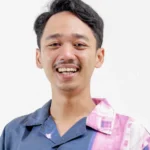
Alwan Brilian
Alwan Brilian
Alwan Brilian identifies as an art worker who reflects his daily practices of researching, organizing, curating, writing, and managing in the arts. He completed his undergraduate studies in Cultural Anthropology at Gadjah Mada University (Yogyakarta, Indonesia) in 2015, and his master’s program in Cultural Resource Studies at Kanazawa University (Kanazawa, Japan) in 2024. He is interested in the intersection of material culture, cultural heritage, archives, and local communities.


Item 1
Program Note
Image(s) Reflection and Polyscope
What makes filmmakers reconsider the presence of photos, archives or footage used in films? One reason that can be an answer is reflection. The film…
Image(s) Reflection and Polyscope
What makes filmmakers reconsider the presence of photos, archives or footage used in films? One reason that can be an answer is reflection. The film often depicts time and events, while the way of ”exfoliation” must be reflective.
Chris Marker evokes the emergence of essay film culture that explores how significantly changing viewpoints can affect film production practices and their relationship to other types of approaches. The comprehension of Marker’s cinematographic rests on the subjectivity and textuality aspects of his film. These two aspects are also characteristic of essay films. The polysemy that he questioned and told of the complexity of history is one of the unique characteristics of his cinematography. As narratives and images no longer centred on a single meaning. In addition, Markers reflect the formation of memories that are not the result of historical cults but through dialectical schemes and creative montage techniques that involve the past by giving it meaning. Marker reflects memories of the past and nostalgia of photographs, files or sequences of footage reinvented but never disappeared. Through reflection upon images, the work lives and continues to wander. Marker does not try to reconcile politics and aesthetics but articulates them by cultivating questionable imagery and resonating their relevance in the present.
This year, FFD Retrospektif presented four of Chris Marker’s works consisting of three feature films and a short film as an attempt to revisit Marker’s work since his disappearance almost ten years ago.
— Arie Kamajaya
Programmer
Programmer

Arie Kamajaya
Arie Kamajaya
Fanboy of the cinema universe and the other products of culture and subculture. He also has an interest in documentary films in Indonesia. Arie has been involved as a film programmer for the Cafe Society Cinema, Gambar Bergerak, and several community-based alternative screening events. Has a background in philosophy and currently participates in the Forum Film Dokumenter’s program section.


Item 1
Program Note
Mythologising the Myth
In essence, we cannot detach myth from social life and translate it into formal elements. Myth is one of the most important patterns of the…
Mythologising the Myth
In essence, we cannot detach myth from social life and translate it into formal elements. Myth is one of the most important patterns of the order of everyday human life. In addition to being intertwined in the cultural norms, myths have a lot of tension with the production of pragmatical knowledge, from everyday politics to ideological construction. In the context of anthropology and religious studies, myths in any culture are almost always related to the origins of social institutions, from marriage to leadership institution which always born of what Mircea Eliade calls illo tempore—time outside the time of reality that we experience, where the social and natural laws we know today don’t apply: from mythical creatures, talking animals, and supernatural powers.
The deliveries of myths vary: from stories transmitted from generation to generation in a geographical landscape to myths translated in nonverbal and experience-based forms. Cinema is a contemporary myth-creating machine that has been operating for one-half of a century in a specific context. In the aesthetic construction of documentary cinema, as a form expected to represent reality, the epistemophilic impulse to the spectator—as written by Bill Nichols—is a strong element of experiencing documentary films, even though the documentary form in its development undergoes a dynamic evolution. How to experience myth in a cinema-style context which on its historical developments on par with terminologies like factual, reality, and truth?
In the Spektrum program: Memitoskan Mitos, this question tried to be investigated and observed from two feature films and three short films that investigate, interpret, and create myths, either directly or indirectly with various approaches. These films tell myths through their dynamics with social and natural landscapes through more sensory experiences. The presence of myth is not merely expressed as a sacred story but is also translated into the most modern language of cinema—playing with form. The five films in this program represent human relations with myths in the information age.
Two featured films, Bosco and Red Moon Tide describe the myths and relation to geographic space and cartography. In Bosco, the myth of the City of Bosco and its inhabitants imagined by the filmmaker’s grandfather is juxtaposed with the factual circumstances of the city, while in Red Moon Tide, the story of mythological creatures in the Galician universe stitched with the story of the mythical figure Rubio de Camelle. These two films are presented with a contemplative nuance while taking an excursion into the space of fantasy and reality.
The two short films, Storegetnya and Mada, deal with the overlapping of myth (fiction as the center of Mada‘s case) and science. Storegetnya observes the alternative medical practice of speleotherapy that in the myth could cure asthma and other acute respiratory ailments by breathing mineral and salty air in caves in an underground salt mine in Avan, Armenia. On the other hand, Mada tries to destabilize the science of archeology by creating new myths and fiction. Both films challenge the understanding of verification in science. The short film, Termimpi Maujun, through the context of dreams and their relationship to the environment and community, illustrates how myths can also become a scourge if reproduced and regenerated continuously. People on Sunday mythicize the phenomenon of leisure in the context of filmmaking, which in the cinema industry, there is almost no boundary between work and leisure time. Finally, Dormant Soil / Concrete Reflections presents the relationship between humans and their natural surroundings from a non-anthropocentric perspective, against the myth of anthropocentrism that has been attached to everyday life in the poetic and reflective way.
— Riar Rizaldi
Programmer
Programmer
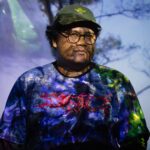
Riar Rizaldi
Riar Rizaldi
Riar Rizaldi works as an artist and filmmaker. His practice explores the relationships between science, technology, labour and nature, alongside competing worldviews, genre cinema, and the possibilities of theoretical fiction. His works have been shown at various international film festivals (including Berlinale, Locarno, IFFR, FID Marseille, Viennale, BFI London, Cinema du Reel, Vancouver, etc.) as well as Singapore Biennale (2025), Thailand Biennale (2025), Museum of Modern Art New York (2024), Whitney Biennial (2024), Taipei Biennial (2023), Istanbul Biennial (2022 & 2025), Venice Architecture Biennale (2021), Biennale Jogja (2021), Centre Pompidou Paris (2021), National Gallery of Indonesia (2019), and other venues and institutions. Recent solo exhibitions and focus programmes have been presented at Almanac, Turin (2025); Gasworks, London (2024); the Institute of Contemporary Arts, London (2024); Z33 – House for Contemporary Art, Design & Architecture, Hasselt (2024); the Centre de la Photographie Genève (2023); and Batalha Centro de Cinema, Porto (2023), among others.


Item 1
Program Note
Reading Archives, Imagining Inclusive Scenes
The archives of Documentary Film Forum represent ideas and the way of speech of Indonesian filmmakers with its cultural complexity. Narration and speech delivered in…
Reading Archives, Imagining Inclusive Scenes
The archives of Documentary Film Forum represent ideas and the way of speech of Indonesian filmmakers with its cultural complexity. Narration and speech delivered in some films often ended in a continuity that influenced other films during these two decades of FFD. Through program curation, Lanskap 21: 2 Dekade Dokumenter invites people to look back at the film archive as alternative literature. Covid-19 has not ended yet and still impacts changes in many sectors. The impact is also seen in cinema’s language and art speech until today, both from production pattern, distribution of movies on the network, to how to enjoy movies.
Cinema is the meeting point between reality and its images, and documentary is a medium for images that opens up dialectics through the landscape of events recorded by the camera’s perception. Like a lens, the meeting point is far from each other, but still inseparable. Determining the position and alignment of the camera in capturing events affects the narrative that is built so that the documentary is always socially and politically charged. Changes in documentary language and speech are shown from time to time through various intrinsic aspects, as well as being a separate sign in the journey of Indonesian documentary films. Exploration of Indonesian documentary films has so far relied on the issue area and the dynamics of storytelling which led to the diversity of documentary films being part of the scope of Indonesian cinema. In addition to storytelling, aesthetic approaches are also increasingly diverse, blurring the boundaries between film genres themselves. The emergence of various production training and funding forums has become significant in viewing the development of documentaries to this day so that efforts to practice the intersection between art media with an aesthetic approach and appropriate storytelling are still a long dream.
Lanskap 21: 2 Dekade Dokumenter presents 22 films consisting of 5 featured films and 17 short films and FFD’s film archives ranging from 2000-2020. In the process, this program strives to give a point of view in imagining a documentary as something more inclusive.
— Arie Kamajaya
Programmer
Programmer
Arie Kamajaya
Arie Kamajaya
Fanboy of the cinema universe and the other products of culture and subculture. He also has an interest in documentary films in Indonesia. Arie has been involved as a film programmer for the Cafe Society Cinema, Gambar Bergerak, and several community-based alternative screening events. Has a background in philosophy and currently participates in the Forum Film Dokumenter’s program section.
Film


- Best Short Documentary (2019)


- Jury Special Mention (2020)


- Best Short Documentary (2014)

Item 1
Program Note
Thematic Cycle: Our Uncertain Wars
War becomes a part of the birth of the cinema, while history is presented as a memory through several mediums, one of them being film.…
Thematic Cycle: Our Uncertain Wars
War becomes a part of the birth of the cinema, while history is presented as a memory through several mediums, one of them being film. Creative treatment of images in a film can indeed contextualize time and space to bring forth facts, memories, and images of the past in a particular approach.
The images of war and history that are narrated using sound, text, and image archives can be analogized as a process in which a film’s image does not come out of thin air. The films in this program are a response of the filmmakers who are driven by certain experiences and perspectives. They’re not merely an idea that presents a paraphrase of uncertain war or conflict situations, but also possess a different approach and present how image and memory relations are treated to trace the past. This year marks the 60 years of conflict in Algeria that broke out since March 19, 1962. This is an opportunity to revisit the conflicts of the 20th century.
200.000 fantômes is an experimental meditation to articulate conflict through photographic images and all of the changes for over 90 years. This film recorded the development of a former Japanese business center built in 1915 which became the symbol of the destruction of the city of Hiroshima by the American atomic bomb in 1945. The Dome was the only building to remain standing in the immediate vicinity of the explosion. In another time frame, we traverse the stories using all senses through Irradiés, which uses a storytelling approach, images, words, and footage about a conflict in Cambodia. The film excites sights and feelings by juxtaposing images from the encounters and testimonies of hibakusha (victims of bombings) that remind them of the past and the things that have been lived through. This circumstance brings us to an immersive experience with a different approach to understanding the situation. In 143 Rue du Desert, one of Algeria’s main highways, the portrait of an eccentric woman, who seems aware of her character’s cinematic construction, is described through dynamic situations that reveal a new fragment of this minuscule space.
Photography as a concept in the three films supports the significant idea of perspective of the historical events and timescales. This framing occasionally brought us to the cinematic concept of Werckmeister Harmonies by Béla Tarr’s which brings melancholy of resistance where shots through certain frames give the impression of a situation that is full of mystery and stability.
— Alia Damaihati
Programmer
*Thematic Cycle; Our Uncertain Wars is a partnership program between Forum Film Dokumenter & Le Mois du Film Documentaire with the support of Institut Français d’Indonésie (IFI).
Programmer

Alia Damaihati
Alia Damaihati
For two decades, Alia Damaihati has been involved in developing various programs for Forum Film Dokumenter. Her work focuses on managing film programs and exhibitions, and her experience has led her to participate in various forums, festivals, and documentary networks in Indonesia and internationally. Alia plays a key role in program development and in mapping documentary trends, which serve as the foundation for the organization’s various initiatives. She currently serves as Program Director of Festival Film Dokumenter.


Festival Info
Statistics
- 0Film submission
- 0Film screened
- 0Audiences
- 0Partners