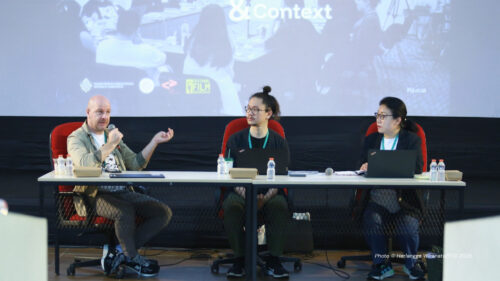
How can a film move beyond the screen and transform itself into social action? In response to that question, Festival Film Dokumenter 2025 presented a DOC Talk session entitled Ringan sama Dijinjing (lit. light to tote). The event was held on Saturday, November 22, 2025, at Kedai Kebun Forum, and was attended by participants from various backgrounds. The discussion was guided by Kurnia Yudha, inviting the director of Planet of Love (2023), Ika Wulandari, who shared the artistic process, ethics, and emotional struggles in the filmmaking process.
What the camera captures is not always what the body remembers. In documentaries, especially when filmmakers live close to their subjects, footage is not just visual footage that can be cut, reconstructed, or presented on screen. There is another record that lingers and settles in the filmmaker’s body: the experience of nurturing, witnessing, and losing.
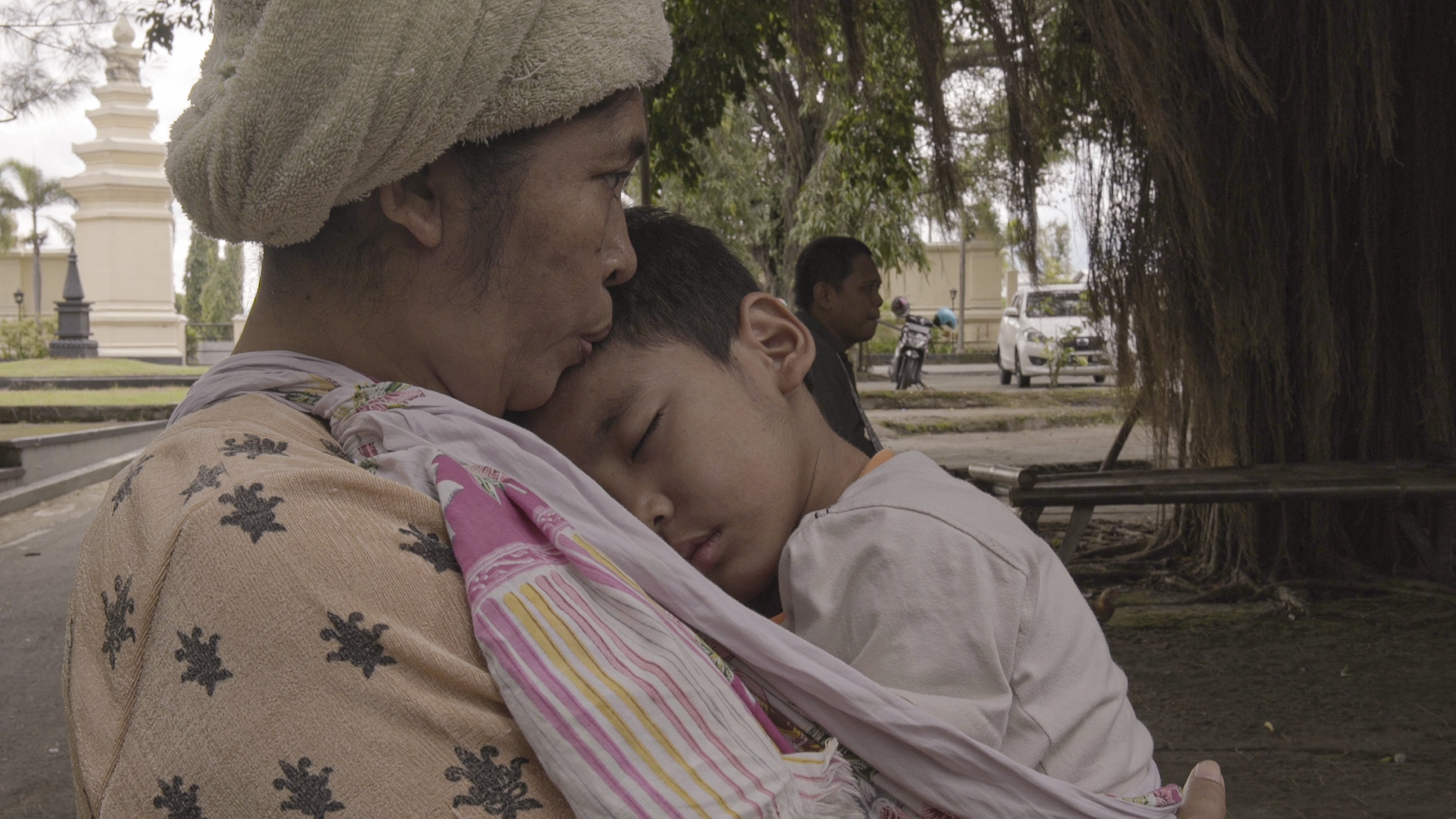
At this point, the work of documentary becomes a wager: The camera can choose the distance, but the body and memory do not always have a choice. When a documentary steps into delicate realms such as death, stigma, and life’s struggles, the impact reaches far beyond viewers or characters, but it also hits the filmmaker just as powerfully. DOC Talk theme: “Ringan Sama Dijinjing” finds its resonance here: The impact not only moves outward as a campaign to ignite social change, but also moves inward, coloring the filmmaker’s emotional struggles and reshaping the way they perceive the world. Documentary, in this context, offers an impact that stands strong.
Planet of Love records a life at the Lentera Surakarta Foundation, a home for children with HIV/AIDS who are often excluded from school spaces and social environments.
This film is inspired by personal experience. Ika volunteered at the Lentera Foundation for almost a year. It ignites the urge to record. With a borrowed camera, she started to compile a visual memory, although she didn’t yet understand the full concept of the film. In other words, she was still feeling her way through. “Too many stories, too many layers,” she says. After attending various workshops, Ika finally found what the film would be, even though she didn’t have a complete guide. She only had one goal: the film must be finished, no matter how the struggles.

The participants were given a chance to ask. The first question touched that sensitive area: how did Ika keep an emotional distance when it comes to recording tragic moments affectively? Ika shared her toughest experience during the shoot: Okta, one of the film’s key subjects, was hospitalized, growing weaker by the day. In that critical moment, Ika found a dilemmatic condition: should I put down my camera and appear as a friend? Should I still record all the moments and places herself as a filmmaker? She decided to record, a decision that turned out to hurt her the most. She needed months to finally watch the clip completely. The film’s editing process took four years, not because of technical reasons, but because the body and heart needed time to heal. Emotions cannot be edited, but perhaps that is precisely where the film finds its breath and emancipatory spirit.
The next question was about the social context in the film: Is there any discrimination toward the children with HIV/AIDS while they are in school? Ika explained that some of them experienced bullying, exclusion, and even expulsion from school, despite having a strong passion for learning. This situation exposes a gap between regulation and reality: there are rules meant to protect students, but their implementation is barely present. There is an invisible hierarchy: who is considered more worth fighting for?

At this point, the theme of DOC Talk: “Ringan Sama Dijinjing” becomes relevant and increasingly significant. Ika invited Putri Rakhmadhani, the Planet of Love impact producer, to introduce the campaign “Dare to Care.” This campaign centers on invisible disabilities — conditions that cannot be seen, yet still carry heavy stigma. This program targets primary schools through child-friendly short film screenings, followed by empathetic discussion sessions. The hope is simple but significant: create an inclusive, safe, and equal educational environment for all children-including those who have been hidden behind the stigma.
This is where Planet of Love shows that documentaries are not just a watching activity, but a space for encounter, conversation, and possibility. This film invites the audience not just to feel, but to think about positions, relationships, and actions. And maybe, as the title of that day’s Doc Talk says, this burden cannot be divided evenly. But at least, it can be carried together. Because the film may come to an end, but the impact continues to move. Scenes can be edited. But wounds? It can’t be. And that’s where the change might come from. (Hesty N. Tyas, 22/11/2025 [Ed. Vanis/Trans. Shafira Rahmasari])