Docs Docs: Short! Series Spatial Space is an invitation to think about space through its multiplicity of relations, recognizing that humans and other actants play a role in creating space and the ways by which we inhabit them. Space is empty potentiality actualized through relations. Thus, the urban and the rural, the past and the present, the present and absent, are not antidotes but mutually constitutive relations. They exist because of and with each other. It is within these spatial spaces that we return to our bodies and respond to the spaces we inhabit. There is no outside. There is only relation and interdependency.
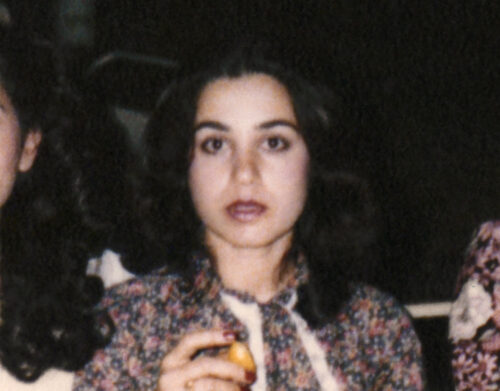
Between archival images, soundscapes and personal memories a lot is left unspoken but everything is conveyed in City of Poets (2024) is the history of a neighborhood in Iran; works against the representational hardness and sensationalism of detached war journalism and pulls us right into the rhythm of a space and its inhabitants that has gone through war.
What becomes of a space when alien forces organize and enable a series of material manifestations? Object 817 (2024) visits an isolated village in the Urals to talk about a nuclear accident and the discovery of an alien creature. Inconvenient occurrences and whispers that challenge the official narrative on the absence of atomic disaster. Here other spaces emerge: a public prayer, a ritual enchantment, future-making through spiritual and animistic practice. Such inhabitations of space open up the question of the non-rational space, which in so called modern societies has been captured by institutionalized religion.
No Exorcism Film (2024) evokes a sense of Thailand as structured by the desires of many to change the ways by which people can inhabit a nation, where the real story can never be spoken because the wants of some have been captured under an umbrella that assumes the generalism of agency. Liberating Shipwreck (2024) thinks with the descendants of African slaves who have survived a shipwreck and built communities on the shores of Ecuador. Their cooperation with natives and settlers led to the formation of hybrid spaces, where institutionalized religion and embodied rituals of dance, create new spaces of emancipation where sense-making enters the terrain of theory. Theories are stories about our lives and the pride of telling your own story is infectious!
Jumping scales via cinematic spaces we become witness to the liminality of spaces; taking back to our present moment a new hope, perhaps more urgent, for things to be different. What remains are the echoes of questions. How can we build out differences from within the spaces we are living in? Can the dances of freedom in Ecuador be a space of hope for Thailand? When will the rhythm flip in Iran for there to be archives of women smiling again? When will the microscopic forces of radioactivity dissipate and when, if ever, will landscape be conducive to life again?
–Rosalia Namsai Engchuan & Alia Damaihati
Programmer