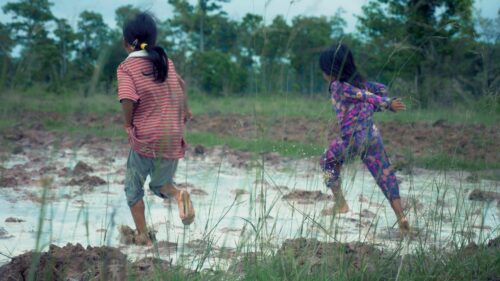
Tree_trunk. Vegetation. Human, authority_figure, construction_worker. Object. Building. Vehicle, emergency_vehicle, police_vehicle. Sky. This is how the computers see things, trained by invisible workers who annotate real world objects for them.
“Millions of people around the world work as data annotators, performing the tedious task of converting large quantities of data into the curated datasets used to train artificial intelligence. The training of AI models requires enormous amounts of data, but this data cannot be fed into an AI system without human workers […] One prominent field of AI is computer vision, in which computers learn to make sense of images and video, and to take action based on these inputs.”
— Feeding the Machine by James Muldoon, Mark Graham, & Callum Cant
Tech companies from the Global North outsource cheap labour from the South to train said computer vision AI models. The labour of annotating objects to feed into AI models is crucial to perfect computer vision, and perfect computer vision is very much needed for self-driving cars to navigate unpredictable, real-world situations—and most importantly, to prevent accidents from happening. A well-known example occurred in 2018, when an autonomous vehicle in Arizona struck and killed a pedestrian who was walking her bike across the road. The car’s software failed to correctly identify her as a pedestrian, highlighting the devastating consequences of inaccurate labelling. Even when data annotation is paid poorly, the workers are expected to work with utter precision for human lives are at stake.

Their Eyes (Nicolas Gourault, 2025) is about these invisible workers that train these AI models. The film is constructed out of software screen recordings, personal videos taken from the phones of the annotators, and a simulation of computer vision itself. Through these unconventional methods, we are put into the position of these annotators from the Global South: their lives, their work, their precariousness. As the film unfolds, the workers share their experiences as annotators, as director Nicolas Gourault highlights the tedious nature of their labour and the unequal exchange underlying it—implicitly revealing how labour in the Global South is systematically undervalued in global trade, enabling wealth accumulation in the North.
One annotator from Venezuela explains that in the United States, a single task is paid three times more than what they earn doing the same job in their country. Further exacerbating the problem, one annotator explained that as some of them try to outsmart the system by changing their location to where the pay is better via VPN. It worked—until a coworker reported it to their supervisor and got their accounts banned. It is a dog-eat-dog world under capitalism: in its neoliberal workplaces, “snitching” can be reframed as “accountability” or “excellence.” Reporting inefficiency or misconduct can be rewarded, making complicity seem virtuous. Even with miserable wages, not all annotators are paid equally. Even under the same job, solidarity turns into competition.

“They [might] come up with other software that will [annotate] for them. Then it means [we] will be replaced by these robots. That’s one thing I think about,” says one of the annotators from Nairobi worryingly. As artificial intelligence advances, the very workers who make it possible find themselves training the systems that may one day erase their livelihoods—similar to the gig workers going to be replaced by self-driving cars. Their eyes help to teach the machines to see, but their own visibility within the global economy remains obscured. The paradox of being needed but unseen, productive yet precarious, captures the cruel irony at the heart of digital capitalism. In this film, Gourault transforms this irony into haunting imagery: a world seen through the gaze of the machine, where human labour becomes indistinguishable from data, and where the pursuit of technological perfection silently depends on the exploitation of vulnerable lives. (Timmie) (Ed. Vanis)
Film Details
Their Eyes
Nicolas Gourault | 23 min | 2025 | France
Official Selection for Perspektif
Festival Film Dokumenter 2025