Site remains an essential–if not enduring–aspect of cinema. Site shapes cinema’s form, and cinema redefines our perception of site. Here, site does not appear as a representation–as something shown as it is–but instead undergoes a process of making and performing through filmic practices. This programme, which consists of five films, asks the audience to problematise the meaning of site by looking at how site is made.
The first film, Images of Tunisia (Younès Ben Slimane, 2025), remaps the site of Tozeur, Tunisia, previously occupied by France. The film takes French colonial archives that record the site then abruptly juxtaposes them with present-day handheld recordings of walking around the site. By sensing the site through bodily movements such as pacing and turning, the film creates a new sketch that counters the colonial gaze. The colonial gaze extracts what it sees, whereas the film takes that extract and melts it, returning the site to the realm of lived experience mediated by both human and camera. Meanwhile, a site with a story of the past is a site grounded in familiarity and unfamiliarity. In Statues Rule the Waves (Noah Berhitu, 2024), a Dutch-Moluccan filmmaker visits her ancestors’ land in Ambon, Indonesia. The film treats its filmmaking process as a journey of processing the site. For the filmmaker, to process a site is to translate it, consequently facing the risk of experiencing losses in translation. It is an honest process that does not attempt to cover up the barriers and cracks that arise from the history of colonialisation.
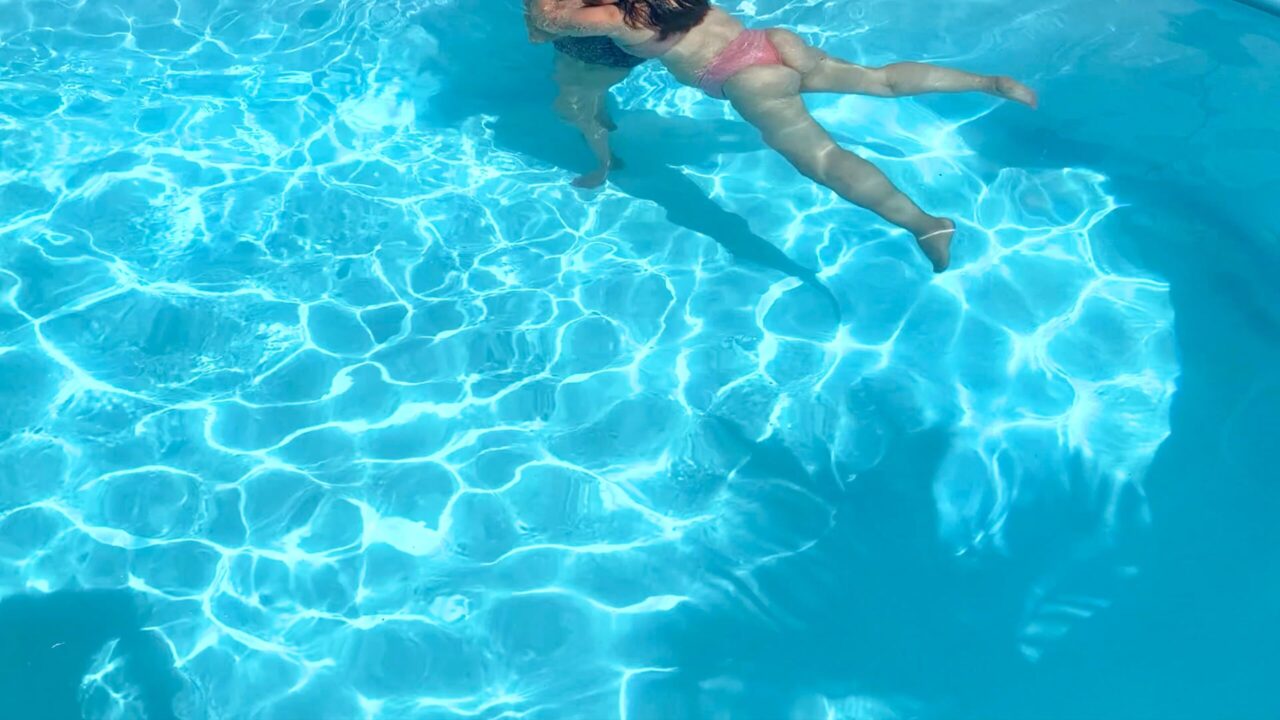
In Dissipate (Victor Laet, 2024), site begins to shift in meaning. The camera looks at a swimming pool; people swim in and out of the frame, talking and humming idly. Through the long take, site is no longer just a place but a situation that is framed. The swimming pool is a site in material sense, and framing turns that material site into one that now exists specifically in the filmic sense, with temporal and spatial dimensions. The swimming pool in the film is a swimming pool that is made, and given a life, precisely because of the practice of framing.
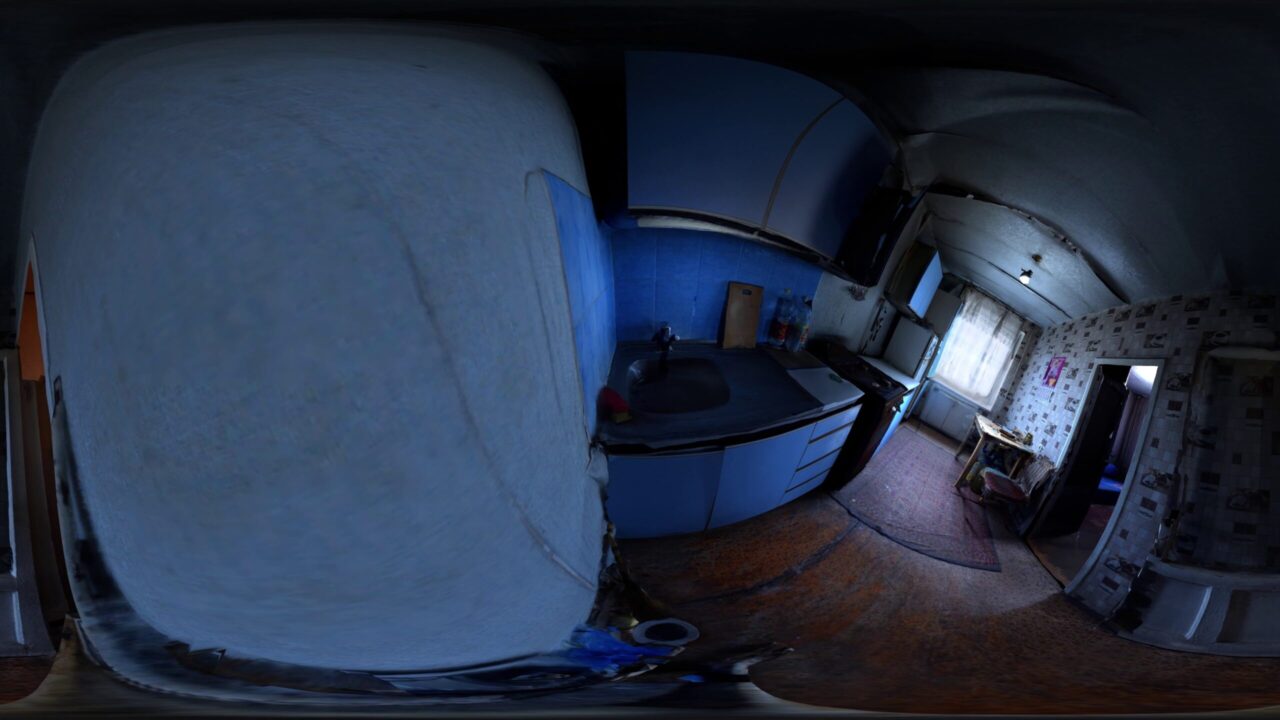
In site-making, the sense of site itself can be unstable. Rapture I – Visit (Alisa Berger, 2025) demonstrates this tension when a man, standing in a dark room, is asked to wear a virtual reality headset and revisits his apartment, which is not physically accessible due to Russia’s invasion. Meanwhile, the camera observes the man moving around the dark room with the headset on, recounting the memory of the place as he experiences the virtual world. The apartment, made virtual and non-virtual, then resides in the cognitive realm, where it is defined and redefined–constantly in a state of tension because of its fluidity.
Lastly, there is also a site that cannot be articulated, as it does not exist as a material and/or conceptual site. Mountain Roars (Pobwarat Maprasob, Chonchanok Thanatteepwong; 2024) pieces together a story about a cave with a principle that the universe and its agents are bound by mystical relations. Unlike its predecessors, this film’s artistic tactic is not rooted in language and logic, but rather in a hybrid of magic and science. The site appears as something that cannot be and refuses to be represented, and through the film, the site becomes translucent. Transmitted, diffused, not exactly what it seems, yet it is what it is.
Site is not fixed and always in the making–made, remade, unmade. Cinema empties and refills it, playing its role in shaping spatial practice and imagination.