Jury Special Mention (2022)


14—19 November 2022
Download catalogue
Makiko Wakai
Makiko Wakai
Wakai Makiko is New Asian Currents program coordinator/programmer, of the Yamagata International Documentary Film Festival (YIDFF), that aims to showcase and bring together emerging filmmakers from across the region. She is programmer, feminist, activist, and filmmaker based in Tokyo. Ongoing paid/unpaid works include: FAV (feminist active documentary video festa) that distributes/screens independent films in Japan; Visual Documentary Project (Kyoto-University-based film festival that showcases theme-specific short documentary films across Southeast Asia); translator/interpreter for Tokyo Labour Consultation Center and Legato Ota (an NGO working with immigrant families); and a decade-plus personal documentary project centering around a Japanese-Filipino family living in Asahi village, Yamagata, which led her to spend a year in Bataan, Philippines (API fellowship, 2012-2013).

Philip Cheah
Philip Cheah
Philip Cheah is a film critic and is the editor of BigO, Singapore’s only independent pop culture publication. He is currently program consultant and advisor to film festivals in Shanghai (China), El Gouna (Egypt), River Meets Mountain (India), Adoor (India), Yogyakarta (Indonesia), and Hanoi (Vietnam). He cofounded the Southeast Asian Film Festival and the Asia Pacific Screen Lab and is patron of the SEA Screen Academy in Makassar, Indonesia. He is also Spiritual Advisor to the Bakunawa Young Cinema Film Festival, Philippines. He is co-editor of the books, Garin Nugroho: And the Moon Dances; Noel Vera: Critic After Dark, and Ngo Phuong Lan: Modernity and Nationality in Vietnamese Cinema.

Pierre-Emmanuel Barthe
Pierre-Emmanuel Barthe
Pierre-Emmanuel Barthe is French, 65 years old, lives in Yogyakarta area and retired from the international movies business. He has been working as V.P. Marketing for Bac Films (1990-2003) and Pathé Distribution (2003-2006), two movies distribution companies based in Paris, France. In charge of marketing (poster, trailer, promotion, premieres, animations, festivals, etc.), he had the honor to work with well known directors, like Quentin Tarantino, Jane Campion, Joel & Ethan Coen, David Lynch, James Gray, Woody Allen, Nanni Moretti, Wim Wenders, Roman Polanski, Stephen Frears, Robert Altman, Jim Jarmush, David Cronenberg, Gus van Sant, Takeshi Kitano and great French directors, like Claude Sautet, Patrice Leconte, Bertrand Tavernier, Etienne Chatilliez, Alain Corneau or Claude Lelouch. In documentary, he worked on The Eye of Vichy (Claude Chabrol), A Brief History of Time (Stephen Hawking), Buena Vista Social Club (Wim Wenders), Microcosmos, Himalaya (Eric Valli) and Winged Migrations (Le peuple migrateur) produced by Jacques Perrin.
Celebrating the 21st year of the competition program, Festival Film Dokumenter received a wide array of vibrant documentary films from around Indonesia and all over…
Competition Program Note
Celebrating the 21st year of the competition program, Festival Film Dokumenter received a wide array of vibrant documentary films from around Indonesia and all over the world. This program consistently strives to show documentary films that are reflective and intervene the social reality through creative ways of storytelling.
In this year of 2022, we have received 400 films that are selected by a committee of fellows from within and also good supporters of FFD from over the years. Luckily, the numbers and quality of films has been growing over the past four years of it’s being divided in four categories. The four categories in competition are International Feature-length Documentary, Indonesian Feature-length Documentary, Short Documentary, and Student Documentary.
We selected 3 student documentary films, 8 short documentary films, 3 Indonesian feature-length documentary films, and 8 of international feature-length documentary films to be screened during the six-day festival. From each category, the team of final juries will award one winner that will be announced at the closing night of the festival. The competition program honors the emergence of documentaries with perspectives, storytelling styles, and colorful approaches every year, and hence we look forward to having more in the upcoming future.
— Rugun Sirait & Riskya Duavania
Program Coordinator

Rugun Sirait
Rugun Sirait
Rugun Sirait is an Indonesian producer and researcher working across documentary, experimental cinema, and media anthropology. Her practice is shaped by long-term interests in digital cultures, collective memory, and the relationship between media, technology, and everyday life. She is currently pursuing a project-based doctoral degree in Amsterdam.

Riskya Duavania
Riskya Duavania
Riskya Duavania (b.1999) is a filmmaker who worked mostly as a film editor. She loves working with footage to create a storyline which brought her to use documentaries as a storytelling medium. In 2021, she experimented with Mimzy to make an art installation of material collection owned by a non-binary named Cik San, which was exhibited as part of Asana Bina Seni Biennale Yogyakarta. With the same subject, she expanded the research and began to direct her feature-length documentary debut.



Alia Swastika
Alia Swastika
Alia Swastika is the director of the Jogja Biennale Foundation in Yogyakarta, Indonesia, and is actively involved as a curator, project manager, and writer on a number of international exhibitions. She was co-artistic director of the Gwangju Biennale IX (2012): Roundtable and director of the Biennale Yogyakarta XIV (2015). She also participated as the curator of a special exhibition of Indonesian artists in the 2012 edition of Art Dubai. In 2017, she curated contemporary art sections at the Europalia Festival, Indonesia where she organized exhibitions in Oude Kerk, Amsterdam, SMAK Ghent, MuHKA in Antwerp, and some others. She curated many exhibitions in Indonesia and abroad, including some established and new emerging artists. She is currently researching Indonesian women artists in the period of 1975 to 1990 and has published the first series of publications. She actively writes for various magazines, journals and publications, in Indonesia and international platforms.

Chalida Uabumrungjit
Chalida Uabumrungjit
Chalida Uabumrungjit graduated in film from Thammasat University and film archiving from University of East Anglia, UK. She is one of the founding members of Thai Short Film and Video Festival which she has served as Festival Director since 1997. She also programmes for Salaya Documentary Film Festival and Silent Film Festival in Thailand. She coordinated programmes of Thai films for various international festivals and was also involved in making a number of experimental films and documentaries. She is also one of the selection committee of AND (Asian Network of Documentary) from 2006-2018. Since 2013, she is one of the Executive Committee of FIAF(International Federation of Film Archives). Currently she serves as the Director of the Film Archive, Thailand.
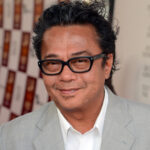
Dain Said
Dain Said
Dain Said is an award-winning Malaysian writer, visual artist, and filmmaker whose stories explore themes of memory, cultural hybridity, and the human condition. His versatile directing career spans features, tv commercials, creative documentaries, and video installations that have been produced and screened internationally. His critically acclaimed features, Bunohan (2011), Interchange (2016), and Dukun (2018), have led to Dain’s recognition as a tour de force in Malaysian cinema.
Celebrating the 21st year of the competition program, Festival Film Dokumenter received a wide array of vibrant documentary films from around Indonesia and all over…
Competition Program Note
Celebrating the 21st year of the competition program, Festival Film Dokumenter received a wide array of vibrant documentary films from around Indonesia and all over the world. This program consistently strives to show documentary films that are reflective and intervene the social reality through creative ways of storytelling.
In this year of 2022, we have received 400 films that are selected by a committee of fellows from within and also good supporters of FFD from over the years. Luckily, the numbers and quality of films has been growing over the past four years of it’s being divided in four categories. The four categories in competition are International Feature-length Documentary, Indonesian Feature-length Documentary, Short Documentary, and Student Documentary.
We selected 3 student documentary films, 8 short documentary films, 3 Indonesian feature-length documentary films, and 8 of international feature-length documentary films to be screened during the six-day festival. From each category, the team of final juries will award one winner that will be announced at the closing night of the festival. The competition program honors the emergence of documentaries with perspectives, storytelling styles, and colorful approaches every year, and hence we look forward to having more in the upcoming future.
— Rugun Sirait & Riskya Duavania
Program Coordinator
Rugun Sirait
Rugun Sirait
Rugun Sirait is an Indonesian producer and researcher working across documentary, experimental cinema, and media anthropology. Her practice is shaped by long-term interests in digital cultures, collective memory, and the relationship between media, technology, and everyday life. She is currently pursuing a project-based doctoral degree in Amsterdam.
Riskya Duavania
Riskya Duavania
Riskya Duavania (b.1999) is a filmmaker who worked mostly as a film editor. She loves working with footage to create a storyline which brought her to use documentaries as a storytelling medium. In 2021, she experimented with Mimzy to make an art installation of material collection owned by a non-binary named Cik San, which was exhibited as part of Asana Bina Seni Biennale Yogyakarta. With the same subject, she expanded the research and began to direct her feature-length documentary debut.


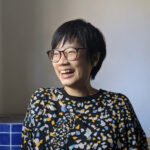
Puiyee Leong
Puiyee Leong
Puiyee is an arts manager and film programmer based in Singapore. She is currently the Senior Manager at Objectifs Centre for Photography and Film, where she manages the film programmes. She was previously the programme manager of the Singapore International Film Festival (2014‒2019), where she led the Short Films programme. She has been invited to be on the selection panel of SEAShorts Film Festival in Malaysia, World Press Photo Digital Storytelling Contest (Long category), Busan International Film Festival, Bangkok ASEAN Film Festival, and was a Screener for SXSW 2022.

Vivian Idris
Vivian Idris
Her work in film started in 2000, organizing the Jakarta International Film Festival. Since then she’s been involved in film production as producer and director for documentary films, project market, and pitching forum. Founded Biru Terong Initiative in 2015, which focuses on using film as a tool to create impact, Biru Terong is a network of Video4Change. She also worked for the government program; Akatara since 2018 with the Ministry of Tourism and Creative Economy, and joined Indonesiana Film since 2021 with the Ministry of Education and Culture. She has worked for Salto Production (now Base.id), Kalyana Shira Foundation, and Viu Indonesia. She collaborated with Sokola Rimba, Yayasan Perempuan Kepala Keluarga, Toraja Melo, Indonesia Film Coop, and Yayasan Odesa. She is now in Dewan Film Indonesia, festival board for Jakarta Film Week, and board of advisor for Puan Seni, an Indonesian women artist collective.

Woto Wibowo
Woto Wibowo
Woto Wibowo is an artist active across the fields of contemporary art, design, music, and socio-cultural activities. He is a member of artist collective Ruang MES 56 in Yogyakarta, runs the music label Yes No Wave Music and initiated the Indonesian Netaudio Forum. He was the curator of Biennale Jogja XIII in 2015. He is interested in developing an experimentation of collective platform, interdisciplinary works, contemporary cultural intervention using curatorial aesthetic and speculative approach as his artistic practice.
Celebrating the 21st year of the competition program, Festival Film Dokumenter received a wide array of vibrant documentary films from around Indonesia and all over…
Competition Program Note
Celebrating the 21st year of the competition program, Festival Film Dokumenter received a wide array of vibrant documentary films from around Indonesia and all over the world. This program consistently strives to show documentary films that are reflective and intervene the social reality through creative ways of storytelling.
In this year of 2022, we have received 400 films that are selected by a committee of fellows from within and also good supporters of FFD from over the years. Luckily, the numbers and quality of films has been growing over the past four years of it’s being divided in four categories. The four categories in competition are International Feature-length Documentary, Indonesian Feature-length Documentary, Short Documentary, and Student Documentary.
We selected 3 student documentary films, 8 short documentary films, 3 Indonesian feature-length documentary films, and 8 of international feature-length documentary films to be screened during the six-day festival. From each category, the team of final juries will award one winner that will be announced at the closing night of the festival. The competition program honors the emergence of documentaries with perspectives, storytelling styles, and colorful approaches every year, and hence we look forward to having more in the upcoming future.
— Rugun Sirait & Riskya Duavania
Program Coordinator
Rugun Sirait
Rugun Sirait
Rugun Sirait is an Indonesian producer and researcher working across documentary, experimental cinema, and media anthropology. Her practice is shaped by long-term interests in digital cultures, collective memory, and the relationship between media, technology, and everyday life. She is currently pursuing a project-based doctoral degree in Amsterdam.
Riskya Duavania
Riskya Duavania
Riskya Duavania (b.1999) is a filmmaker who worked mostly as a film editor. She loves working with footage to create a storyline which brought her to use documentaries as a storytelling medium. In 2021, she experimented with Mimzy to make an art installation of material collection owned by a non-binary named Cik San, which was exhibited as part of Asana Bina Seni Biennale Yogyakarta. With the same subject, she expanded the research and began to direct her feature-length documentary debut.


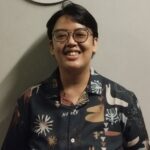
Amalia Sekarjati
Amalia Sekarjati
Amalia Sekarjati–called Sekar–is an arts and culture enthusiast and worker, especially film. Starting as a publicity and communications officer for an alternative cinema in Jakarta, Indonesia, she then was mostly involved in film-event organizing until now. She also worked as a film reporter and part of a film distribution initiative. Currently, she is focusing on continuing her journey in archiving after finishing her formal studies in the field.
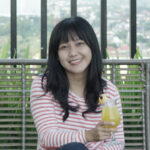
Siska Raharja
Siska Raharja
Siska is an alumnus of the Television Department of ISI Yogyakarta and one of the founders of Kamisinema. Siska founded Elora Films in 2013 which produces films, television programs, commercial videos, and documentaries. She directed nearly 100 documentaries of artist profiles across Indonesia with Indoartnow. She has produced three short films: Lost Wonders (Loeloe Hendra, 2015 – Singapore IFF), Flowers in the Wall (Eden Junjung, 2016 – Busan Short IFF, JAFF, Bogota Short IFF), and BURA (Eden Junjung, 2019 – Singapore IFF, JAFF, FFI, Tampere IFF, Minikino, and won three awards including the Jury Award at the Seashorts Film Festival Malaysia 2020). Siska is also an alumnus of SEAFIC, Torino Film Lab, and became the 5 Asian producers selected in Ties That Bind 2019.

Winner Wijaya
Winner Wijaya
Winner Wijaya is an Indonesian filmmaker. They have liked making films since the fifth grade of elementary school because they were taught by their school teacher. Every weekend, together with their friends, they made movies with a MiniDV camcorder. They tried fun new things, painted the house walls green for chroma keying, wore ghost masks, made weird stories, and so on. Their short documentary, Ojek Lusi, was nominated for Piala Citra and won the Best Short Documentary Award in FFD 2017. In 2020, they won Minikino Best Begadang Filmmaking Competition for their film Hey Guys Balik Lagi Sama Gue, Tuhan! and were nominated for best short fiction film at Festival Film Indonesia 2020. At the moment, they are in the editing process for their first feature documentary.
Celebrating the 21st year of the competition program, Festival Film Dokumenter received a wide array of vibrant documentary films from around Indonesia and all over…
Competition Program Note
Celebrating the 21st year of the competition program, Festival Film Dokumenter received a wide array of vibrant documentary films from around Indonesia and all over the world. This program consistently strives to show documentary films that are reflective and intervene the social reality through creative ways of storytelling.
In this year of 2022, we have received 400 films that are selected by a committee of fellows from within and also good supporters of FFD from over the years. Luckily, the numbers and quality of films has been growing over the past four years of it’s being divided in four categories. The four categories in competition are International Feature-length Documentary, Indonesian Feature-length Documentary, Short Documentary, and Student Documentary.
We selected 3 student documentary films, 8 short documentary films, 3 Indonesian feature-length documentary films, and 8 of international feature-length documentary films to be screened during the six-day festival. From each category, the team of final juries will award one winner that will be announced at the closing night of the festival. The competition program honors the emergence of documentaries with perspectives, storytelling styles, and colorful approaches every year, and hence we look forward to having more in the upcoming future.
— Rugun Sirait & Riskya Duavania
Program Coordinator
Rugun Sirait
Rugun Sirait
Rugun Sirait is an Indonesian producer and researcher working across documentary, experimental cinema, and media anthropology. Her practice is shaped by long-term interests in digital cultures, collective memory, and the relationship between media, technology, and everyday life. She is currently pursuing a project-based doctoral degree in Amsterdam.
Riskya Duavania
Riskya Duavania
Riskya Duavania (b.1999) is a filmmaker who worked mostly as a film editor. She loves working with footage to create a storyline which brought her to use documentaries as a storytelling medium. In 2021, she experimented with Mimzy to make an art installation of material collection owned by a non-binary named Cik San, which was exhibited as part of Asana Bina Seni Biennale Yogyakarta. With the same subject, she expanded the research and began to direct her feature-length documentary debut.


The world as we see and experience it today, is the way it is because it carries all the wounds accumulated throughout the history of…
Film, Archives, and Memories as a Process to Heal the Wounds of the World
The world as we see and experience it today, is the way it is because it carries all the wounds accumulated throughout the history of Western modernity. This world of wounds is based on the crimes committed by modernity–from slavery to colonialism with racism as an ideological weapon. Many of these wounds that have never been repaired tend to become invisible. Though they have not completely disappeared, their symptoms continue to manifest themselves. Even if material and intangible wounds inflicted by colonialism seem irreparable, we cannot continue to deny them or ignore them with silence.
As he departed Algeria after the independence war, Albert Camus, descendent of French settler in this country, wrote in his last novel The First Man: “Since what we have made here is a crime, it has to be wiped out.”
The list of the crimes of colonialism is so long that many of them remain invisible till today. While at the same time, making these crimes invisible has also been a weapon of control for the colonizer, claiming victory while disavowing all responsibility.
Although repairing all of them seems to be a never-ending task, there is a need for many people to move beyond this discouragement. It is through the process of identifying these wounds, listening to them, reflect upon them, talk about them and take care of them, that these countries will be able to reinvent themselves.
There are many ways to approach this difficult task, but I believe that art through different medias can be a powerful one and successfully contribute to it. Making documentary films is a way to understand and heal these traumas, and access to material or immaterial archives is an essential task which contribute to multiply knowledge and experience.
All these films speaks about wounds of the past, collecting memories, repairing archives, bringing testimonies to the surface, and are means to find a ways to cure them. In Algeria, in Madagascar, in Bissau, and in Indonesia, this important process of reappropriating the past is the only way to heal and illuminate the present.
— Jean-Pascal Elbaz
Programmer
Jean-Pascal Elbaz
Jean-Pascal Elbaz
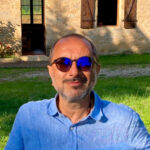
After a bachelor in Psychology (Paris Sorbonne), he has been working in Paris as a journalist and for several French contemporary literature publishers. Coming to Indonesia in 1991, he worked as a free-lancer for École Française d’Extrême Orient, as well as teaching French in universities before being in charge of a translation program for the French Embassy. From 1997 to 2006 he was successively director of the French Cultural Center (LIP/IFI) in Yogyakarta, Indonesia and the Alliance Française of Madras, India. Coming back to Yogyakarta in 2007, he shares his time between translations and interpretation for development organizations as well as writing and translating books, subtitling films, writing essays and articles. Currently writing a Master in Cultural Studies at IRB, Sanata Dharma University about Louis Charles Damais.
In a film production, from pre-production to post-production involves many roles from multi-disciplinary backgrounds–which undeniably entails a large amount of money and time. Through this…
Incomplete, Undisciplined, and Unavailable
In a film production, from pre-production to post-production involves many roles from multi-disciplinary backgrounds–which undeniably entails a large amount of money and time. Through this program, I invite you to check out some short films. Some aspects of the production of these films are deliberately not executed, not presented, skipped, or ignored by the film-makers. In other words, if it is seen from the aspect of production, they are incomplete and undisciplined films–at least when we are talking about the standard film production process. These films have an inclination to show their creative power, even, it successfully discovers artistic aspects that are (apparently) very exploratory in documentary production while carrying a message.
There are Fish in the Water and Rice in the Field is a film in which they did not undergo the process of shooting, but they utilized Google Street View in capturing the scene. Street Opera, a documentary that films (source) the sounds emitted by various devices and noises created by street vendors when hawking their wares around villages in Jakarta. The main act of the film–if I may say so–is organized in line and in harmony with the creation of melodious musical compositions from the collection of noise, “watching sound”, where sound is the subject of the film itself. The film entitled (((O))) is quite different. The combination of images that associate certain sounds and sounds that sometimes do not directly correlate with poetic visuals throughout the film, the editing of soft and rough sounds, sometimes, and images, with soft and expressive voice-overs, and nearly poetic texts, scripts, and film scenes. The one that is needed to underline is the film-maker states that this film can be watched with your eyes closed.
Transparent I am, a self-portrait poem with a cross-disciplinary approach, featuring an archive of personal works in the form of drawings, photography, scribbles, sketches, paintings, memories, and stories presented in a very personal way. An artistic approach by processing archives of videos, still photography, and sounds that are, then, arranged to talk about a specific topic, can also be found in Blinded by the Light which shows the stories of Thai film workers. It, even, incorporates performance art in the Chronicle of Nowhere which talks about how the human desire discovering utopia through futuristic architectural projects that are not fully completed and ends up being abandoned. In the short film, The Partian, there is no verbal narrative, but we, as the audience, are invited for a walk to take a look at the situation of the problematic landscape which is nearly Mars by its nearly-astronaut character in a near-fiction documentary.
The indiscipline of these films–if I may say so–can be pictured as if we get into schools or other places where shoes are required and forbid us from wearing slippers. However, instead of wearing shoes, these films are like those people who get into the places wearing slippers.
The incompleteness of these films seems to be someone who is incapable of conveying his thoughts verbally in a clear way. However, is that true? The incompleteness is a loophole, an empty space given by the films to us as the audience to choose whether or not to fill it out. A space that allows the audience to be free and to actively participate. The emancipatory space for thinking and speculating to complete the films that lets the audience share their diverse thoughts to fill the incompleteness. At the end, it is a complete spectacle and experience where a film finds its own audience. Happy watching and discovering the invisible ghosts of the Atacama Desert in Fantasmagoria. The same ghost which is everywhere infiltrating our living space.
— Wimo Ambala Bayang
Programmer
Wimo Ambala Bayang
Wimo Ambala Bayang
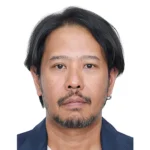
Wimo Ambala Bayang is an artist and co-founder of Ruang MES 56, based in Yogyakarta, Indonesia. Working across photography, film, video, objects, and painting, he explores how images shape our understanding of memory and reality.
The advances of technology-in this case means a film-not only about production or distribution of filmmaking, it is also about the medium of film itself…
Immersive / Empathy
The advances of technology-in this case means a film-not only about production or distribution of filmmaking, it is also about the medium of film itself and the platform on which or how it is presented. Immersive media experiences allow us to take far beyond the limitations of flat screens.
Does media immersive really work in eliciting empathy? The basic question of this technology brought us to experience on Meet Mortaza – a journey of an Afghan refugee on his memories, dreams and struggles. Meantime, exploring the history of cinema as narrated by production designer Dean Tavoularis in Kinosscope brought us to a lesson about immersive cinema.
Then jump to another query; is it possible to use virtual reality with a journalistic documentary approach?, Revivre Notre Dame– a journey that dive into stunning sceneries of Notre Dame cathedral before and after the tragic fire, to the recording of the Rivonia in Accused #2: Walter Sisulu that revived the politics of Mandela in Africa that uses sound archives to revive 265 hours of gripping battling relentless aggression. Might be virtual reality films will bring us to possibilities that come from various forms, approaches and other intersections in documentary.
—Alia Damaihati
Programmer
Alia Damaihati
Alia Damaihati
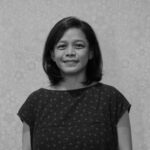
For two decades, Alia Damaihati has been involved in developing various programs for Forum Film Dokumenter. Her work focuses on managing film programs and exhibitions, and her experience has led her to participate in various forums, festivals, and documentary networks in Indonesia and internationally. Alia plays a key role in program development and in mapping documentary trends, which serve as the foundation for the organization’s various initiatives. She currently serves as Program Director of Festival Film Dokumenter.


