History is not immune from the canonization of periods as a signifier of the peak success of an event or subject that took place in its time. In the age of digital cinema itself, some observers’ readings also do not escape the canonization of cinema history in the analog era where the factors of reading are still not separated from the narrative tradition and do not expand or change the understanding of cinema in the digital media era. Historical essentialism seems to generalize the history of cinema from different medium periods, especially how the history of cinema in the digital era actually has a different perspective in presupposing the notion of cinema, including what cinema history is-especially Indonesian cinema-whose historical understanding itself is also expanded or changed to reach cinema practices in this digital era that are increasingly diverse and widely used. Diversity is an important signifier in the growth of digital Indonesian cinema. The fluidity of using this digital medium then forms a variety of images, which of course, produces its own narrative patterns.
This program is an attempt to outline a multifaceted reading of cinema practices in this digital era. It involves simultaneous receptions of cinema practice modes from various practitioners and their ways of producing images. Competition programs are consciously and politically heavily burdened by the conventional regime of Indonesian cinema; noncompetition programs in film festivals become a stake for various cinema ideas as a desire to get out of the canonical regime of linear historical schools of thought. In the noncompetition program, it takes more sensitivity to discern variances as part of resisting the canonical regime of the historical school of Indonesian cinema. Of course, this is not an easy challenge, and how to build a noncompetition environment can contribute to a more open and fluid cinematic history.
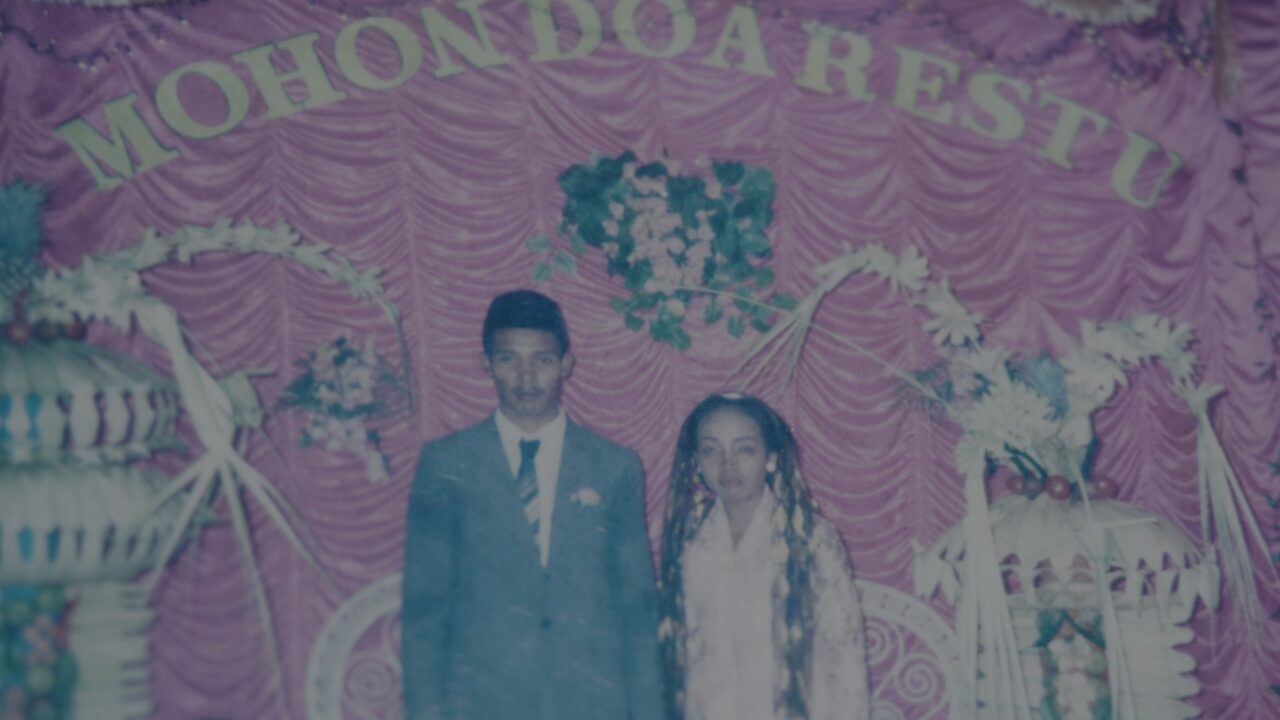
History is basically an open book as the reading of history is also in a state where it can be chronicled as history itself. Everyday images are not free from the use of digital mediums, including how images are personal, which form their own unique narratives–and not vice versa. The four films in this program are themselves confined spaces that try to reach the ongoing variety in Indonesian cinema. Utilizing various sensory things marks how digital mediums are fluid in using sounds to form images, including the utilization of personal archives, as well as other mediums outside of cinema as body choreography which is possible on digital cinema.
Hopefully, noncompetition spaces will become essential marks in reading cinema development history, as well as the need to reverse and break the epistemological paradigm, where history is no longer at the peak of events, such as festival-winning films, but as something that grows, expands, and is continuously being produced.
–Akbar Yumni
Programmer