Queer and trans geographies make one think of space as more than a mere container of human activity but rather as a site where power and identity are played out and negotiated. Queer spaces often emerge in the temporary, fluid, and at times invisible margins of the dominant order of space, be it ballrooms, nightclubs, or online. To “queer” a space means disrupting its heteronormative order and imagining how all bodies, including those whose bodies and identities do not conform to normative expectations, might be related and be able to interact within, and by extension, how it might function in everyday life. Queering space is a means of shifting one’s everyday hostilities, making the familiar equivocal. In Gamodi (Felix Kalmenson, 2023), queer space emerges through the ruins of a city.

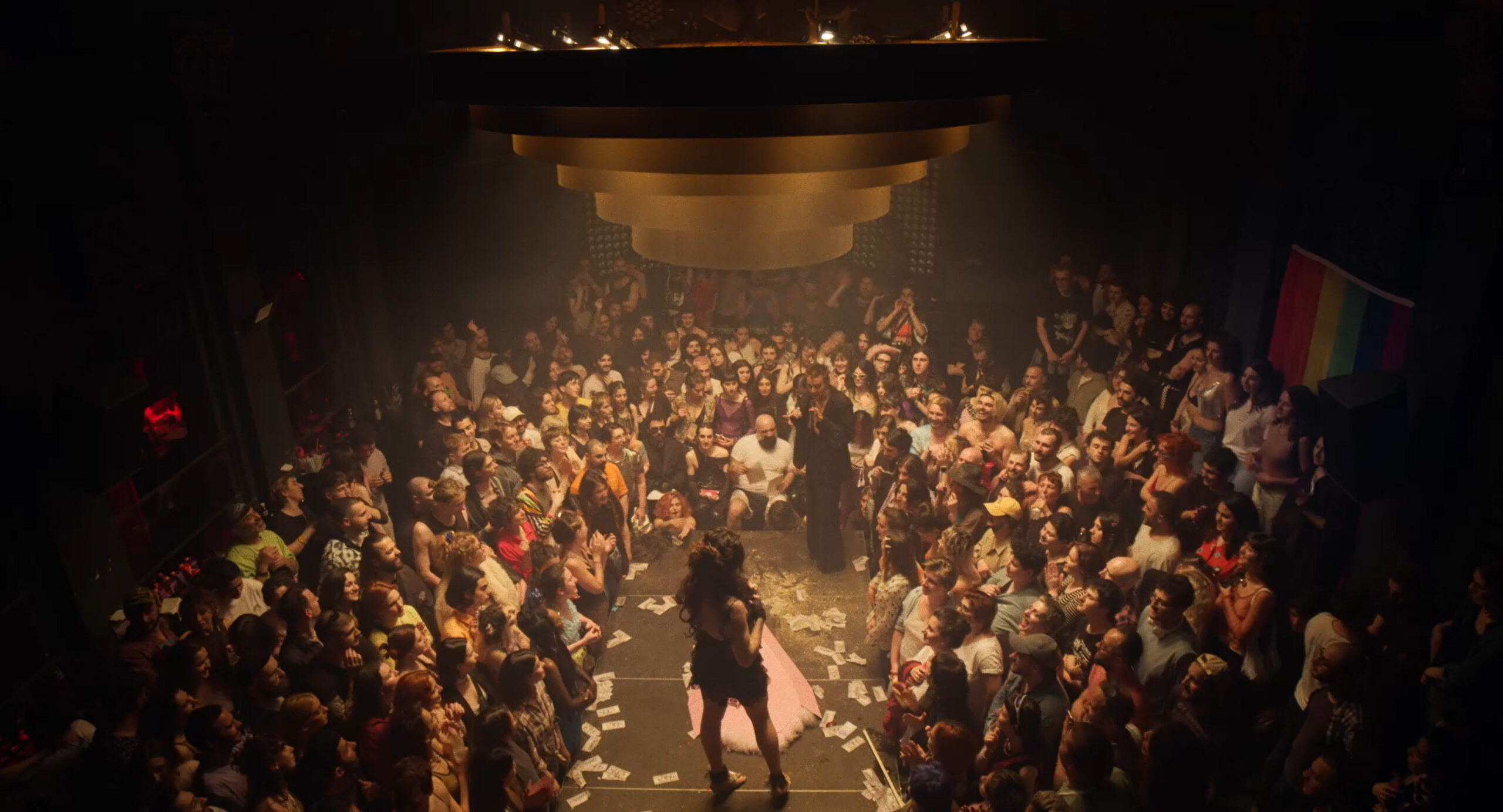
Set amidst the COVID-19 pandemic in an abandoned apartment building of Tbilisi, Georgia, Felix Kalmenson’s Gamodi is a meditation on the liminalities of gender, sexuality, and its geography. With its abstract and minimal narrative, the film follows Viktor, a legendary drag queen, and Tarzan, a teenage drifter, as they attempt to embrace their collective purgatorial languor—subsisting on brief moments of intimacy in the city’s shadowy alcoves. While intermittent television broadcasts update them on the outside world, it becomes increasingly unclear whether they are still living in the same plane of existence.
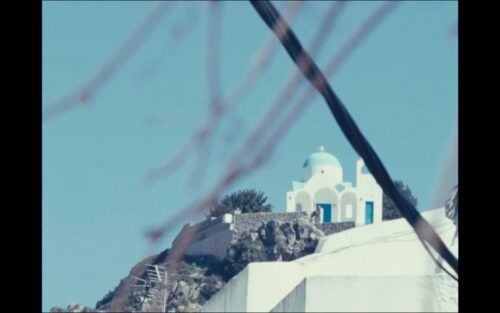
Throughout this film, director Kalmenson focuses on the spatiotemporal. The film’s slow moving rhythm and wide framing compel the audience to inhabit the psychogeography of the ruins. This in turn, makes the audience active participants in experiencing and reimagining the space as if through dérive. Filmically, it seems that time appears to stall; the ruins, animated by traces of those who once inhabited them, stretch endlessly, rendering the humans within small and transient. Calling the film “Gamodi,” meaning “come on out,” is in itself ironic in a time of a global pandemic. Also, coming out as queer/trans when outside feels hostile to non-comforming bodies and identities is another feat in itself. It is in these paradoxes that this film truly operates: should we live in ruins, or to go out with the possibilities of risk and harm?

By further meditating the liminal, we can learn that these false dichotomies shouldn’t end where they do. Here, the people are not the focus but the ruins are—for these spaces hold traces of persistence and the possibility of renewal. By examining the ruins, the film engages in an expanded political and emotional activity; envisioning a different world, it encourages the audience to consider deterioration not an ending, but a space for continuing change. Even in decay, new relationships, new forms of caring, new intimacies are created. To come on out—Gamodi!—maybe is the wrong way to see it. We should instead dwell within the in-between. Reimagine the ruins as spaces of potential, where we shall rise beyond the rigid boundaries of gender, time, and place! (Timmie) (Ed. Vanis)
Detail Film
Gamodi (გამოდი)
Felix Kalmenson | 97 min | 2023 | Canada, Georgia
Seleksi Resmi untuk program Utopia/Dystopia
Festival Film Dokumenter 2025