In the first 2 minutes, the silence begins to crack, awakened by Devi’s calm yet trembling voice like a whisper from a wound that refuses to be forgotten, “For years I have stayed quiet about the violence that I and others like me faced.” What kind of warrior am I?”
At the age of 17, Devi was arrested, tortured, and raped after being accused of being a rebel at the onset of the Nepalese Civil War (1996–2006). On paper, the war may have ended, but for women in Nepal, the struggle never really stopped. The thunder of weapons may fade, but another was still in the air: the fight for women’s rights. A war was buried under a peace accord and silenced in the name of reconciliation.
The revolution may have changed the face of politics, but for the women, nothing was ever truly a triumph. As the country celebrates the end of the war, women like Devi still have to see their rapist walk by the streets with their heads held high, where the guilt never touches them. And what if they want to cry out for justice? To whom should they report? To a country that turns its back? To an apparatus that trades women’s pain for political stability? Again and again, the survivors are forced to swallow the betrayal of the institution that was supposed to protect them.
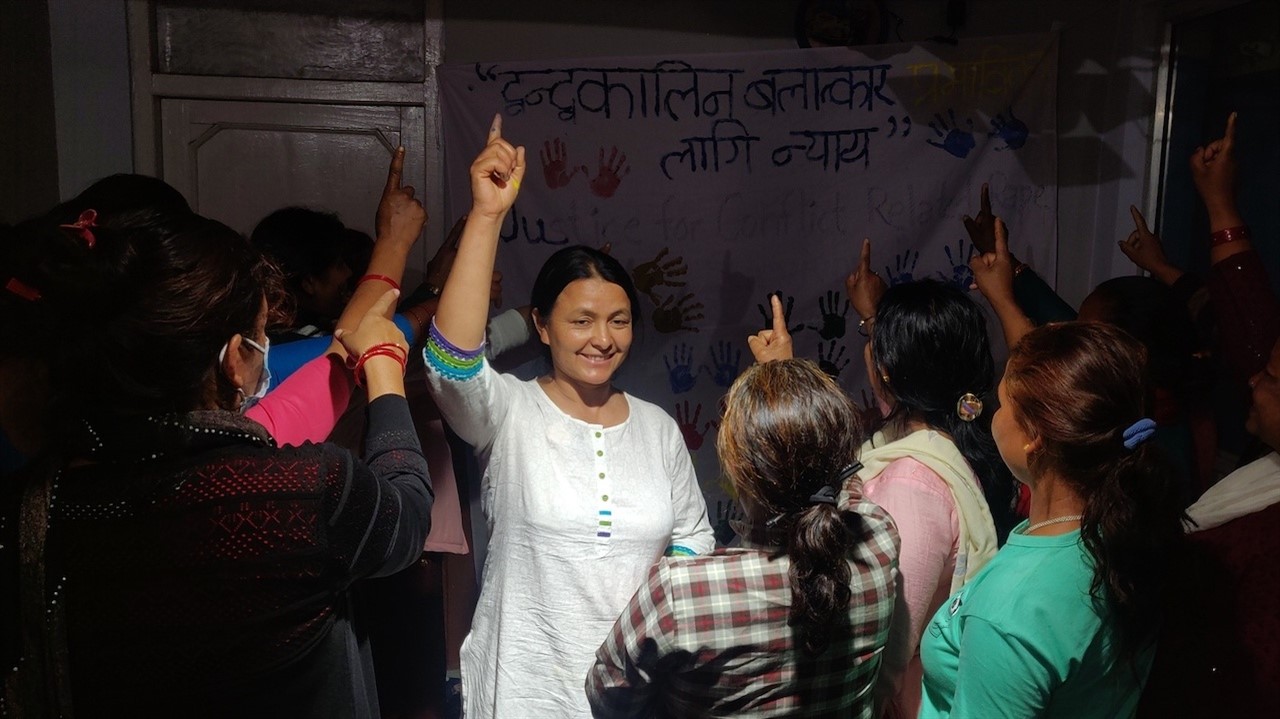
Witnessing Devi’s story feels like holding your breath between hurt and hope. The first half is full of pain and anger, but it slowly turns into a sense of pride. We are proud of Devi, who not only heals herself but also ignites the fire within women to rise and speak out. Working together, they named themselves The Undefeated. Despite the world’s attempts to bring them down, they stand firm. It takes a long time for The Undefeated to speak up, but when they find the strength to speak, the world can no longer pretend to be deaf.
After some time, in 2024, Nepal’s parliament enacted a law paving the way toward justice for survivors of wartime sexual violence: a long-delayed victory. However, the law itself is not enough to cure. Until early 2025, Devi and other survivors continued to strive so that the law was not only written, but truly implemented. Towards the end of the film, it shoots Devi, clapping and smiling warmly, like a sigh of relief after a long journey full of wounds. In her laughter, there is hope: justice is not an impossible dream if women choose not to be silent, not to give up, and stand up.
What kind of warrior am I?

Maybe, now, Devi no longer needs to wonder. Amid the uncertainty, we know the answer: Devi is the lingering breath of a memory nearly forgotten. Silence was never her choice when women’s bodies were wiped out from history. She reminds us that justice without confession is only a lie wrapped neatly, and peace without a woman’s voice is only a silence that pretends to be healed. Thank you, Devi!
And thanks to all the women who work in their own way to find a way to strive together. Also, for Subina Shrestha, the director, who works with courage and empathy, voiced Devi’s story so that the world would not lose track of her struggle.
Long live all women who resist, speak out, and will never be silenced. Because of you, history is coming back to life. (Tirza Kanya) (Ed. Vanis/Trans. Shafira Rahmasari)
Film Details
Devi
Subina Shrestha | 85 min | 2024 | Nepal, South Korea, United Kingdom
In Competition for International Feature-Length Documentary
Festival Film Dokumenter 2025