Jalan Raya Pos and Memoranda to Death
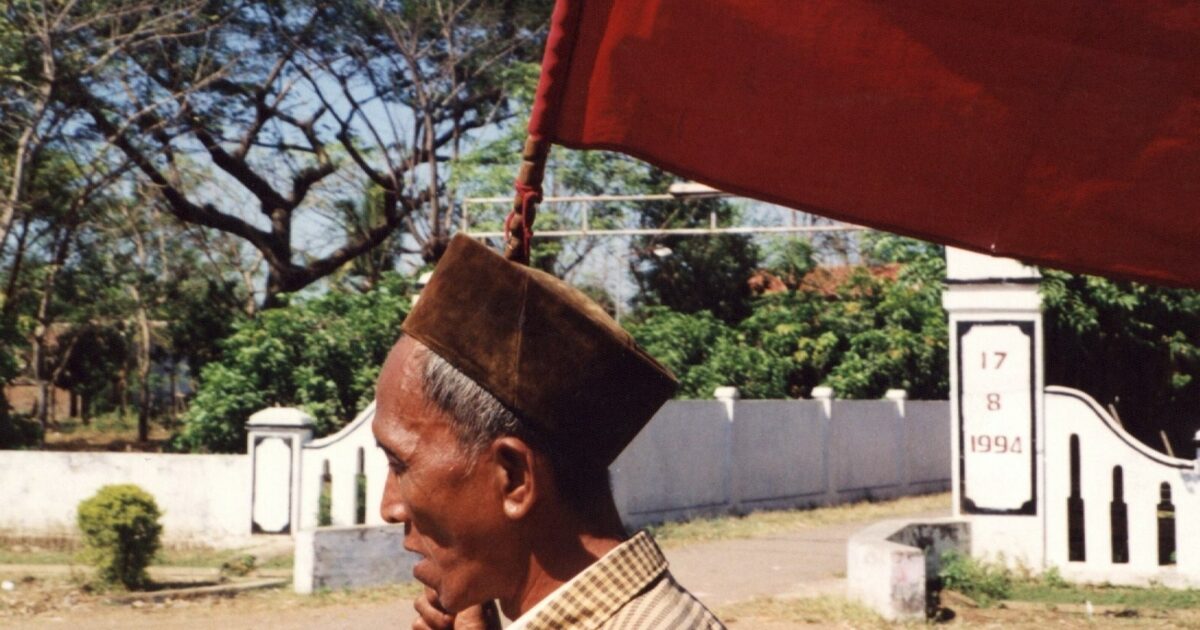
As the film unfolds, Pramoedya Ananta Toer recounts the history of Jalan Raya Pos, along with stories of his experiences in prison and his books, which were frequently banned from being read. Jalan Raya Pos (Bernie IJdis, 1996) depicts Indonesia at the tail end of the New Order. His optimism is no longer roaring. Skepticism and critical attitudes emerge in the various responses of the sources, who either flatter the New Order or oppose it. The images are almost like those in the news, cold and expressionless. People speak to the camera with white people shoved in front of them. In those days, it took guts to even answer a foreigner’s questions. Even though it looks “overly conventional documentary”, it still manages to expose the arrogance of New Order developmentalism by comparing it to the Daendels post road project; nothing more and nothing less than a repetitive colonialism.
Pramoedya himself is portrayed as a puppet master, providing depth by adding details along with context. Jalan Raya Pos was made in 1996, on the eve of the economic crisis that would bring down the New Order regime, which at the beginning of its establishment was envisioned as a beacon of hope. It was the antithesis of the previous order, which was considered chaotic and turbulent. A utopia that in this film is turned on its head into a dystopia, at least according to the voices of some of the people who were recorded in it.
Dystopia and utopia are often perceived as binary opposites. However, the films in this program have proven otherwise. There is no dystopia without utopia. The two coexist, superimposed upon each other. They are constructs created in an effort to see what is novel and advanced, replacing the old. It is a perspective that seems to view eras or periods as negating one another.
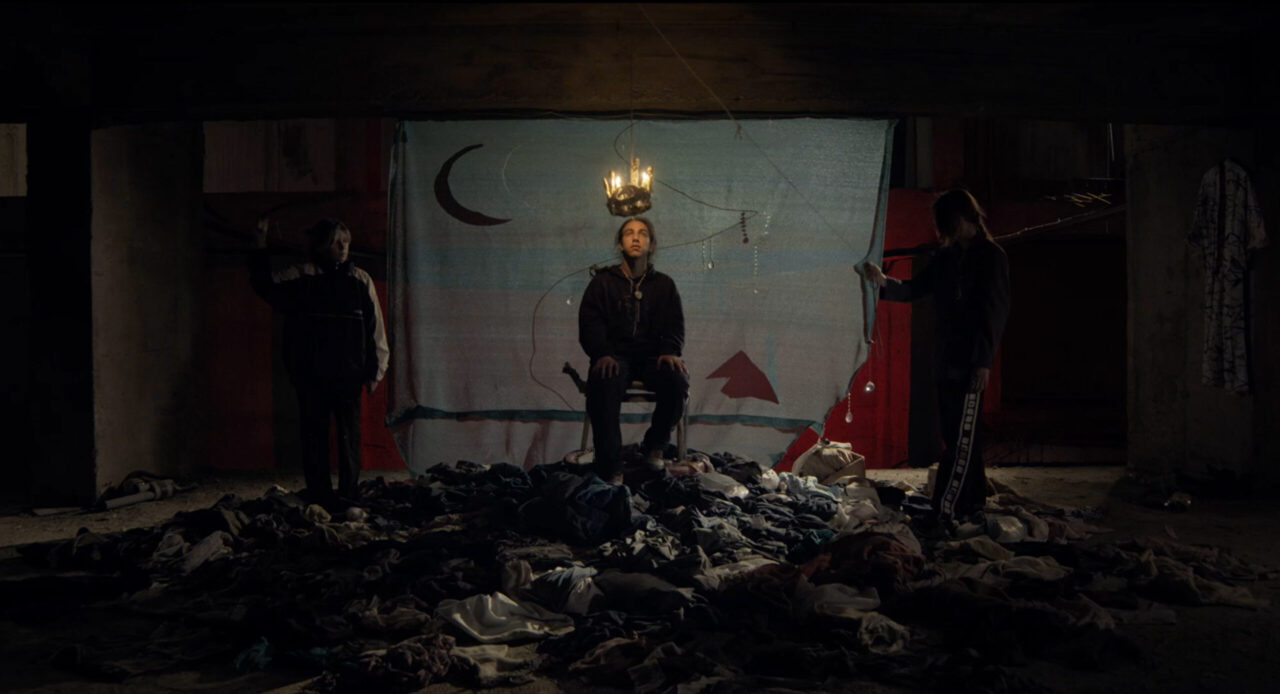
The city of Tbilisi is dark and gloomy. Ruins of buildings, street lights, and dimly lit alleys fill the entire film. The protagonist is neither male nor female, just living life in the midst of COVID. The pandemic has killed the city. Activity has come to a standstill. Marginalized transgender groups have even less space to gather. Defeated, they are not considered important enough for a city in a coma. Gamodi (Felix Kalmenson, 2023) is a journey that forces us to see the nocturnal life of the transgender community through its two protagonists. Slow, somewhat tedious, yet compelling in its details—graffiti, broken streetlights, and half-finished buildings. Darkness consumes the film, revealing the era’s context without needing much to say.
Setting cleanliness on the map by equating the originally noble natives with monkeys, i.e., beings without any cleanliness norms. Filthy. Unworthy of enjoying the utopia of the garden master. Cast out into the gutter. Cleaning & Cleansing (Thomas Fürhapter, 2024) is a testament to how cleanliness and the act of cleaning are sacred work. Its meticulousness is interpreted as a sign of the cross or stigmata, sacred and must not be tarnished. “This is a suitable job for someone who has killed someone,” a cleaner in the film mutters, cursing at the stain on the floor that won’t go away.
Any stains are unfit to exist in today’s world. Thus, civilization spends billions of dollars to wash its hands, not only from any stains, but also from the unspoken guilt of civilization. The act of cleaning and cleansing in this film actually reveals the face of civilization, showing that washing hands is not as noble as it seems. This trivial act actually has a dark history. Washing hands is not just about cleanliness; it also involves history and the reversal of such history.
Che is dead in Bolivia, shot by American-trained special forces. The war against communism is being waged across the globe. Latin America is one of its centers, and Che Guevara is a stain that must be cleaned and sterilized, not with soap, but with 5.56 mm bullets. As the bullets tore through his stomach, he may have briefly recalled the letters he had written to his friends. Death seized his memories faster than any reply could arrive, but this film immortalizes his final journey to death. Beautiful scenery, shuffling city streets and beaches, interspersed with security camera footage, illustrate Commander Che’s soliloquy. This documentary tends to express the unspoken through a series of collages. While the images and the text could stand alone, they have a peculiar connection. The images lull us to sleep, while the narrative repeatedly wakes us up.
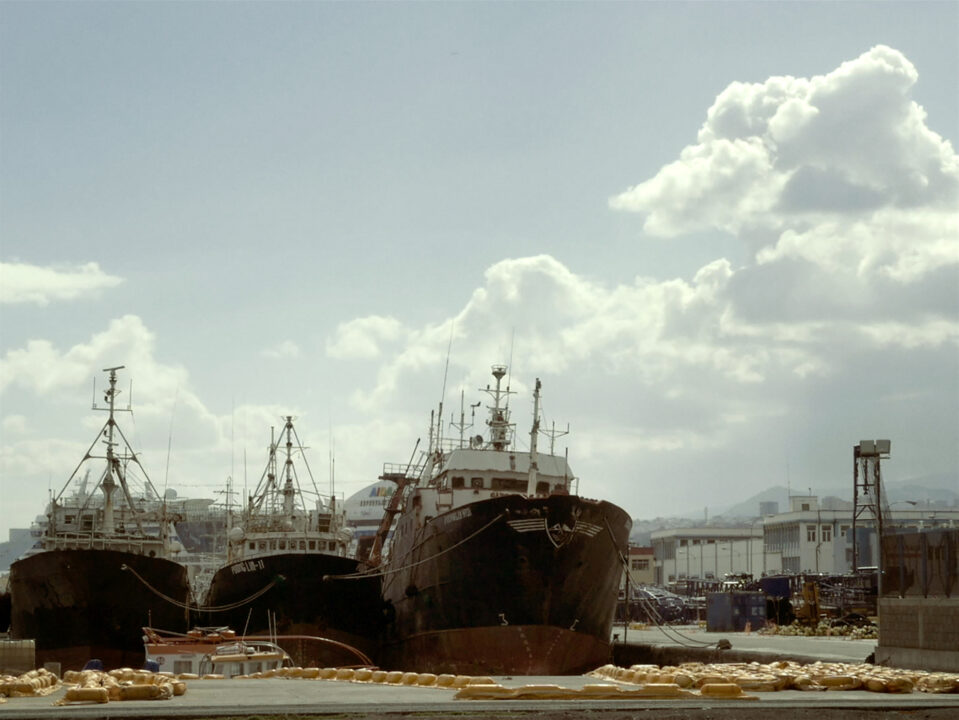
It ends with an exuberant music. A long text follows, yet the entire film is a narrative about the final journey of a group of leftist fighters towards death. Whether swept away by floodwaters or being shot. Their interactions, despair, and relationships with soldiers and farmers are valuable documentative notes worth hearing, with or without images in Glass Bottom Ferry. On Border and Submerged Utopias (Chus Domínguez, 2025).
The connection between images and narration in some of these films has its own dramatic situation. Are the images and narration connected, or do they stand alone? Some films are loud with very little narration, while others are full of images with strong narration battling each other.
Watching a documentary film is like listening to thousands of complaints. Our job as viewers is to listen carefully. Even so, with or without images that are well connected, they still appear as reasoning filled with clear political attitudes. It is at this point that documentaries become valuable accounts. Leaving fiction films far behind, crumpled in a trash can filled with gimmicky ghosts and market domestication. Documentaries speak—or more accurately, whimper–just like Commander Che when the army captured him: weary and wistful yet still respectful of the world that antagonized him.