The Afterlife of Image
“The Afterlife of Image” presents works by Mahardika Yudha (ID) and Nguyễn Trinh Thi (VN) that interrogate the colonial and imperial gaze through archival materials and footage. Both artists critically examine how historical and popular images have been weaponized to construct reality from a singular perspective, shaped by those in control of the camera. These works illuminate not only the past but also what theorist Ariella Aïsha Azoulay describes as potential history—not a radical thinking or ideological struggle against imperialism but a rejection of imperialism’s conceptual apparatus that presumes such struggle exists only in the past, as dusty record in the archive (Azoulay, 2019, p.43). This approach entails challenging dominant institutional narratives, questioning the perceived finality of the archive, and recovering what imperial violence sought to suppress (Azoulay, 2019, p.43). By regarding the archive as an ongoing site of political and aesthetic contestation rather than a closed repository of facts, Mahardika and Thi enact a counter-archival intervention that reopens state-sanctioned and colonial timelines.
Mahardika Yudha’s video installation, Apa yang Kamu Lihat? Apa yang Akan Kamu Ingat? (What did you see and what will you remember?) (2023), situates this inquiry within the digital omnipresence of colonial remnants. To fully understand his intervention, we must examine how the Dutch colonial apparatus historically utilized the photographic medium. During the late 19th and early twentieth centuries in the Dutch East Indies, both the colonial state and corporate enterprises used photography not only to document reality but also to manufacture consent and legitimize imperial dominance within the colony through calculated visual tactics.
For example, staged photographs of plantations, with their regimented rows and vast order, propagated the myth of “Rust en Orde” (Peace and Order). These images not only asserted Dutch authority and rationality over the land but also masked violence and erased indigenous presence, presenting colonial rule as both civilizing and inevitable. The aestheticized landscape was used to hide colonial brutality. Plantations under the Cultuurstelsel relied on harshly exploited indentured laborers (kuli), yet photography erased this violence—either omitting native workers or depicting them as orderly, content, and grateful, sanitizing the reality of systemic abuse. When people finally appeared in the photograph, composition reinforced racial hierarchy: white overseers stood in commanding positions, while Indonesian laborers were pushed to the margins or grouped as faceless, nameless workers—visualizing colonial dominance and erasing individuality. Finally, these images functioned as direct propaganda to justify the “Ethical Policy” (Ethische Politiek) of the early twentieth century. The Dutch asserted a moral obligation to uplift the native population, disseminating photographs of modern processing factories, extensive irrigation projects, and organized plantations to the Netherlands as evidence that colonial rule constituted a noble and benevolent mission.
Through a single-channel video and two archival photographs, Mahardika investigates the complexities of digital accessibility in the present day. He demonstrates how images originating from the colonial camera operator’s singular perspective have transitioned from analog archives to contemporary personal screens, circulating widely in digital form. Mahardika interrogates whether contemporary digital practices—such as reframing, zooming, or collage—effectively dismantle historical hierarchies or merely simulate resistance, creating a “daylight dream” of overcoming past oppressions while the underlying structure of the archive persists. His work exposes the enduring nature of the colonial gaze, compelling viewers to reflect on the extent to which imperial structures remain embedded within current technological systems.
Moving from the static archive to the moving image, mainstream global cinema often continues a similar colonial gaze by stripping a foreign country of its actual identity. In Hollywood’s portrayal of Vietnam, the nation-state is completely flattened through a process of visual imperialism and erasure. In iconic films like Apocalypse Now (Francis Ford Coppola, 1979) or Platoon (Oliver Stone, 1986), Vietnam is rarely treated as a sovereign country with its own ancient culture, history, or diverse population. Instead, it is systematically reduced to a hostile, untamed jungle filled with hidden, faceless dangers, or used as a psychological stage designed purely to test the morality, sanity, and brotherhood of American soldiers. In this depiction, the Vietnamese people are relegated to background fixtures—either helpless victims waiting to be saved or terrifying, silent aggressors. The actual geopolitics, sovereignty, and suffering of Vietnamese citizens are completely eclipsed to focus on a domestic American healing process. The war is converted into a resource for the American culture industry, commemorating the conflict as a “media-myth” that dominates global cultural memory.
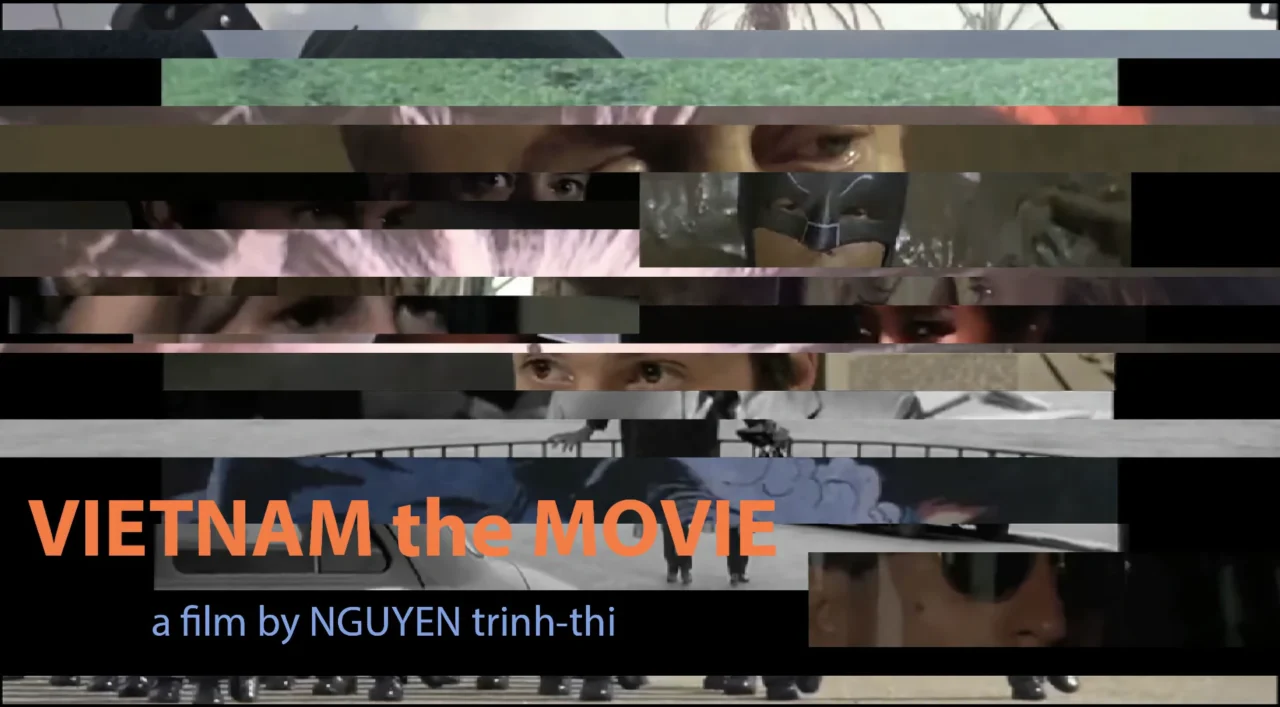
Nguyễn Trinh Thi’s avant-garde documentary Vietnam the Movie (2016) addresses visual imperialism through radical compilation and détournement. To reveal this external perspective, Thi assembles a chronological collage of clips depicting Vietnam from thirty-six different films, including Hollywood blockbusters (Apocalypse Now, Forrest Gump), European arthouse cinema (Harun Farocki, Jean-Luc Godard, Rainer Werner Fassbinder), and Asian productions. Through this editing process, she demonstrates how the global imaginary has consumed and commodified the name “Vietnam,” reducing a real country to a synonym for “War” Thi juxtaposes these external and often problematic representations, prompting critical dialogue among them. In doing so, Vietnam the Movie destabilizes Hollywood’s constructed illusions, stripping the original films of narrative authority and reframing their footage as “found artifacts” of Western ideological bias. Ultimately, Thi’s counter-archive exposes a profound socio-political tragedy: the authentic, lived history of post-war Vietnam is obscured beneath layers of foreign cinematic myths, metaphors, and geopolitical projections.
Throughout the exhibition, Thi extends this critique to encompass twentieth-century geopolitical conflicts. In Vietnam the Movie (2016), the 47-minute film eschews conventional dramatic linearity, instead employing a “logic of forms” and association, where clips are connected through visual or linguistic cues, particularly the utterance of the word “Vietnam” (Pazzini, 2017). This creative montage compels viewers to confront the global “industry of memory” and the Western appropriation of historical narrative, thereby destabilizing the dominant representation of the Vietnam War. Thi approaches the extensive archive of global cinema not as a repository of historical truths, but as a site of ideological construction, employing formal disruptions to diminish the immersive power of mainstream film.
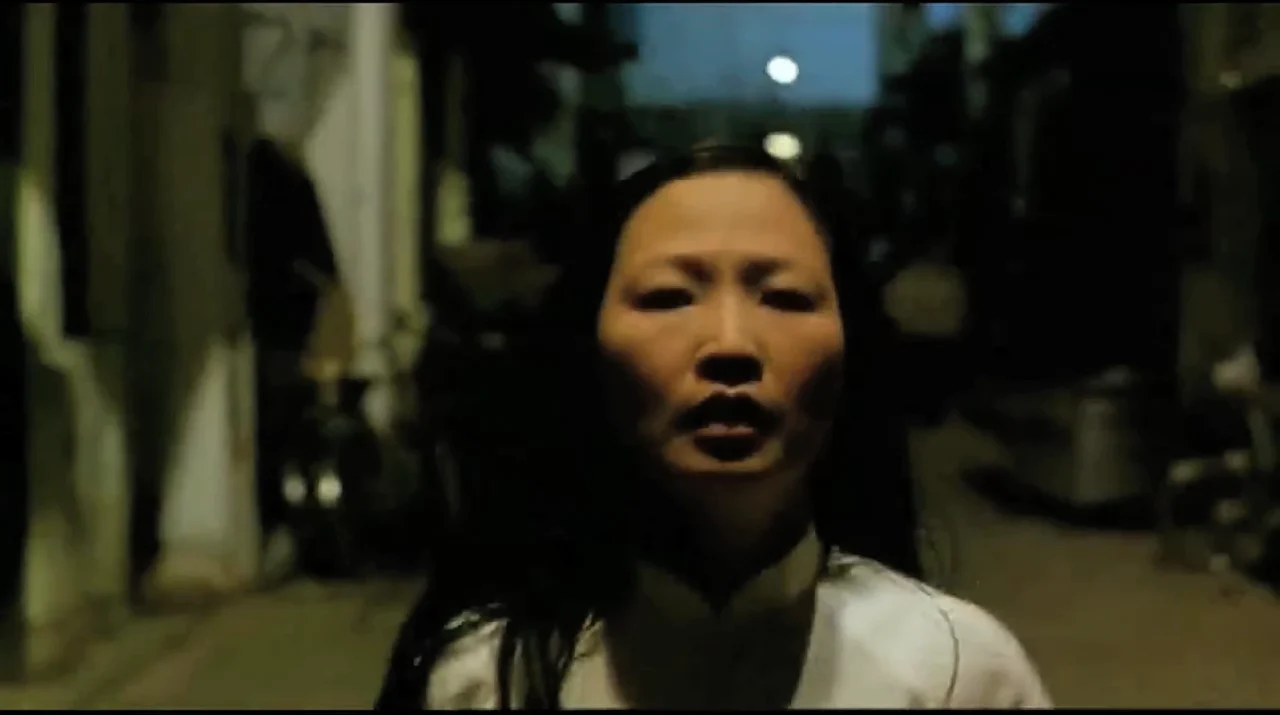
In her other work presented in this exhibition, a 28-minute installation titled Eleven Men (2016), Thi turns her archival subversion inward by compiling scenes from classic Vietnamese state-sponsored narrative films spanning three decades. Featuring the renowned actress Nhu Quynh, the film adapts the patriarchal and ironic voice of Franz Kafka’s short story Eleven Sons into a female perspective, declaring, “I have eleven men.” By repurposing state-owned archival footage, Thi challenges both local ideological frameworks and institutional gender roles, introducing new vulnerabilities, desires, and complexities into a visual history originally constructed to serve nationalistic state agendas (Magiera, 2016).
The works of both artists demonstrate how visual media—whether colonial photography or cinematic images—are utilized by dominant powers to portray a nation’s reality with constructed myths. A comparative analysis of Dutch colonial plantation photography and Hollywood’s depiction of Vietnam, as well as state-sponsored images, reveals a consistent socio-political pattern: the visual reduction of sovereign territories to either economic assets or psychological stages for external anxieties, as well as serving a nationalistic agenda.
Ultimately, this duo exhibition serves as a critical site to “refuse the stories the shutter tells.” (Azoulay, 2019, p.4). Mahardika and Thi illustrate that the archive is not a static repository of definitive truths, but an active arena of contestation. Through manipulation, analysis, and reframing of imperial and state-sanctioned records, both artists challenge hegemonic narratives, thereby enabling alternative modes of remembrance and perception for future generations.
— Mira Asriningtyas, Dito Yuwono
Reference
Azoulay, Ariella Aïsha. Potential History: Unlearning Imperialism. London: Verso, 2019.
Pazzini, Laura. “Vietnam The Movie: Resituating Images in Postcolonial Mainstream and Art Cinema.” Cinema Journal (2017). https://doi.org/10.1353/cj.2017.0000.
Magiera, Magdalena. “Nguyễn Trinh Thi: Eleven Men.” Vdrome, 2016. https://www.vdrome.org/Nguyễn-trinh-thi/

Information
General
- All film screenings are free.
- Registration opens at each screening venue 30 minutes before the scheduled screening time.
- Screenings are free seating, first-come first-served basis.
- Check the age rating assigned to each screening before attending.
- For feature-length screenings, doors close 15 minutes after the scheduled start time.
- For shorts compilation screenings, late entry is permitted between films.
- Latecomers may not be guaranteed entry.
Please Do…
- Arrive on time.
- Be considerate of other.
- Stay open to things that may differ from what you’ve known.
- Ask our doKRUmenter (festival team) at our venues if you need assistance.
Other agenda
- Detail
- Rainy Day Mother
- The Other Spring
- Retrograde
- A Small Alley Dreams of Us
Friday, 27 Nov 26, 13:00 WIB(2h 3min)Pascasarjana ISI Yogyakarta, Ruang Multimedia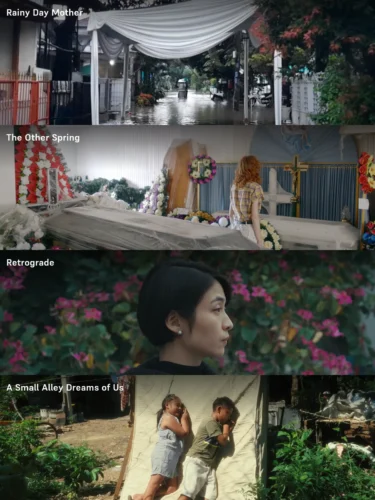
- Detail
- meteors…
- Documents for the End of the World
- Latex Labyrinth
- Elegy for the Lost
Tuesday, 24 Nov 26, 15:30 WIB(1h 29min)Pascasarjana ISI Yogyakarta, Ruang Concert Hall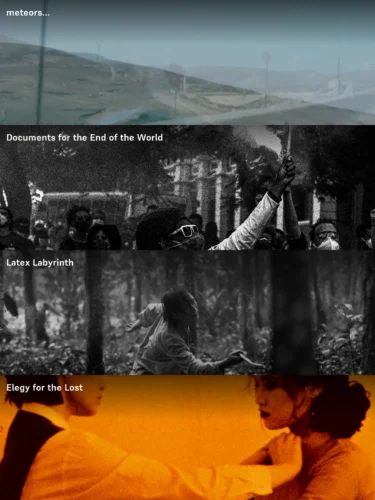
- DetailThursday, 26 Nov 26, 15:30 WIB(1h 48min)Pascasarjana ISI Yogyakarta, Ruang Galeri