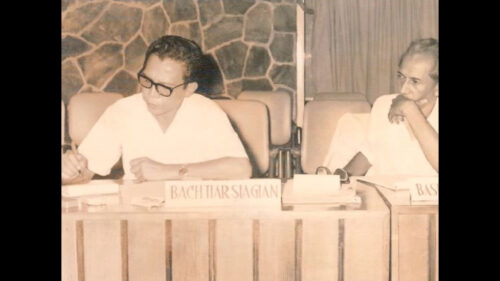
On June 30, 2019, Indonesian filming world mourned with the passing of Abduh Aziz. He is remembered not only among filmmaking circles, but also art and culture communities because of his activism and advocacy for film as the product of art and culture. Abduh Aziz spoke from within cultural organizations, tirelessly striving for nationwide change. He placed film as a creative medium which is inseparable from its potentials to convey criticism for social and political changes.
Structural and outward interpretation of meanings is one of Abduh Aziz’s signature. His works do not merely prioritize form and aesthetics, but also seek to achieve a unified meaning which leaves a lasting impression on the audience’s mind. To honor his service to the film industry, Festival Film Dokumenter (FFD) 2017 will screen his films through Lanskap: Tribute to Abduh.

Lanskap was initiated in FFD 2017 and specifically attempts to observe the myriads of Indonesian documentary films along with its ecosystem. Lanskap recognizes this changes outside film to be examined through film. Conversely, elements inside of film and how they are read can be perceived in relation to the ecosystem.
In this year’s Lanskap, FFD aims to recollect Abduh Aziz’ contributions in film industry and Indonesia’s social-political scene through the films he oversaw as producer, director, or writer.

Abracadabra! (Aryo Danusiri, 2003) invites the audience to explore Aceh in early 2003, a few months prior to the return of Indonesian army in Aceh on May 19. The film retells the situation there post-Cessation of Hostilities Agreement signed by Aceh Free Movement and Indonesian government. One can see the filmmaker’s concern toward the implications of these national turmoils and humanity aspects captured through the lens of the characters. Through this film, the audience is escorted to view the restlessness within society undocumented on television.
Tjidurian 19 (Lasja F. Susatyo & M. Abduh Aziz, 2009), on the other hand, takes us back to the story of how political brawl dismantled a community on Tjidurian 19 Street. Tjidurian 19 was a home for ideas, love, knowledge, and friendship. It was where youth gathered and exhibited their flair to enrich Indonesian literary scene. The film exposed history not through a grandiose perspective, but integrated it from trivial stories of individuals in different times and places.
In Banda: The Dark Forgotten Trail (Jay Subiyakto, 2017), Abduh Aziz’s observance of history is displayed. The film highlights Banda Islands, the islands that once were famed for its spice, but are now fading into obscurity. In medieval centuries, a handful of nutmegs was worth even more than a crate of gold. The Dutch was even willing to let go of Nieuw Amsterdam (now Manhattan, New York) to cast the British forces out of the islands. In Banda, Indonesia’s first occurence of slavery and massacre materialized. Evidently, the filmmaker hopes to raise interest among the general public to learn the history of Indonesia, specifically that of Banda Islands.

Di Atas Rel Mati (Welldy Handoko & Nur Fitriah, 2006) takes the audience to dive into the lower social class of Indonesia. It features the portraits of children of Dao Atos Village, Ancol, Jakarta, who survive by providing services of railway trolley, a means of carrying people and cargo. This film observes not only a small portrait of social structure in Indonesia, but also pays close attention to the human aspect of its subjects. Even with the critical undertone on social, education, infrastructure and welfare policies, this film is not short on the nuance of human characteristics.
The four films are nothing but a fragment of the long list of his contributions to Indonesian filmmaking world. Through his works, one can still see his presence and influence of the late Abduh Aziz. The films presented on Lanskap: Tribute to Abduh will be screened on December 5th-7th, 2019 on Taman Budaya Yogyakarta and IFI-LIP Yogyakarta.
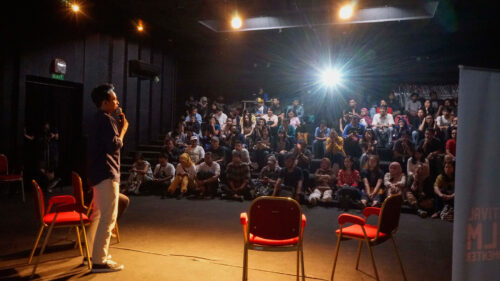
Film is the product of art, meanwhile documentary film holds a unique reputation in the content it delivers. How does documentary combine aesthetic and ingenuity in capturing the essence of humanity along with its many aspects? Where does documentary stand within the art ecosystem in Indonesia and how does one find meaning in this? Those are questions to be answered in the special Doctalk for Lanskap, titled Documentary and the Ecosystem of Arts in Indonesia, led by film practitioners Aryo Danusiri and Lasja F. Susatyo.