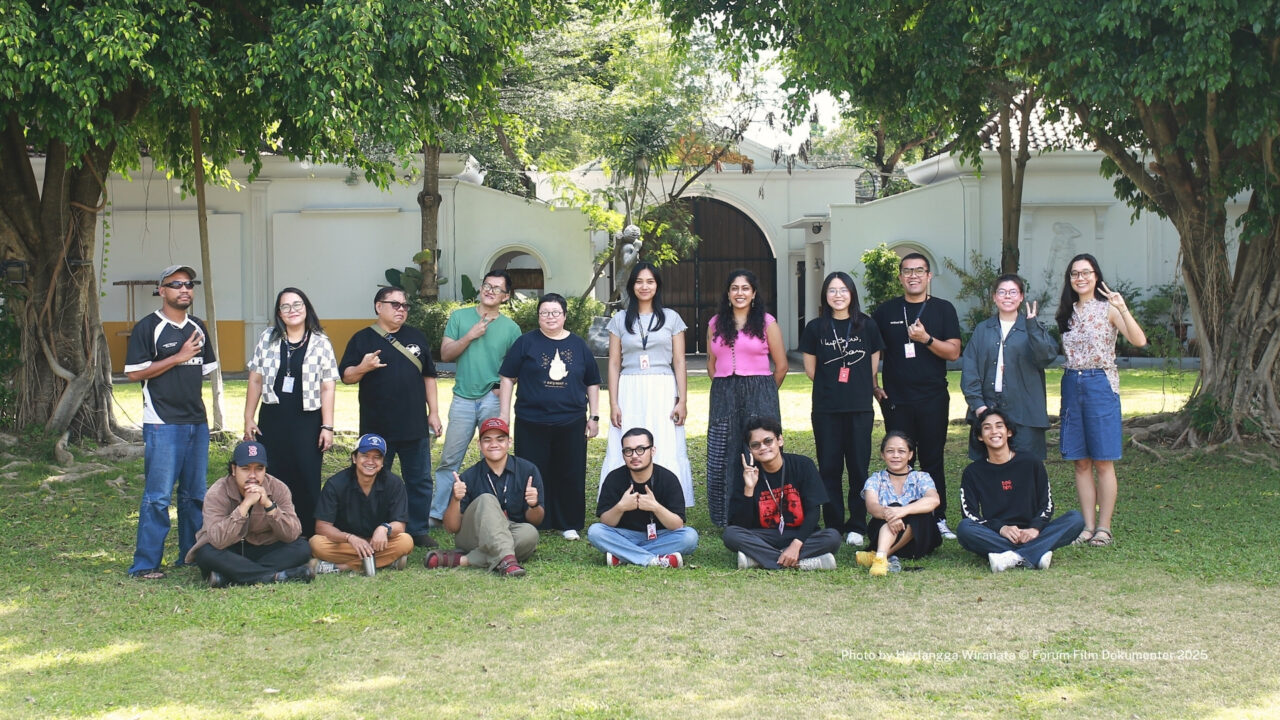
The first edition of Teka-teki Sinema film programming workshop has officially wrapped up. The workshop was split into two phases, with the online workshop taking place on June 20–21 and 27–28, 2025, and the in-person workshop on July 20–24, 2025. The workshop was attended by 13 selected participants representing various educational and professional backgrounds. See the list of participants here.
The online workshop consists of four sessions covering different topics. These sessions aim to introduce participants to the general pillars of film programming as a foundation for further exploration of the practice. The first session held on June 20, 2025, is titled What is Southeast Asian Cinema? led by Eric Sasono and moderated by Yuki Aditya. This session discussed the development of Southeast Asian cinema’s aesthetics and history, intertwined with the social and cultural conditions of the countries within the region. The second session, June 21, 2025, was led by Gayatri Nadya and moderated by Gerry Junus. In the session titled Identify and Embrace the Audience, participants were encouraged to recognize the segmentation of film screening audiences that can affect how film programmers structure their frameworks. On June 27, 2025, Chalida Uabumrungjit led a session titled Curating Short Films and Creating a Global Community. This session discussed the development of Southeast Asian short films through the lens of film festival curation. Chalida shared her experience in managing a short film festival that curates and screens Southeast Asian short films. The final session held on June 28, 2025, explored how film programmers’ approach in reading feature-length films in a session titled Is Feature-Length Hard? led by Stefan Borsos.
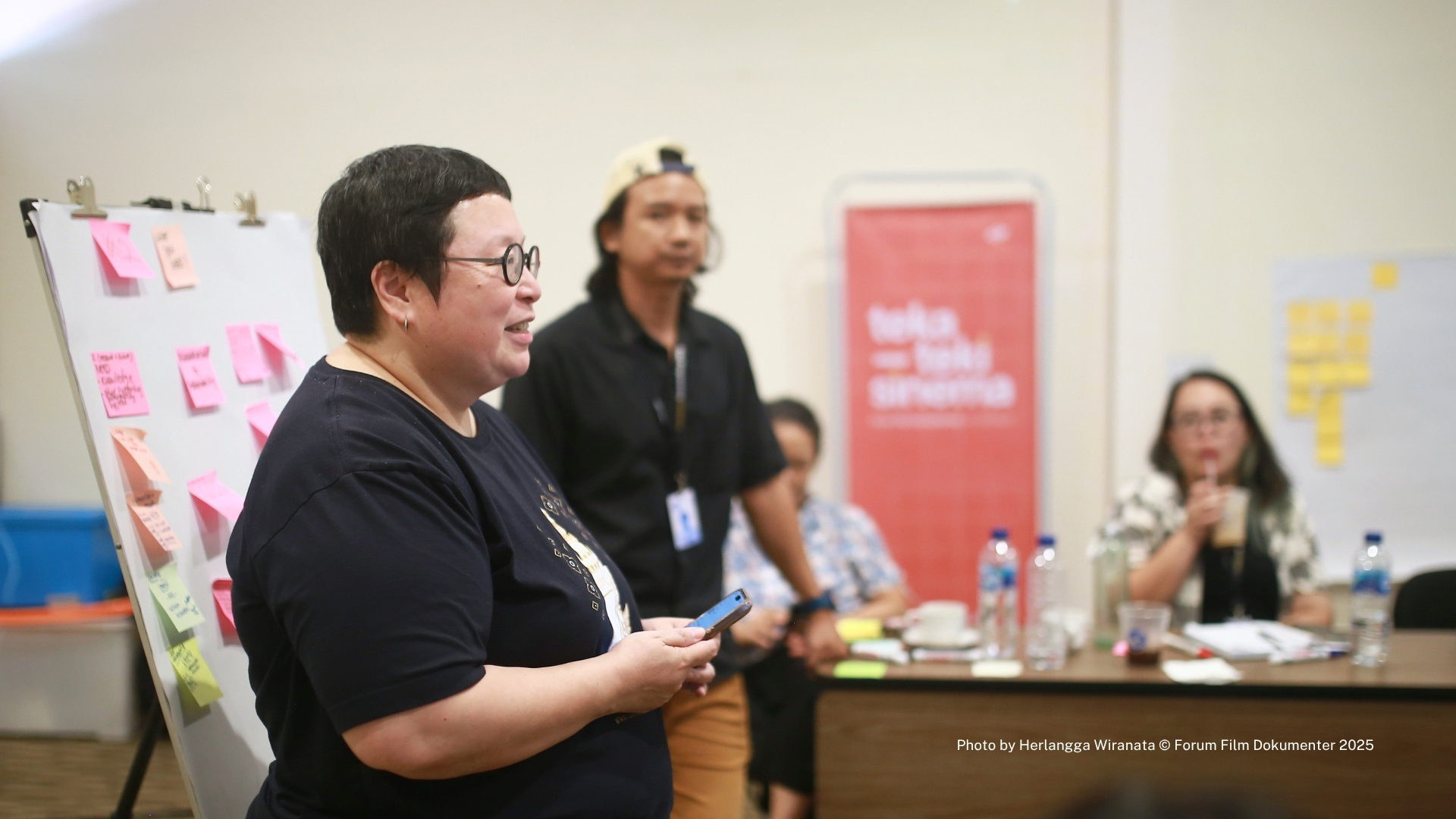
Following a series of virtual sessions, Teka-teki Sinema 2025 entered its face-to-face session held in Yogyakarta, Indonesia. On July 21, 2025, participants took part in a rotating group discussion (RGD) session, answering questions related to their vision and challenges in film programming practice. Participants were split into four groups, which then took turns meeting with mentors to discuss their respective answers. The session was mentored by Chalida Uabumrungjit, Yuki Aditya, Gayatri Nadya, and Ekky Imanjaya, facilitated by Alia Damaihati and Suluh Pamuji. After participating in the RGD session, the participants watched a compilation of four short films and then discussed the potential for program planning based on those films. Director Eden Junjung (director of Bura, 2019) was also present during the session.

On July 22, 2025, participants attended a series of three sessions on curatorial practice, film archive management, and genre. The first session, led by Yuki Aditya and moderated by Gayatri Nadya, focused on the management of experimental film programs and practices that are also experimental in their approach. The next session, Curating the Archives and Make it Relevant, was led by Chalida Uabumrungjit, discussing the context and concept of film programming based on archival films and the intended audience. This session was a more in-depth discussion of the virtual session also led by Chalida. Closing the second day’s session, the session on film genres was presented by Eric Sasono and Ekky Imanjaya and moderated by Dyna Herlina. In this session, participants were invited to delve into a reading about various genres in the forms of fiction and non-fiction films. After all the sessions were concluded, participants were free to attend informal consultation sessions with mentors to prepare the program selection that would be presented on the last day of the workshop.

Participants attended a session visiting three art institutions in Yogyakarta on July 23, 2025, namely Cemeti – Institute for Art and Society, ARTJOG, and Ruang MES 56. After viewing the exhibitions, participants attended discussion sessions with Fitri DK and Dito Yuwono (Cemeti – Institute for Art and Society); Ignatia Nilu (ARTJOG); and Akiq AW, Rangga Purbaya, and Wimo Ambala Bayang (Ruang MES 56). This site visit sessions exposed participants to curatorial practices and audiovisual presentations in alternative spaces and methods. This enriched participants in composing their film programming work, which is not always presented in conventional screening rooms.

After attending all sessions, site visits, and discussions, participants presented the film programs they had worked on throughout the workshop. Participants were divided into four groups, each presenting a narrative proposal for the compilation of films they had made. This session was attended by panelists Yuki Aditya, Gayatri Nadya, Alia Damaihati, and Kurnia Yudha. The film program presented by the participants consisted of selected films from the Southeast Asia region and focused on a variety of narratives, including history, culture, identity, social issues, and self-expression.

Teka-teki Sinema film programming workshop officially ended on July 24, 2025. Forum Film Dokumenter would like to thank all participants, mentors, and parties involved in making this workshop occur. Teka-teki Sinema Film Programming Workshop is presented by Forum Film Dokumenter with the support of the Ministry of Culture Republik Indonesia through Dana Indonesiana and LPDP, in collaboration with Thai Film Archive, Institut Français Indonésie, KDM Cinema, and Mini Film Festival Malaysia. Sign up for our newsletter to stay up to date on the latest news about festivals, workshops, and other programs presented by Forum Film Dokumenter.