“How can this short documentary film that presents various layers of history be used as a medium (to) imagine, and project the future of the (subject) community that is documented? Then what kind of future?” a question from Moses, an audience member, opened an interesting discussion at the screening of Short Competition Program at Festival Film Dokumenter 2024.
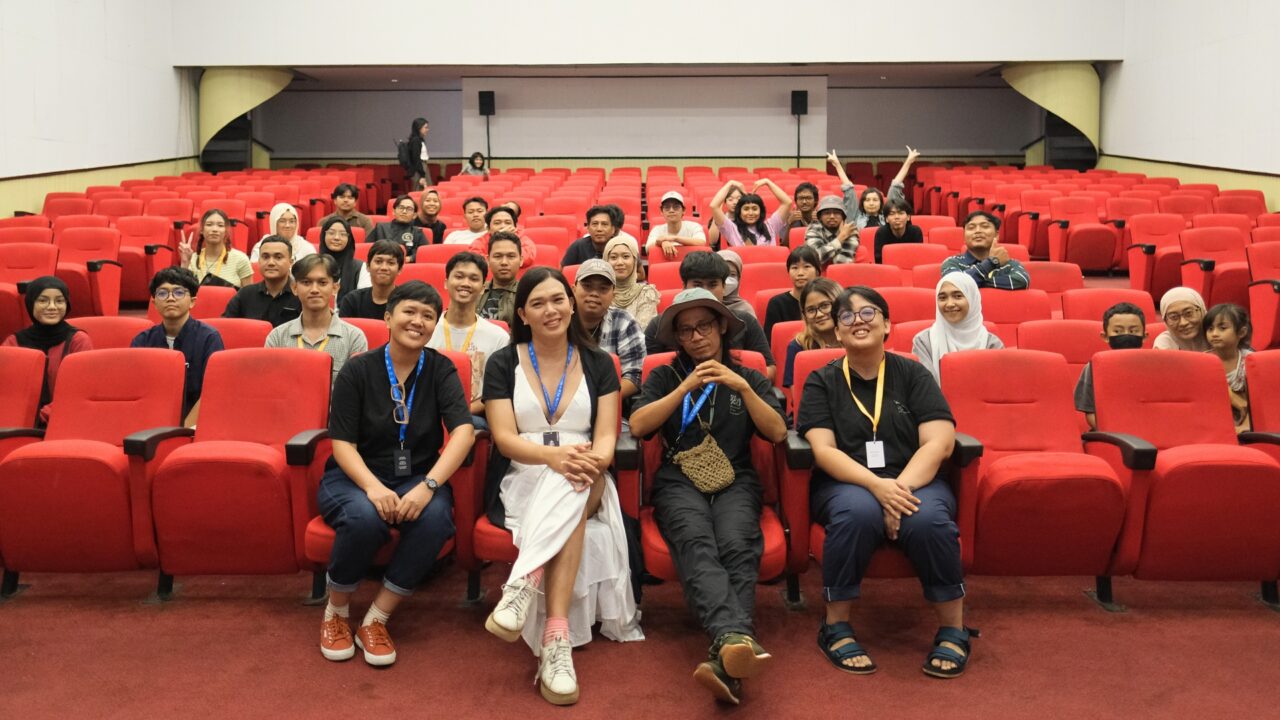
The short documentary films selected at the Short Competition were A Journey of Island People (Arief Budiman, 2024), A Tale for My Daughter (Wulan Putri, 2024), Afterlives (Timoteus Anggawan Kusno, 2024), To Face My Father in Jambi (Anggun Pradesha, 2023), and What Did You See and What Will You Remember? (Mahardika Yudha, 2023). The five films competing in this year’s Short Competition brought out recent issues, which then offered a multi-directional bridge to the past and the future. It started from collective to personal and domestic issues. After the film screening, a discussion was held, which was attended by director Anggun Pradesha, director Wulan Putri, and Komarulloh, a representative of the film A Journey of Island People (2024).
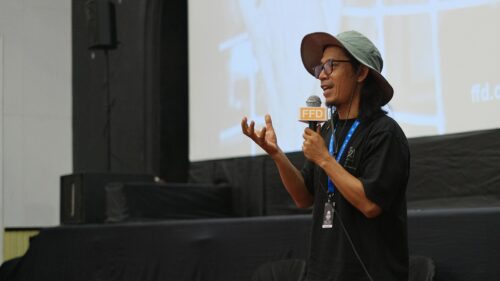
Answering Moses’ question, Komarulloh said there will always be some difficulties in presenting history and projecting the future in a film. However, Komarulloh believed that a film is one of the media that can build civilization, “Through documentary films, we have faith in the future of our children, the youth of our children, to be an ahistorical young generation to always work through film,” he continued. Wulan Putri added that she felt that it needed a collective effort because a film could only talk about one small piece of a big event.
Speaking of intimacy to the subject, the presence of filmmaker representatives had different distances. Anggun was the director as well as the subject in her own film. Wulan Putri is not part of the Papuan community but has a close issue with her subject, as a mother. Komarulloh, meanwhile, is part of the other whose group was being documented by the filmmakers. Anggun said that her film was a process of approaching her relationship with her family. While Wulan, it felt like she was reflecting, “As a mother who has a daughter, (Wulan) views this heteropatriarchy as something unsafe for women,” she said. Meanwhile, Komarulloh was happy because it felt like someone was retelling his ancestor’s story, through documentary.

Documentaries serve not only as a medium to record history but also as a medium to imagine and project the future of documented communities. Through a personal and collective approach, documentary films are able to open a space for the audience to see the relationship between the past, the present, and the future.
Covered by FadliAwan on November 5, 2024. (Ed. Vanis/Trans. Shafira Rahmasari)