For Musthapa, life is composed of 60% past, 30% future, and 10% present. The present is like a stopping point for the future before moving on from the past. Therefore, no one has the right, let alone the power, over life. Everything is temporary. Just passing through.
Through verses of poetry that faithfully accompany him through life until his twilight years, Musthapa embraces life with all its acrobatics. For him, poetry is not only a collection of verses full of rhymes and constellations of symbols, but also a museum of life. He borrows language as an instrument to express what transcends language itself.
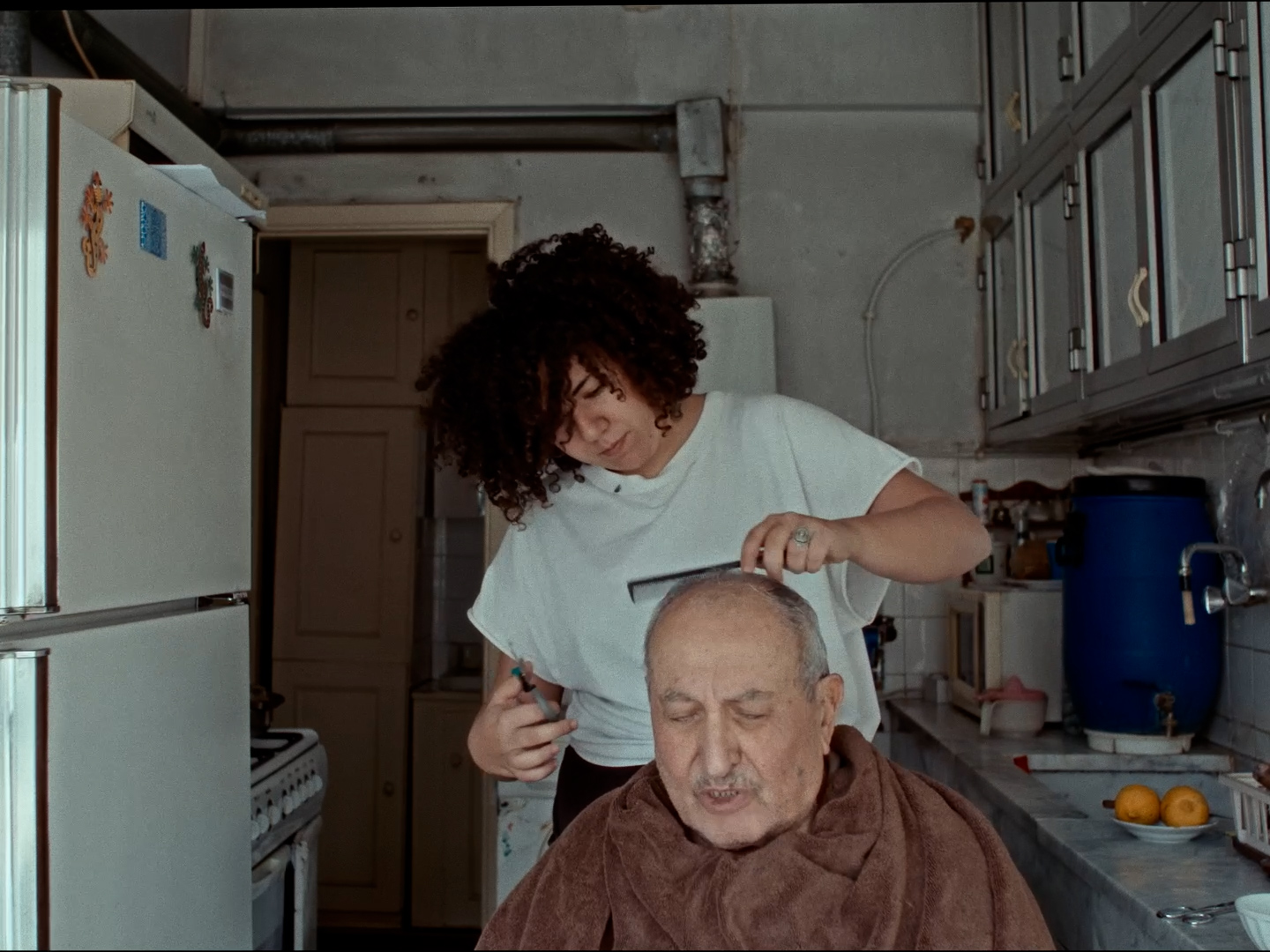
Meanwhile, Farah, his daughter, chooses to use the camera to capture her daily life with Musthapa, Nana—the housekeeper—and the elderly men in the poetry club; after Farah returns to her homeland. The camera is like words weaving verses of poetry; articulating the intimate, humorous, and sometimes contentious relationship between her and, in particular, her father.
One time, Farah asked Musthapa if he knew why she was making this film. Musthapa nodded and replied; to record their relationship, of course. However, beyond that, he realizes that there is another layer of answers that he deliberately does not want to say. About life, death, destiny, and memory. Musthapa gently reminds her, “Forgetting is part of remembering, My Daughter.”
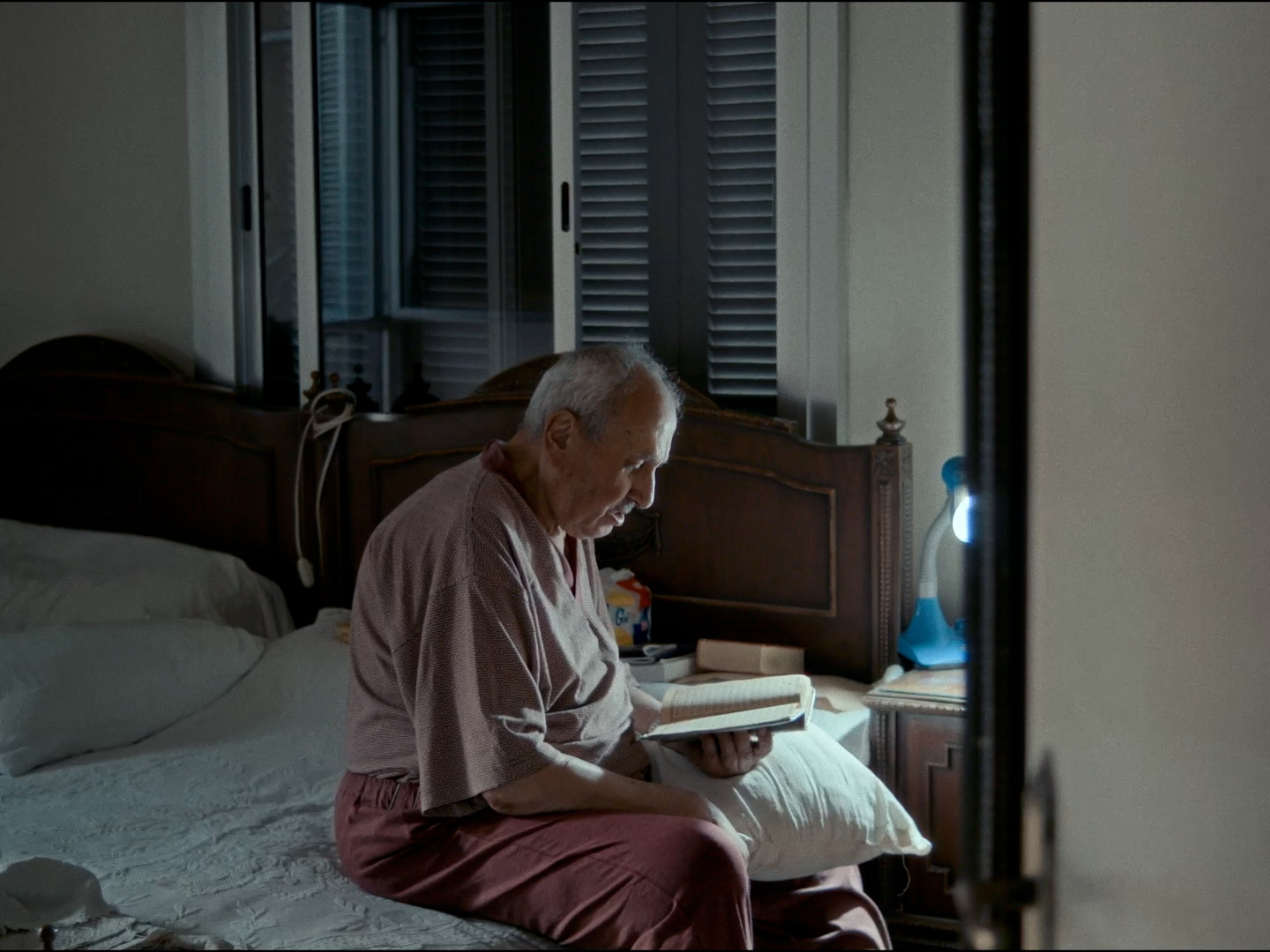
We Are Inside (Farah Kassem, 2024) is structured like a series of poems. Verse. After. Verse. Living daily life in an apartment, watching the news, attending poetry club meetings, then looking out the window at a restless city. Outside the domestic frame, Lebanon in 2019 was rocked by a wave of protests. Meanwhile, inside the apartment, Farah and Musthapa choose poetic language to voice things that are also political. The repetition of space and situation operates as a visual rhyme that links the private and public spheres. Politics is not free from intimacy, but rather shows that the two are closely intertwined.
In this 180-minute documentary, poetry transcends its form; it becomes a means of everyday politics. And like politics, it dances like poetry itself. However, in the end, amid increasingly weakened bodies, a restless city, and fading memories, is there still poetry for today? (Hesty N. Tyas) (Ed/Trans. Vanis)
Film Details
We Are Inside (Nahou Fil Dakhel)
Farah Kassem | 180 min | 2024 | Denmark, Lebanon, Qatar
In Competition for International Feature-Length Documentary
Festival Film Dokumenter 2025