Colonialism ravages cultures, weaving its fabric of doctrine that cloaks past civilizations with its imperialistic powers for one reason only: to take over the Old World and undeservedly reap its benefits. It brings us to an era of modernity that operates under a global economic system, using its every way to ravage and expropriate the “ethnic” in the name of inexhaustible fortune. Moving towards an age of progress, when old songs are chanted and heaping rolls of film are replayed over and over again, a new cultural logic appears through western cinema and manufactured film theatres that prioritizes screenings of Hollywood films; not leaving any room for independent nor local cinema to thrive in the increasingly small amount of time it has.
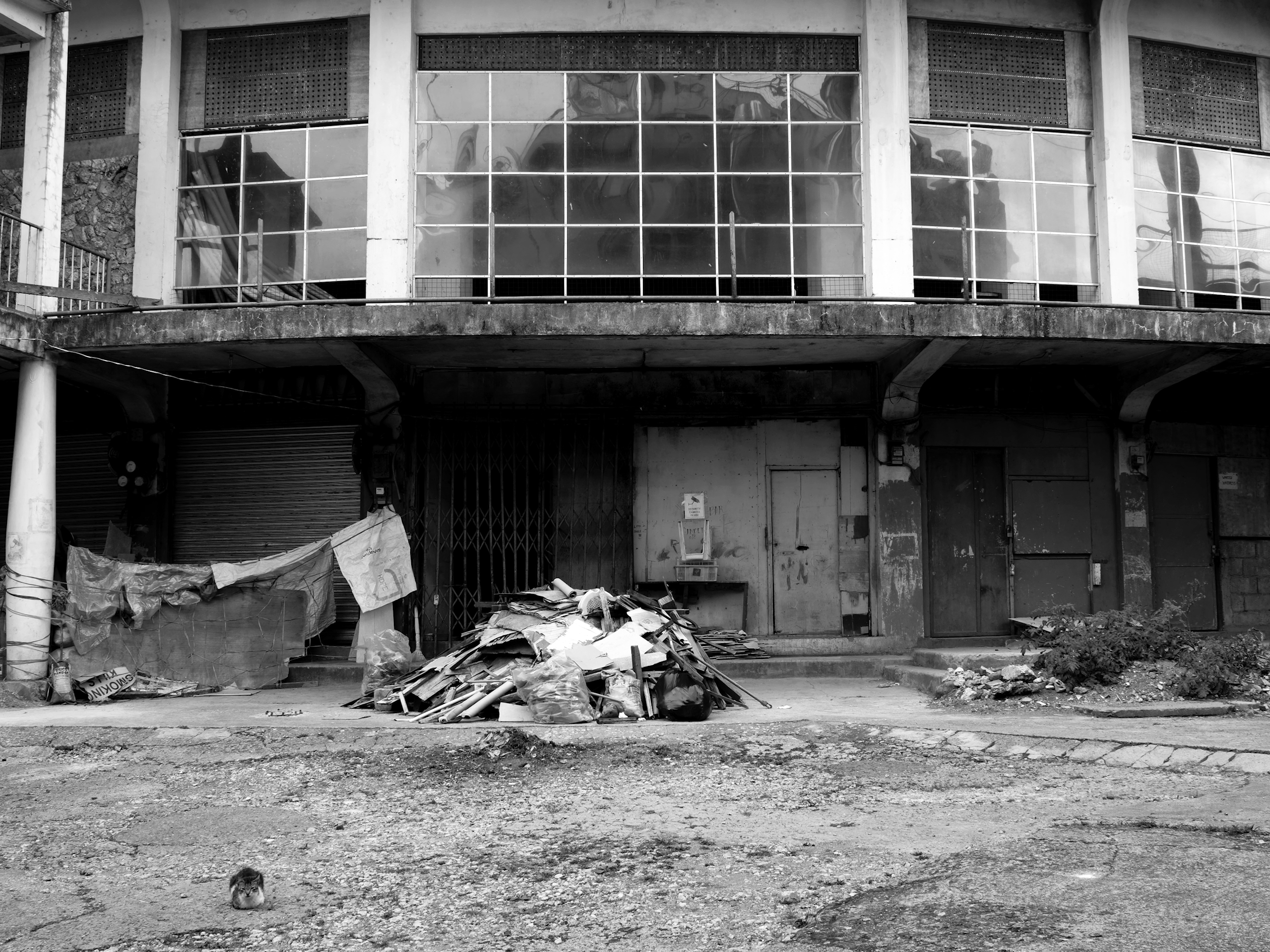
The city of Baguio in the Luzon Island, filled with archives manifesting in the form of lot-based buildings that once were prospering movie theatres, most of which is in the style of art deco, carry within them the inherited stories of the Indigenous Igorot people of northern Luzon. Gradually, the land has been seized in the name of progress, erasing the local wisdom of communities in the Cordillera mountains. That is until the people of Baguio stood in resistance against the felling of pine trees for the expansion of shopping centres. Amidst all these stages of humanitarian struggle, those former film theatres took on and shifted into new roles, either as agents that perpetuates relentless development or as victims swallowed by modernisation itself.
An urgency to record the dialogues and the texts of history through that architectural landscape then arises. Those documentations then present a series of portraits, comparing the film theatres in their early days to their present state of pale, crusted walls, as if architectural corpses whose fate ends in abandonment and decay. Texts and audio fill the silence, sparking immersive imaginations that can only be conjured when the narrator recounts the life once held by the walls of those independent cinemas. Once, they were adorned with murals depicting episodes of the indigenous traditions of Igorot and Benguet communities, along with other tribes from the Cordillera highlands.

At the end of the duration, we arrive at the conclusion of a journey that leads the film theatres of Baguio City to their point of farewell. This journey gives rise to an archive in another form: a human body, an idea, and an inspiration for the progress of humanity through the lens of a camera. It is an offering of ideas and efforts toward the preservation of cinema, theatres, and the agency that emerges from film culture, a library of premises whose birth and death remain unfinished. Kidlat Tahimik. (Gantar Sinaga) (Ed. Vanis/Trans. Timmie)
Film Details
Goodbye Cinema (Salamat Pagsinean)
Christian Balictan | 22 min | 2025 | Philippines, Switzerland
In Competition for Short Documentary
Festival Film Dokumenter 2025